
By John Meyer, consultant in financial affairs, for Eurasia Business News, July 1, 2023
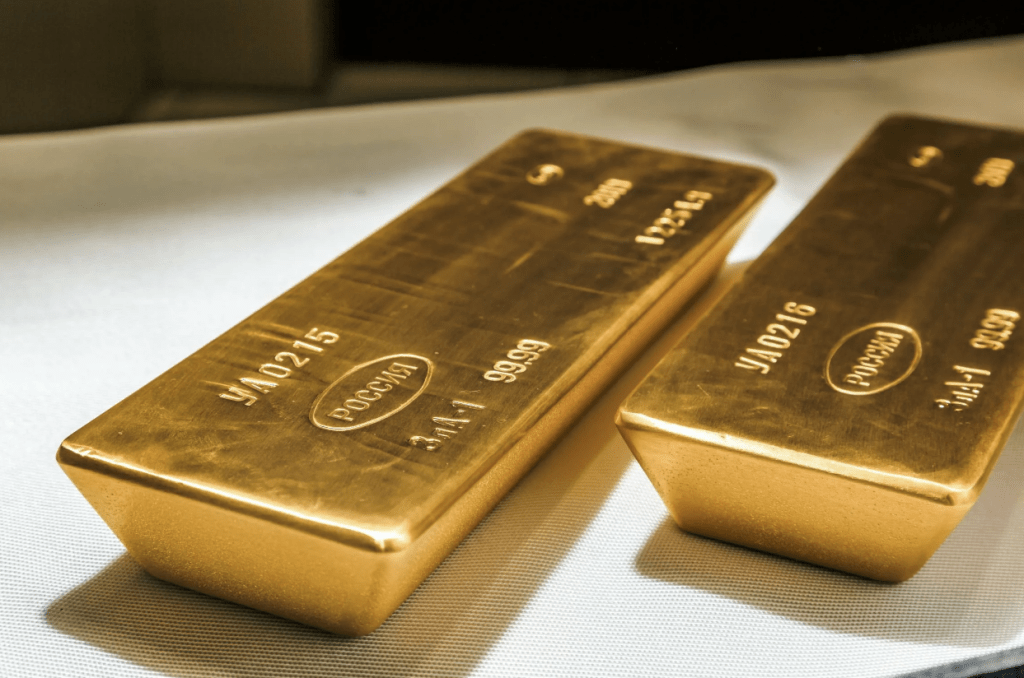
Russia’s international reserves amounted to $586.9 billion as of June 23, reported the Bank of Russia.
As of June 16, international reserves amounted to $587.5 billion, so they decreased by $0.6 billion over the week.
After the introduction of Western sanctions against the Bank of Russia in March 2022, more than $ 300 billion of the $ 640 billion of the central bank’s gold and foreign exchange reserves were frozen.
The Russian central bank sold 6.22 tonnes of gold in the first quarter of 2023, reported the World Gold Council. This move can be explained by the need to fund some sectors of the Russian economy, amid Western sanctions.
International reserves are highly liquid financial assets held by the Bank of Russia and the Government of the Russian Federation. They consist of assets in foreign currency, monetary gold, special drawing rights (SDRs, special drawing rights, the unit of account used by the International Monetary Fund, IMF), a reserve position in the IMF and other reserve assets.
The Bank of Russia has been actively buying gold since January 2013 (958 tonnes of gold in Q4 2012) and was the leader among the world’s central banks in terms of purchases since this time. Russian has more than doubled the amount of gold in reserves. Also, the Bank of Russia was the largest consumer of gold in the country. It purchased about 45% of the gold production from Russian mining sites in 2019. According to the Russian Union of Gold Producers, at the end of 2019, compared to the previous year, gold production in Russia increased by 12% to 367,952 kg.
Read also : Gold : Build Your Wealth and Freedom
Russia was the second largest producer in the world in 2020 and accounted for 9.88 per cent of total global production, with 331.1t of mined gold. Gold output of Russian mines amounted to 314 tons in 2021.
In the third quarter of 2022, the Russian central bank was holding 2,298.53 tonnes of gold in its reserves. This amount was 2,301.64 tonnes in the fourth quarter of 2021. Russia had 2,271.16 tonnes of gold in the fourth quarter of 2019, according to data of the World Gold Council.
Central bank gold reserves declined by 71 tonnes (t) in April 2023, primarily due to Turkish selling (-81t), reported the World Gold Council. Other notable sellers include Kazakhstan (-13t), Uzbekistan (-2t) and Kyrgyz (-0.6t). Four purchases were reported by Poland (+15t), China (+8t), Czech (+2t) and Mongolia (+1t). Going forward, we expect central banks to remain net buyers in 2023, supported by their overall positive sentiment towards gold reserves.
Make a one-time donation
Make a monthly donation
Make a yearly donation
Choose an amount
Or enter a custom amount
Your contribution is appreciated.
Your contribution is appreciated.
Your contribution is appreciated.
DonateDonate monthlyDonate yearlyThank you for being one of our readers.
Our community already has nearly 110,000 members
Sign up to get our exclusive news before others.
Follow us on Telegram, Facebook and Twitter
© Copyright 2023 – Eurasia Business News
 Eurasia Business News