
By Anthony Marcus, correspondent for Eurasia Business News, July 5, 2024. Article n°1071.
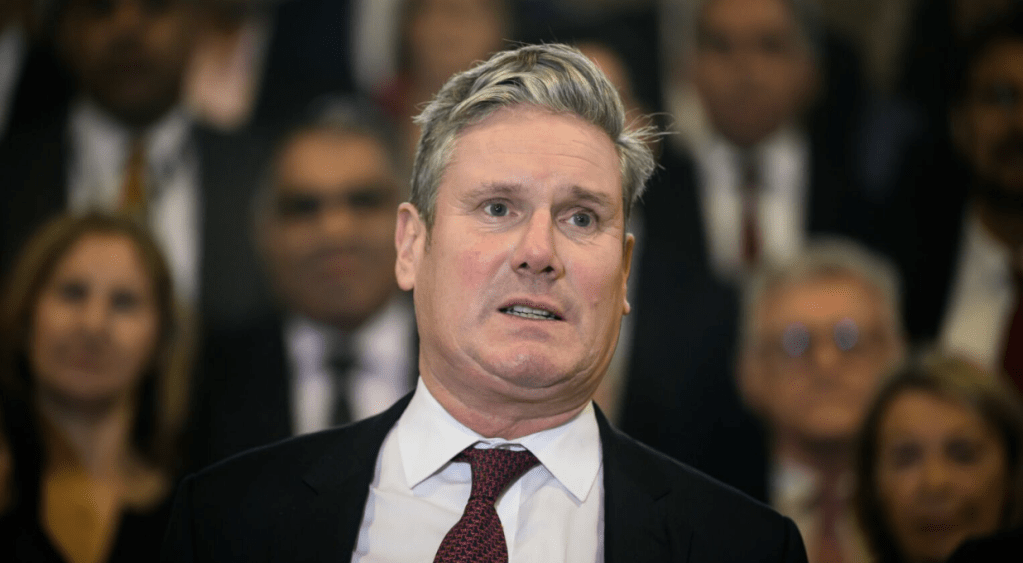
The UK Labour Party has won a historic landslide victory in the 2024 general election, ending 14 years of Conservative rule. Prime Minister Sunak resigned. Labour Party leader Keir Starmer has become Britain’s new prime minister after meeting King Charles at Buckingham Palace.
On July 5, King Charles III of Great Britain asked Keir Starmer, the leader of the Labour Party, which won the parliamentary elections the day before, to form a new government. This was reported by the press service of Buckingham Palace. After that, the new prime minister went to the official residence at 10 Downing Street, where he made his first speech as head of government.
The new British Parliament will begin its work on July 9. At the same time, the inauguration of newly elected legislators and the election of the Speaker of the House of Commons will take place. On July 17, the opening ceremony of the parliament by Charles III will take place, during which he will talk about the intentions and goals of the new government.
The Labour’s Victory
Labour, under the leadership of Keir Starmer, won a sweeping victory in the 2024 UK general election, securing over 400 seats in the House of Commons and achieving a majority of more than 190 seats. This result is comparable to Tony Blair’s landslide victory in 1997.
The Conservatives’ Defeat
The Conservatives suffered their worst defeat since the party’s founding in the 1830s. They lost hundreds of seats, with projections showing them winning only around 118-131 seats. Many prominent Conservative figures, including former Prime Minister Liz Truss, lost their seats.
A New Political Landscape
This general election marks a significant shift in British politics, with Labour returning to power for the first time since 2010. Smaller parties like the Liberal Democrats, Reform UK, and the Green Party also made gains.
The Scottish National Party suffered significant losses, mostly to Labour.
Keir Starmer’s Leadership
Keir Starmer became Labour leader in 2019 and has moved the party back to the center ground. He campaigned on a platform of ending chaos and slowly reinvigorating Britain’s services and infrastructure.
In his first speech as Prime Minister, Starmer promised a “government of service” focused on national renewal.
Challenges Ahead
Despite securing a large parliamentary majority, Labour indeed won the 2024 UK general election with a historically low proportion of the total popular vote, at around 35%. This unusual outcome highlights the significant disparity between vote share and seat allocation in the UK’s first-past-the-post electoral system.
The UK faces economic difficulties and strained public finances, making improvements to public services challenging.
Keir Starmer has acknowledged that progress will be slow and difficult initially.
This election result represents a significant shift in UK politics, with Labour now tasked with addressing the country’s challenges after more than a decade of Conservative governance.
The Labour Party’s landslide victory in the UK general election is likely to have significant implications for Brexit policies, though the changes may be more moderate than some might expect.
Closer ties with the EU
Labour has pledged to forge closer trade and security ties with the European Union to mitigate some of the economic costs of Brexit. This suggests a softening of the UK’s stance towards the EU compared to the previous Conservative government.
No single market or customs union re-entry
Despite seeking closer relations, Labour has made it clear that they do not intend to rejoin the EU’s single market or customs union, nor allow free movement of people between the UK and EU. This indicates that while there will be changes, they won’t be as drastic as a full reversal of Brexit.
Challenges in negotiations
The EU is unlikely to allow the UK to “cherry-pick” access to its single market without concessions. This could pose challenges for Labour’s intentions to revisit the Brexit deal, which Starmer has previously referred to as “botched”.
Balancing act
The new Labour government will need to strike a delicate balance in its relationship with the EU. While seeking improved trade relations, they must also be mindful of concerns about sovereignty and oversight by EU institutions like the European Court of Justice.
Economic implications
Analysts from Goldman Sachs expect “slightly stronger near-term growth and slightly higher inflation under a Labour majority” due to these potential changes in the UK-EU relationship.
In summary, while Labour’s victory is likely to lead to a softer approach to Brexit and improved relations with the EU, the changes will be incremental rather than revolutionary. The new government will face challenges in negotiating these changes while maintaining the core aspects of Brexit that have already been implemented.
Notify me when a new article is published:
Follow us on Telegram, Facebook and Twitter
© Copyright 2024 – Eurasia Business News
 Eurasia Business News