
By Anthony Marcus, correspondent. Eurasia Business News, July 13, 2024. Article n°1090.
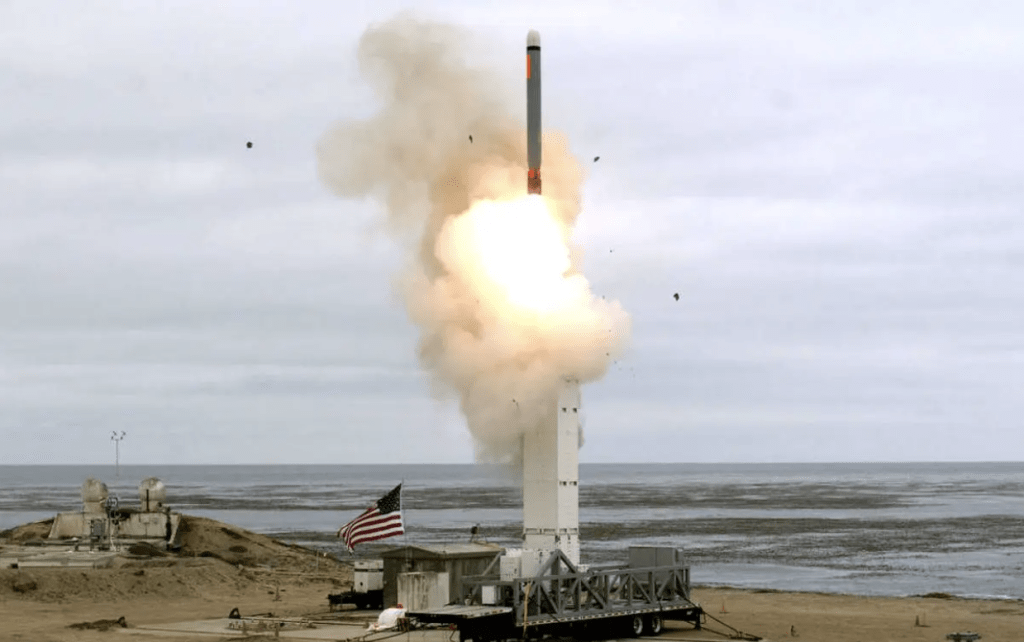
The United States plans to deploy long-range missiles in Germany starting in 2026, as part of its commitment to NATO and European defense, announced a press release by the two countries on the White House website.
This decision marks a significant shift in military strategy, as it will be the first such deployment since the Cold War era.
The list of weapons to be deployed will include the SM-6 missile (sea, air and land-based multifunctional missile), the Tomahawk cruise missile, as well as hypersonic weapons under development, “which have a significantly longer range than current ground-based firepower in Europe.”
The White House commented that “Exercising these advanced capabilities will demonstrate the United States’ commitment to NATO and its contributions to European integrated deterrence.”
Earlier, the Russian President Vladimir Putin has already talked about the start of Russia’s production of medium-range missiles. Measures will be taken after the production of such missiles announced by the United States. “We also consider ourselves entitled to start R&D development, and in the future, production. <… >In principle, we have already given the relevant instructions to the industry,” said President Putin.
Read also : Gold : Build Your Wealth and Freedom
The deployment of US weapons in Germany is not a novelty – these are long-announced plans. In Germany, a NATO member state, a headquarters infrastructure has already been formed for this matter, but the deployment of nuclear weapons is not planned as part of this. The deployment of forces in Germany is even belated. The LRHW complex of medium-range supersonic missiles was supposed to be accepted for trial military operation last year, it would have been ready for deployment in Germany in 2025, but so far not a single successful launch has been carried out in its entirety – the missile flew only from stands, but not from army launchers. At the same time, the SM-6 and Tomahawk will be ready no later than next year.
The United States withdrew from the INF Treaty in August 2019. This treaty required the United States and the Soviet Union to eliminate and permanently forswear all of their nuclear and conventional ground-launched ballistic and cruise missiles with ranges of 500 to 5,500 kilometers. The treaty marked the first time the superpowers had agreed to reduce their nuclear arsenals, eliminate an entire category of nuclear weapons, and employ extensive on-site inspections for verification. In the same month, the Ministry of Foreign Affairs of the Russian Federation officially announced the termination of the treaty.
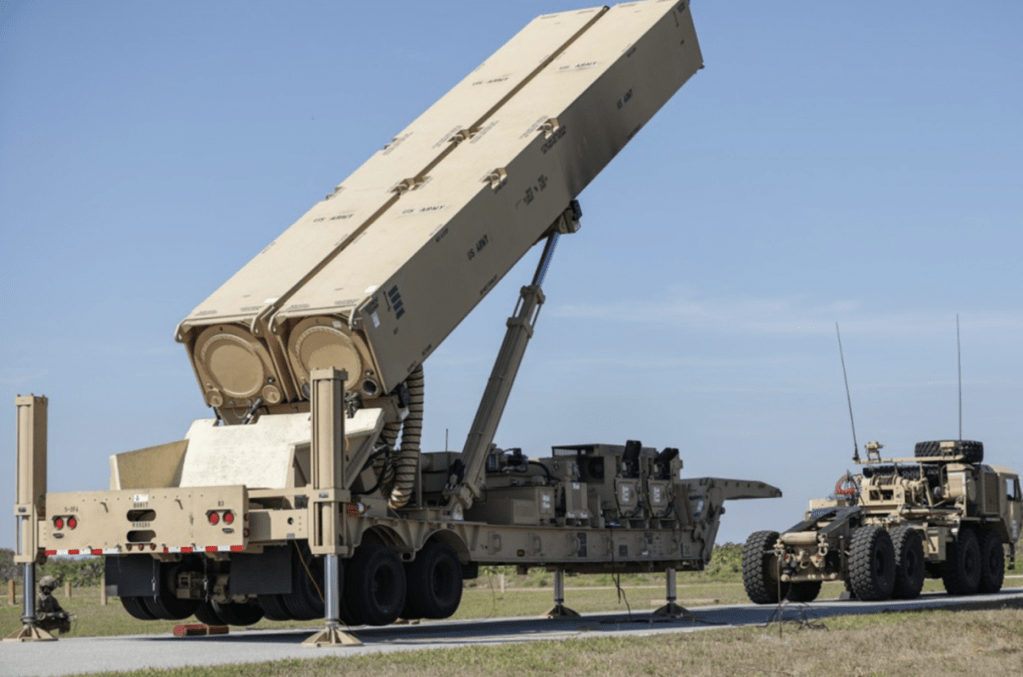
So far, Washington emphasizes the non-nuclear nature of the U.S. medium-range missiles and no changes in this are visible. Theoretically, making nuclear versions of these missiles is not the biggest problem. But to date, the American nuclear weapons complex is struggling to cope with current tasks, and it will be very difficult to add new warheads to current projects from the point of view of limited resources – human, financial, industrial, and simply the availability of fissile materials. In addition, while the INF Treaty’s expiration in 2019 removed legal barriers to developing these missiles, the United States remains bound by other arms control agreements that limit its nuclear arsenal.
Far from Europe, the U.S. Army is also planning to deploy a new medium-range missile launcher in the Asia-Pacific region by the end of 2024. This system is likely to be the ground-based Typhon system, capable of launching Tomahawk cruise missiles and SM-6 interceptor missiles, both of which are conventionally armed.
Our community already has nearly 130,000 readers!
Subscribe to our Telegram channel
Notify me when a new article is published:
Follow us on Telegram, Facebook and Twitter
© Copyright 2024 – Eurasia Business News. Article No. 1090.
 Eurasia Business News