
By Anthony Marcus, correspondent. Eurasia Business News, July 28, 2024. Article n°1109.
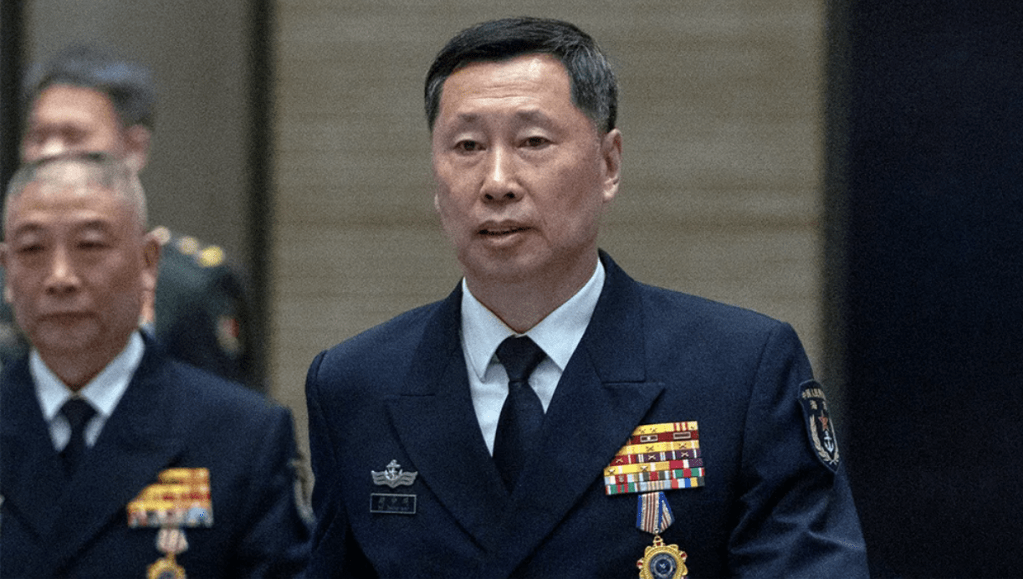
The commander of the naval forces of the People’s Liberation Army of the People’s Republic of China, Hu Zhongming, arrived in Russia to attend the naval parade in St. Petersburg. Deputy Defense Minister of the Russian Federation Alexander Fomin held a meeting with his Chinese counterpart.
The parties agreed to deepen naval cooperation between Moscow and Beijing. “The Deputy Minister of Defense of the Russian Federation thanked the Chinese side for its active participation in the celebrations dedicated to the Day of the Navy, held in St. Petersburg and Vladivostok. The talks were held in a warm and friendly atmosphere,” the Russian Defense Ministry said in a statement.
The Russian president Vladimir Putin signed a decree on holding the main naval parade in St. Petersburg on July 28 – on Navy Day. According to Dmitry Peskov, the president will take part in the opening of the parade.
The Russian Navy, officially known as the Russian Federation Navy, is a significant component of Russia’s armed forces. As of 2023, the Russian Navy has approximately 160,000 active duty personnel. The fleet consists of around 370 active ships.
The Chinese Navy, officially known as the People’s Liberation Army Navy (PLAN), has rapidly grown to become the world’s largest naval force in terms of ship numbers. The PLAN now operates over 350 ships and submarines, surpassing the U.S. Navy’s 219 warships.
China’s fleet includes a wide range of vessels such as aircraft carriers, destroyers, frigates, corvettes, and submarines. Nearly half of China’s combat ships have been built since 2010, with 70% of Chinese warships launched after 2010 compared to only 25% of U.S. Navy ships.
Read also : Gold : Build Your Wealth and Freedom
China has doubled its destroyer fleet from 20 in 2003 to 42 in 2023. The chinese shipbuilding industry vastly outpaces that of the United States, with some estimates suggesting China has 230 times the shipbuilding capacity of the U.S.. This advantage allows China to repair damaged vessels or construct replacements much faster than the U.S. in a potential conflict.
China currently operates two aircraft carriers, the Liaoning and the Shandong, with a third carrier under construction. The Shandong carrier strike group has been increasingly active, conducting multiple exercises and deployments in the Western Pacific.
The PLAN employs over 710 naval aircraft, including fighters, bombers, and electronic warfare aircraft.
Challenges to U.S. Naval Dominance
China’s rapid naval expansion poses a significant challenge to U.S. naval supremacy, particularly in the Indo-Pacific region. The U.S. still maintains an advantage in guided missile cruisers and destroyers, but China is closing this gap.
If current trends continue, China’s naval capabilities may surpass those of the U.S. in several areas, potentially shifting the balance of power in the region.
Our community already has nearly 135,000 readers!
Subscribe to our Telegram channel
Notify me when a new article is published:
Follow us on Telegram, Facebook and Twitter
© Copyright 2024 – Eurasia Business News. Article No. 1109.
 Eurasia Business News