
By Swann Collins, investor, writer and consultant in international affairs – Eurasia Business News. August 17, 2024. Article no 1176
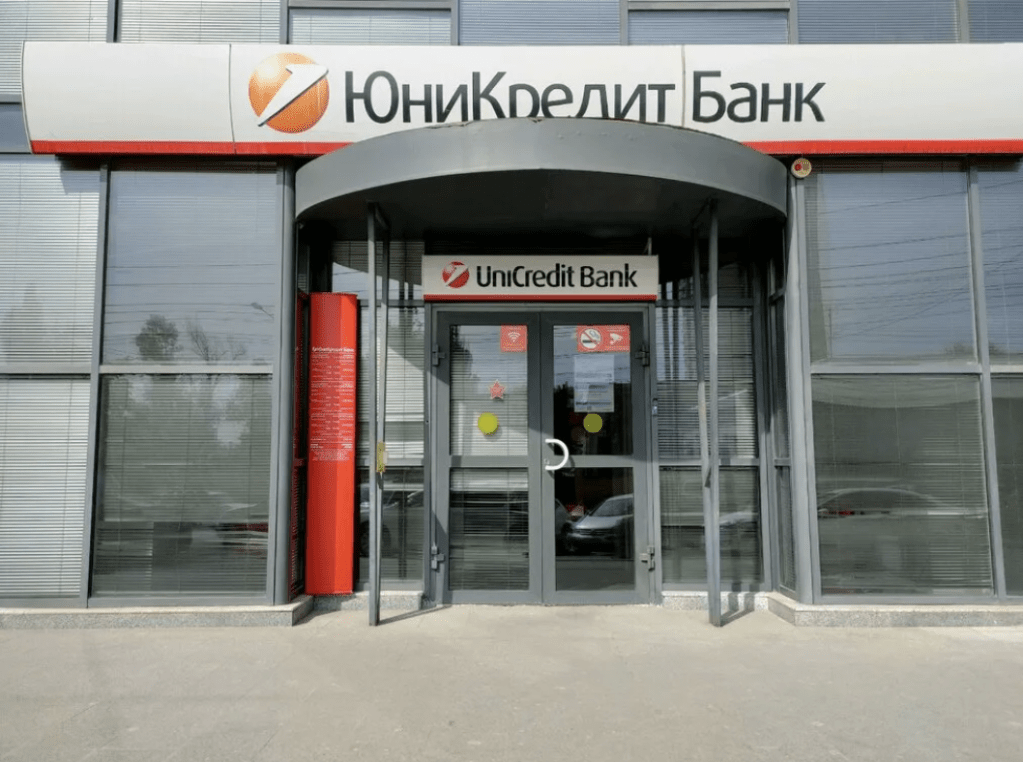
The Italian bank believes that the European Central Bank does not have the legal authority to restrict UniCredit’s business outside Europe. Legal experts believe that there is at least a partial chance of winning the dispute in court.
Italian UniCredit filed a lawsuit against the European Central Bank (ECB) on June 28, 2024. The Italian bank claims that the ECB violated the principle of “respect for private property” by issuing an order to the group to restrict business in Russia. This argument is given in the recently disclosed case materials on the website of the Court of Justice of the European Union.
UniCredit announced the lawsuit on July 1. At that time, the group disclosed that it was seeking a “final legal clarification” of the requirements established by the ECB to curtail the activities of the Russian bank Unicredit, controlled by UniCredit. Such an order was issued by the European regulator to the group in the spring of this year. Now the court has published additional details of the bank’s claims against the European regulator.
UniCredit claims that the Court should annul the decision of the European Central Bank of 22 April 2024 establishing prudential requirements to reduce further the risks connected with the business of UniCredit SpA in Russia (Decision No ECB-SSM-2024-ITUNI-17) in its entirety.
UniCredit Group also agrees to partial satisfaction of the claim, for example, to cancel the following:
- a ban on issuing new loans or renewing existing loans after June 1, 2024;
- a ban from the same date on attracting funds to current accounts and term deposits within Russia from any clients, with the exception of Russian subsidiaries of banks in Europe, Great Britain, Switzerland and the United States;
- from September 1, 2024, it is forbidden to make payments to Russian customers in euros, dollars, yuan, British pounds, Kazakh tenge, Swiss francs and Japanese yen, with the exception of customers from the “white list”.
In the lawsuit, UniCredit provides five arguments why the court should satisfy the group’s claims. According to the plaintiff, the ECB does not have the authority to make a decision ratione loci. It means that the alleged violations were committed outside the territorial jurisdiction of the ECB, which is limited to the territory of the European Union.
In addition, UniCredit alleges infringement of the principle of proportionality and infringement of the applicant’s right to property and freedom to conduct a business.
How strong is UniCredit’s position?
UniCredit’s arguments and claim were published by the European Court of Justice “without actual content”, so it is still difficult to assess the “strength” of each of them in the lawsuit.
From a formal point of view, the impracticability of the ECB’s requirements looks like a very weighty argument, but how feasible they were is a factual question. But UniCredit’s first thesis that the European regulator did not conduct a proper investigation before ordering business cuts in Russia could convince the European court of justice, which in April cancelled restrictive measures against two Russian oligarchs on this point of lack of sufficient investigations.
If, as a result, the ECB made a decision in conditions of unreliability or incompleteness of material factual circumstances, then this may be a sufficient basis for its cancellation by the European Court of Justice, believes Paul Jouvenet, legal expert and consultant.
According to him, the most promising arguments are those indicating that the ECB exceeded its authority and did not act in accordance with the established procedure when making its decision. The argument about the violation of the principle of proportionality is also significant.
However, a successful claim does not provide any special protection against sanctions risks. In this situation, the ECB does not act as a regulator supervising compliance with sanctions legislation, but as a prudential banking supervision body. Its task is to ensure the stability of the European banking system. Therefore, if UniCredit wins before the Court of Justice of the EU, there will be a reduction in the risks of violation of banking legislation rather than sanctions risks.
Orders to curtail business in Russia this spring were also received by the Austrian Raiffeisenbank International (RBI, owns the Russian Raiffeisenbank) and the Hungarian OTP Group, which controls OTP Bank in Russia (not from the ECB, but from the Hungarian regulator).
RBI’s top management reported that the group would begin to comply with the requirements of the European regulator from the third quarter of 2024 and would fulfill it by the end of 2026. The ECB’s order said that Raiffeisen should reduce the loan portfolio in Russia and the volume of payments by 60%.
In August, the RBI group disclosed what Raiffeisenbank’s business model would be, while announcing its intention to sell 60% of the bank’s shares, retaining a non-controlling stake in it. OTP Group reported that it had already radically reduced its business in Russia – in response to a request from the European regulator, it indicated that for the first quarter of 2024, the share of the Russian subsidiary in the Russian credit market is only 0.14% and its share in the entire OTP Group is 4.2%.
Other European banks do not challenge the ECB’s prescription due to reputational risks. Banks may fear political consequences from attempts to appeal the regulator’s instructions, especially in the context of sensitive relations with Russia and current sanctions. However, if UniCredit wins the lawsuit, it could set a precedent for other banks and lead to new lawsuits being filed against the ECB.
In a press release of July 25, UniCredit stated that it remains open to constructive dialogue with the ECB in the hope of resolution.
Our community already has nearly 135,000 readers!
Subscribe to our Telegram channel
Notify me when a new article is published:
Follow us on Telegram, Facebook and Twitter
© Copyright 2024 – Eurasia Business News. Article No. 1176
The principle of “good governance” was violated because the defendant failed to conduct a “proper investigation”, failed to state the reasons for its decision on the order of 22 April, and violated procedural requirements;
The principle of “proper administration” has been violated, as the obligations imputed to UniCredit are contradictory;
The ECB’s decision appears to be impossible to enforce ab origine. This argument boils down to the fact that the contested requirements of the ECB were initially (ab origine) unenforceable, explains Roman Kuzmin, adviser to the Pen & Paper Bar Association. “Any requirement of the regulator must have the property of enforceability, otherwise it will be illegal,” the lawyer says.
The “principle of proportionality, respect for the private property of UniCredit SpA and its freedom to conduct business activities” was violated;
 Eurasia Business News