
By Anthony Marcus, correspondent. Eurasia Business News, September 10, 2024. Article no.1221
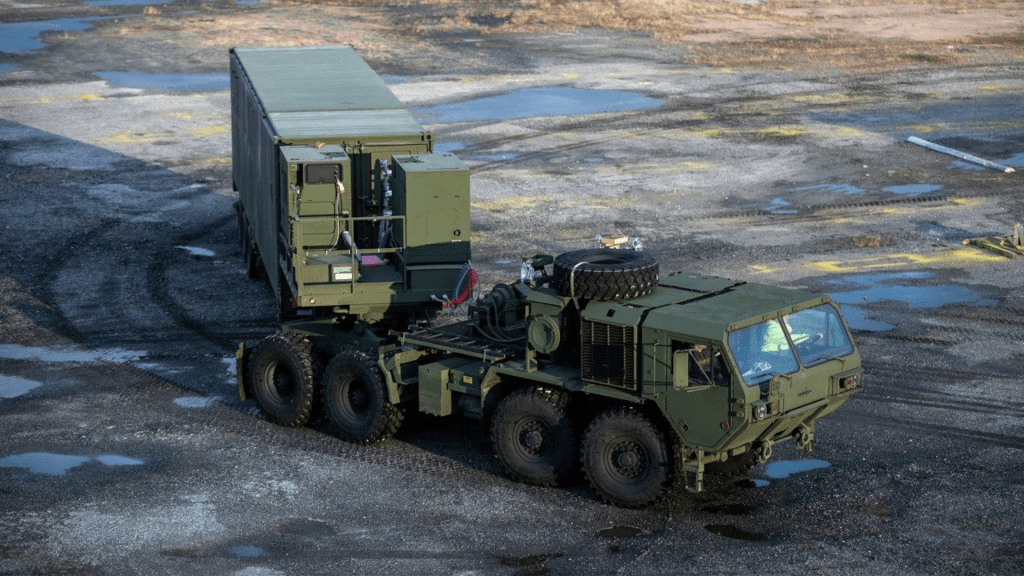
The United States is planning to deploy its new Typhon medium-range missile system in the Asia-Pacific region by the end of 2024. This move is aimed at enhancing deterrence against potential threats from China and North Korea.
A new location for the deployment of American Typhon ground-based medium-range missile systems has become known: this time they will be deployed in Japan. Previously, such weapons were banned under the Russian-American Treaty on the Elimination of Intermediate-Range and Shorter-Range Missiles (INF Treaty). After its collapse, the United States began to deploy the corresponding systems in various states of Europe and the Asia-Pacific region. The deployment of Typhon in Japan allows the United States to reach the territory of three countries at once – China, Russia and North Korea.
The plans of the Americans to deploy Typhon in Japan were reported by The Japan Times, citing a statement by the US Secretary of the Army (the highest civilian position in the Pentagon) Christine Wormuth. According to her, during a recent visit to Japan, she discussed with the country’s Defense Minister Minoru Kihara the prospects for involving the new American Multi Domain Task Force (MDTF) in exercises on Japanese territory.
The MDTF also includes American Typhon ground-based medium-range missile systems (also called Mid-Range Capability, MRC). Their appearance in Japan will be the second deployment of systems previously banned under the INF Treaty in Asia. The first took place in the spring in the Philippines, where they were involved in the American-Philippine exercises Salaknib 24. After that, however, the complexes did not return to the United States, but are still on Luzon (one of the islands of the Philippines). It is possible that further installations will be transferred directly to Japan.
The Typhon is the US Army’s first medium-range ground strike weapon since the end of the Cold War and the termination of the Russian-American INF Treaty in 2019. Its launcher is, in fact, a land-based version of the Mk41 shipborne vertical launcher. The Pentagon signed a contract with Lockheed Martin for the production of these complexes in November 2020, a little more than a year after the INF Treaty, which prohibited the creation of such systems, collapsed. According to this treaty, concluded in 1987 between the United States and the USSR, the parties were not supposed to test and deploy ground-based missiles with a range of 500 to 5.5 thousand km, as well as launchers for them.
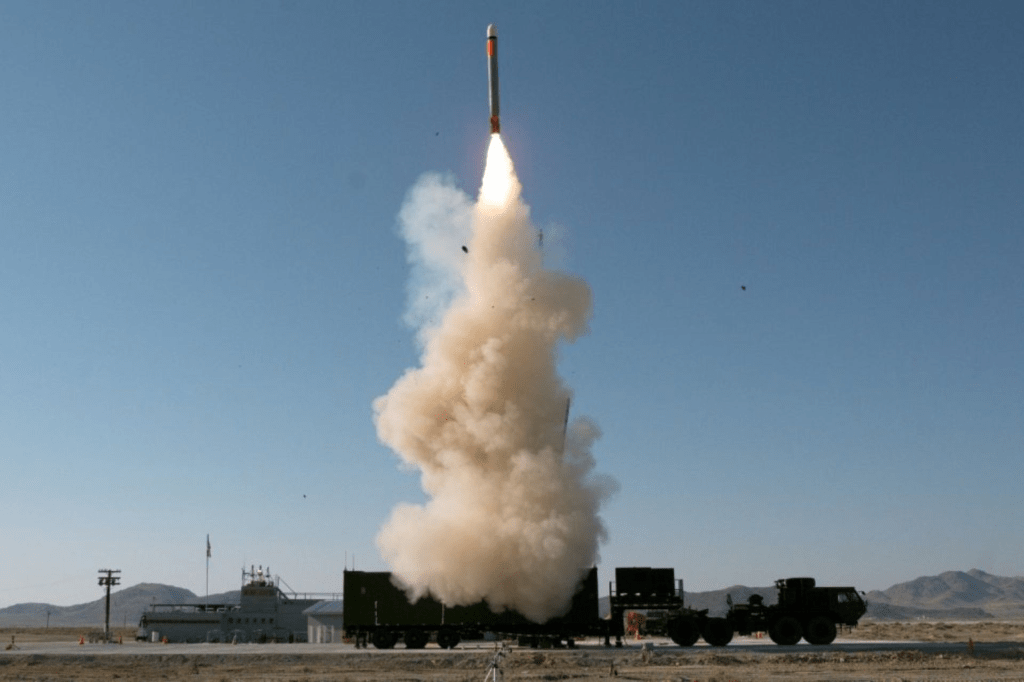
Typhon is capable of launching Tomahawk cruise missiles (range up to 1,8 thousand km) and Standard SM-6 multipurpose missiles (range up to 500 km in the current version, but in the future, it is expected to be more). It is assumed that in the future, Typhon batteries will become part of the MDTF strategic fire division. It will also include batteries of High Mobility Multiple Launch Rocket Systems (HIMARS) with new PrSM missiles (with a range of more than 500 km) and Dark Eagle hypersonic missiles (aka Long Range Hypersonic Weapon, LRHW, with a declared range of more than 2775 km). In addition to the medium-range missile division, the MDTF will also include specialists in intelligence, cyber weapons, electronic warfare and space operations.
In July of this year, it was revealed that from 2026, the United States will deploy ground-based intermediate-range and shorter-range missiles (SM-6, Tomahawk and Dark Eagle) in Germany (also part of the MDTF). In addition, the U.S. has twice brought the Mk70 modular container missile system (a Typhon-like missile system designed for the navy) to the Danish island of Bornholm, where it was used during the exercise.
Russian President Vladimir Putin warned that Russia would respond to the actions of the United States and European allies. In Moscow, judging by his comments, they are convinced that eventually previously banned systems will appear in Europe on a permanent basis. And then important Russian state and military command and control facilities, administrative and industrial centers and defense infrastructure will be within their reach.
If the United States implements such plans, Russia, according to Vladimir Putin, will consider itself free from the previously assumed unilateral moratorium on the deployment of intermediate-range and shorter-range strike weapons.
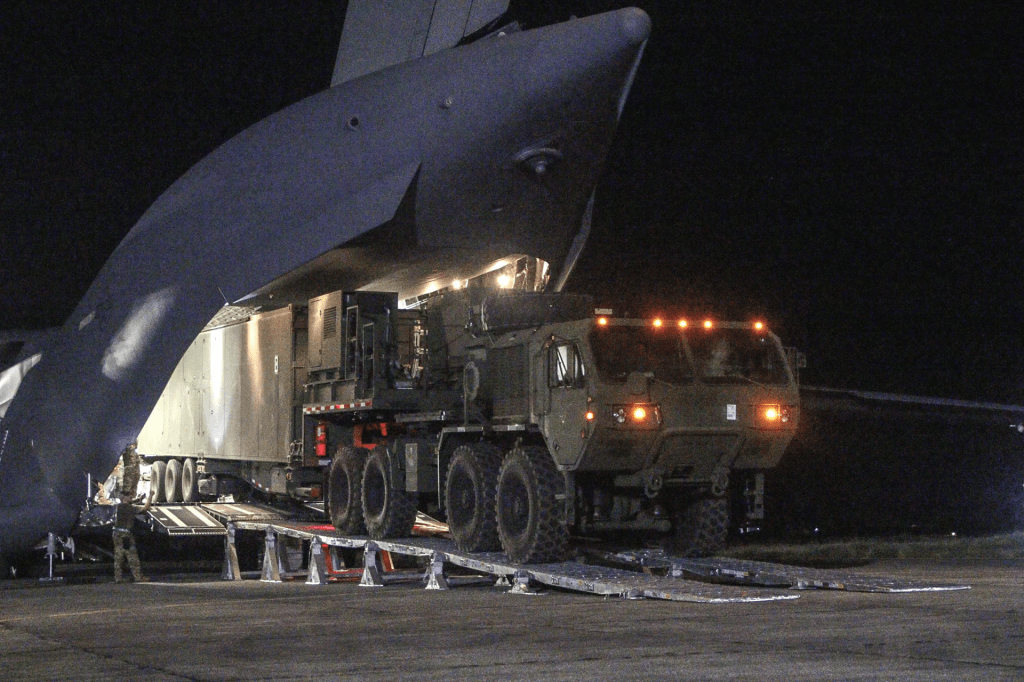
The Chinese authorities have not yet commented on US plans to deploy Typhon in Japan. When these complexes were brought to the Philippines, the Chinese Ministry of Defense described it as a “dangerous trend”, “a serious threat to the security of the countries of the region, causing significant damage to regional peace and stability.” In the case of Japan, China’s reaction can be assumed to be just as negative.
Read also : Gold : Build Your Wealth and Freedom
During Vladimir Putin’s state visit to China in May of this year, a joint statement was adopted, in which the parties for the first time announced their intention to jointly counteract US plans to deploy intermediate-range and shorter-range missiles in the Asia-Pacific and European regions.
The Japanese authorities do not comment on Christine Wormuth’s statement about the agreement reached with them on the deployment of Typhon. The Japan Times recalls that earlier in Tokyo denied the possibility of the appearance of relevant American complexes in the country, since the public, fearing countermeasures from China, was wary of this prospect. At the same time, the publication published a photo in which the Chief of Staff of the Command of the Japanese Ground Self-Defense Forces, Kazuo Sakai, who visited the United States in August, poses against the background of a Typhon (photo taken at the Lewis-McCord Joint Air Force and Army Base, Washington).
Japan is an attractive territory for the deployment of medium-range missiles, because from there this type of weapon can be used by Washington against three countries at once : China, Russia or North Korea.
There were already military drills in Denmark and the Philippines, and the deployment of relevant systems on the territory of Germany has been announced. Next in line is Japan.
Earlier in July, it was revealed that the United States plans to deploy long-range missiles in Germany starting in 2026, as part of its commitment to NATO and European defense.
Our community already has nearly 135,000 readers!
Subscribe to our Telegram channel
Follow us on Telegram, Facebook and Twitter
© Copyright 2024 – Eurasia Business News. Article no. 1221
 Eurasia Business News