
By Paul Jouvenet, legal advisor, essayist and consultant in international affairs. Eurasia Business News, October 23, 2024. Article no. 1269.
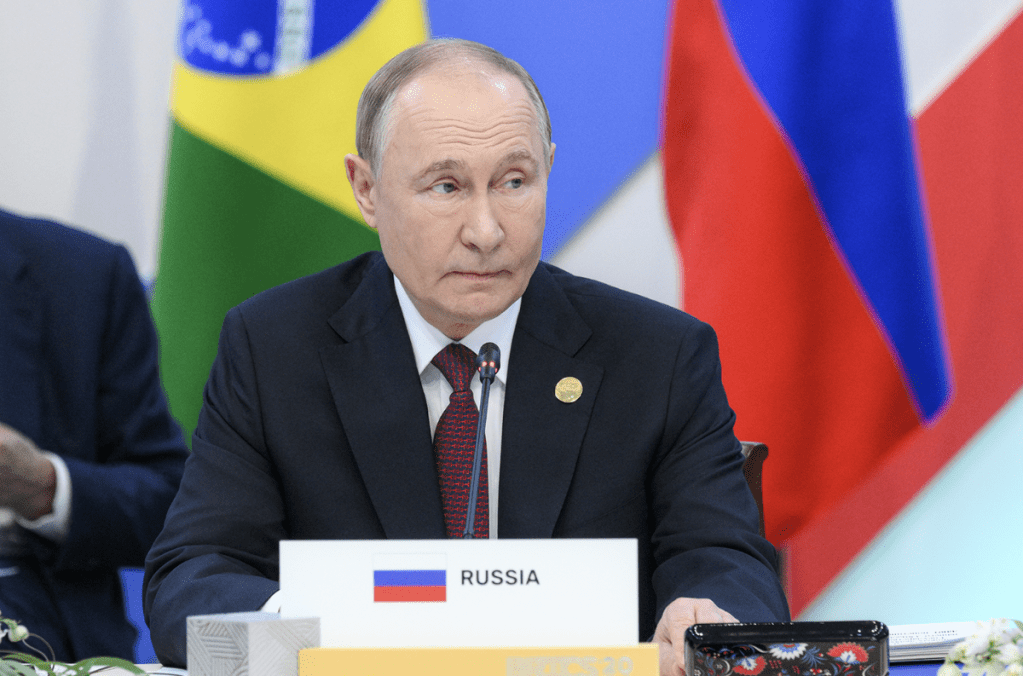
Russia proposes to open a BRICS grain exchange to form “fair and predictable” price indicators for this raw material, President Vladimir Putin said. He voiced this initiative at the 16th summit of the group, which is taking place in Kazan, Russia.
Such a move could reshape global agricultural trade dynamics.
Vladimir Putin noted that grain plays a special role in ensuring food security. In his opinion, the opening of the exchange will help protect national markets “from negative external interference, speculation and attempts to cause an artificial shortage of food products.”
“Over time, it would be possible to think about transforming the grain exchange into a full-fledged commodity exchange,” the Russian president stressed.
In March, Chairman of the Board of the Union of Grain Exporters Eduard Zernin at a meeting between Vladimir Putin and employees of the agro-industrial complex announced the initiative to create a BRICS grain exchange. The Russian President approved this idea and expressed the opinion that many countries of the association would be interested in it.
The primary objective is to create an inter-bloc marketplace that allows member countries to trade grain directly, potentially reducing reliance on Western-dominated pricing systems that currently set benchmark prices in markets like Chicago and Paris.
At the end of June, the head of the Ministry of Agriculture, Oksana Lut, said that the BRICS countries supported this proposal. Mr. Zernin assumes that the commodity exchange of the BRICS countries will consolidate 30-40% of the world supply of key grain crops on one trading platform.
The drought that occurred during the sowing period of winter wheat, and the lack of motivation among farmers to invest in additional investments in plant protection may cause a reduction in the wheat harvest in 2025. According to the preliminary forecast of Sovecon, the wheat harvest may be lower by almost 2% year-on-year and 9% from the average value for the last five years.
Strategic Implications
The establishment of a BRICS grain exchange is seen as a strategic move to challenge the existing global agricultural market structure dominated by Western economies. By creating an alternative trading platform, BRICS nations hope to gain greater control over grain pricing and enhance their collective bargaining power in international markets.
Potential Benefits
Market Stability: The exchange could provide more stable pricing mechanisms amidst global supply chain disruptions and rising food insecurity.
Strengthened Trade Relations: It could foster closer economic ties among member states, facilitating inter-regional trade and cooperation on agricultural issues.
Increased Production Capacity: With the expanded membership, BRICS countries now account for approximately 44% of global grain production, enhancing their potential influence over global grain markets.
By 2030, the BRICS+ could together account for 40% of global GDP and about 45% of the population, with 3.5 billion people. New memberships from 1 January 2024 will help to reach these numbers.
Our community already has nearly 140,000 readers!
Subscribe to our Telegram channel
Follow us on Telegram, Facebook and Twitter
© Copyright 2024 – Eurasia Business News. Article no. 1269.
 Eurasia Business News