
By Paul Jouvenet, legal advisor, essayist and consultant in international affairs. Eurasia Business News, November 6, 2024. Article no. 1288.
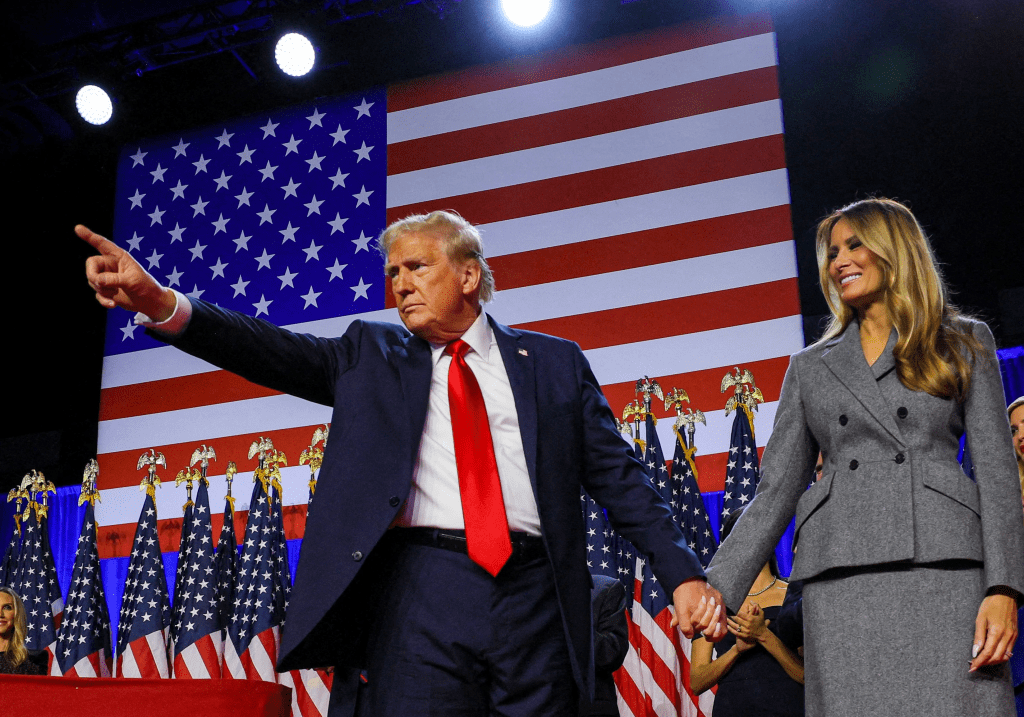
The second term for Donald Trump as the 47th president will significantly impact U.S.-China relations, primarily through a more aggressive trade and foreign policy approach. The landslide victory of Donald Trump at the 5th November elections will give him a large popular support and the U.S. Congress support to carry out an aggressive foreign policy against China.
Trade Policies
Increased Tariffs: Trump has indicated plans to implement universal baseline tariffs on most imported goods, which could include 60% tariffs on Chinese products. This would severely affect Chinese exporters, especially in consumer goods, and lead to higher costs for American consumers.
Revocation of Trade Status: Trump has proposed revoking China’s Most Favored Nation (MFN) status, allowing the U.S. to impose discriminatory tariffs on Chinese imports. This move could escalate tensions and lead to a significant downturn in U.S.-China trade relations.
Decoupling Economies: Trump’s policies may further decouple the U.S. and Chinese economies, intensifying the ongoing trade war initiated during his first term. This could disrupt supply chains and impact global markets.
For the entirety of 2024, U.S.-China trade in goods is projected to reach approximately $427.2 billion in imports from China and $147.8 billion in exports to China, resulting in a total trade volume of around $575 billion. This represents a decline of about 17% compared to 2023, primarily due to reduced exports and imports amid economic slowdowns and shifting supply chains
National Security and Espionage
Counter-Espionage Measures: Trump has vowed to expand efforts against Chinese espionage in the U.S., potentially reviving or enhancing initiatives like the China Initiative, which targeted Chinese researchers and companies. This could lead to increased scrutiny of Chinese nationals and businesses operating in the U.S.
Read also : Gold : Build Your Wealth and Freedom
Infrastructure Ownership Restrictions: His administration is expected to impose stricter regulations on Chinese ownership of critical infrastructure sectors, such as technology and energy, citing national security concerns.
Economic Stimulus in China
Chinese Response: In anticipation of heightened tensions and potential economic fallout from Trump’s policies, China may implement substantial stimulus measures to bolster its economy. Reports suggest that Beijing is preparing for significant fiscal interventions to mitigate impacts from expected U.S. tariffs.
Geopolitical Dynamics
Regional Security Concerns: Trump’s foreign policy could lead to increased military tensions in regions like Taiwan and the South China Sea. His administration’s stance might embolden aggressive postures from China while simultaneously straining U.S. alliances in Asia. On the other side, a firmer stance against China would be welcomed, as Beijing became more aggressive towards Taiwan under the Biden presidency.
Isolationism vs. Engagement: While Trump’s approach may reduce U.S. engagement with allies, it could also create opportunities for China to strengthen its influence globally, particularly if U.S. commitments wane under an isolationist agenda.
In summary, a Trump presidency should exacerbate existing tensions with China through aggressive trade policies, heightened security measures in Eastern Asia, and a further decoupling of the two economies. This scenario poses significant risks not only for bilateral relations but also for global economic stability.
Our community already has nearly 140,000 readers!
Subscribe to our Telegram channel
Follow us on Telegram, Facebook and Twitter
© Copyright 2024 – Eurasia Business News. Article no. 1288
 Eurasia Business News