
By Paul Jouvenet, essayist and consultant in international affairs. Eurasia Business News, February 18, 2025. Article no.1419.
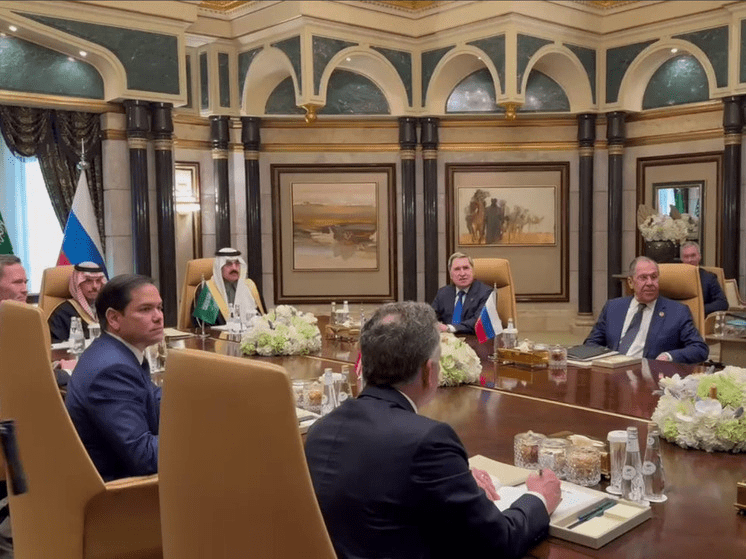
On February 18, high-level delegations from the U.S. and Russia convened in Riyadh, Saudi Arabia, for significant discussions aimed at improving bilateral relations and negotiating an end to the ongoing war in Ukraine. This meeting marks the first substantial dialogue between the two nations since the onset of the conflict nearly three years ago.
The U.S. President Donald Trump called the meeting of the US and Russian delegations in Riyadh “very good” and admitted that after it he became “much more confident” in reaching a deal on a settlement in Ukraine.
On February 18, the capital of Saudi Arabia, Riyadh, hosted the first round of negotiations between high-level delegations from Russia and the United States after President Donald Trump returned to power in the United States, the first meeting in three years. This format was frozen since February 2022 after the start of the Russian military operation in Ukraine. And now their resumption was facilitated by a phone conversation between the new U.S. President Donald Trump and Russian President Vladimir Putin on February 12.
On his behalf, Moscow’s interests were represented by his foreign policy aide Yuri Ushakov and Foreign Minister Sergei Lavrov, both experimented diplomats. They were joined by the director of the Russian Direct Investment Fund (RDIF) Kirill Dmitriev. Their counterparts were the U.S. Secretary of State Marco Rubio, U.S. National Security Adviser Mike Waltz and Special Envoy for the Middle East Settlement Stephen Witkoff.
In addition, in the footage distributed by the Russian Foreign Ministry, Deputy Head of the Foreign Policy Department of the Presidential Administration of the Russian Federation Dmitry Balakin and Minister-Counselor of the Russian Embassy in Canada Vladimir Proskuryakov were seen behind the backs of the leaders of the Russian delegation.
The long-awaited negotiations lasted more than four hours with a short break for lunch. Yuri Ushakov’s comments gave reason to lower the bar of expectations. Despite the fact that, according to him, “the delegations had a serious conversation,” which went “well,” it is still difficult to say that “the United States and Russia are getting closer.” The meeting between Putin and Trump, expected by the Western media in February, probably will not take place. At least, Ushakov said bluntly that it is “unlikely” to take place next week. At the same time, the parties will work to create the necessary conditions for such a summit: Russia and the United States agreed to “take into account each other’s interests.”
The fact that the U.S. and Russian negotiators in Riyadh did not set a date for the meeting between the two presidents was also confirmed by Waltz. But he still talks about his boss Trump’s intention to act “very quickly” as part of the discussion on Ukraine. And they will include, according to him, a discussion of territorial issues and security guarantees. In addition, Waltz believes that EU representatives will have to be at the negotiating table at some point.
And the first step for a detailed dialogue between Russia and the United States should be the creation of a high-level negotiating group on Ukraine, where, as Ushakov later said, the Americans appointed Trump’s representative for Ukraine, Keith Kellogg (but at the same time, there is information that he will be responsible for contacts with Kiev and the EU). Soon, the Russians should also announce their choice.
Sergey Lavrov assured at his press conference that Russians and Americans “not only listened, but also heard each other.” The most urgent agreement that was reached was the decision to appoint new ambassadors to Washington and Moscow as soon as possible (the head of the North America Department of the Russian Foreign Ministry, Alexander Darchiev, would become the new Russian envoy). In addition, the countries agreed to restore the number of embassy staff in Moscow and Washington, which has significantly decreased in recent years due to mutual expulsions of diplomats.
“The conversation was, I think, very useful. We not only listened, but also heard each other. And I have reason to believe that the American side has begun to better understand our position, which we have once again set out in detail, using specific examples, on the basis of repeated speeches by President [of the Russian Federation Vladimir] Putin,” said Sergey Lavrov.
U.S. State Secretary Marco Rubio spoke about the creation of a consultative mechanism to eliminate factors “causing irritation in our bilateral relations,” which should help normalize the work of embassies. The Secretary of State acknowledged that “one phone call and one meeting is not enough to establish lasting peace.” “Today we have taken an important step forward,” he added a bit of optimism.
Dmitriev, following the talks in Riyadh, also urged not to talk about “compromises” yet. According to him, in Riyadh, possible economic cooperation between the countries in the future was also discussed (for which Dmitriev, in fact, was included in the delegation), as well as world energy prices.
Among other things, the Americans at the talks proposed to introduce a moratorium on attacks on energy facilities, to which the Russians replied that Moscow does not attack civilian targets. Later, the Russian Foreign Ministry reported that Moscow and Washington agreed “to establish a dialogue to agree on ways to resume cooperation” in the economy, energy and space. And communication channels will also be restored “taking into account the special responsibility of nuclear powers.”
In addition, Lavrov managed to hold short talks with Saudi Crown Prince Mohammed bin Salman Al Saud. But the President of Ukraine Volodymyr Zelensky, who was at the time of the negotiations between Russia and the United States in Turkey for talks with its President Recep Tayyip Erdogan, postponed his visit there after reports on the results of the conversation in Riyadh (officially – until March 10).
In addition, after the end of the talks in Riyadh, Fox News, a TV channel close to Trump, citing sources, released a report saying that Russia and the United States were allegedly promoting a three-stage plan for Ukraine together. It envisages first a ceasefire, then elections in Ukraine, and only then the signing of a final agreement. Sergey Lavrov, commenting on this publication, denied that he had seen such a plan at all: “I asked Rubio and Waltz today what this means. They said it was a fake.”
The results of the talks in Riyadh and the conclusion of an agreement on working groups and the restoration of the normal functioning of diplomatic missions in Washington and Moscow are a good signal for bilateral relations, which in the past three years have reached the lowest level since the Cold War. At the same time, there is still a chance of torpedoing the Russian-American agreement by Ukraine and the EU, for the latter meeting even part of Russia’s demands will mean a strategic defeat.
There is no need to talk about the failure of the negotiations due to the fact that the parties did not conclude any agreements – it would be strange to expect immediate progress from the meeting in Riyadh. So far, the parties have simply presented each other with their points of view on many aspects, including the Ukrainian conflict.
Read also : Gold : Build Your Wealth and Freedom
At the same time, it is worth taking into account the discrepancies in the negotiations, the U.S. would like to quickly agree on a ceasefire and freezing the conflict. Moscow fears that if the conflict is frozen, it will be resumed later with renewed vigor. So it is not worth expecting Russia to agree to such a scenario without a complete solution to the political aspects related to the conflict in Ukraine, such as security guarantees for Moscow.
Russia had asked in December 2021 for a bilateral agreement over security guarantees in Europe. Moscow was feeling threatened as the U.S. was building the military capacities of Ukraine, after using Romania since 2015 and Poland since 2018 for anti-missile defense systems Aegis Ashore. The failure of these negotiations led to the tragic outbreak of the war in Ukraine on February 24, 2022.
Our community already has nearly 145,000 readers!
Subscribe to our Telegram channel
Follow us on Telegram, Facebook and Twitter
© Copyright 2025 – Eurasia Business News. Article no. 1418.
 Eurasia Business News