
By Swann Collins, investor, writer and consultant in international affairs – Eurasia Business News. April 6, 2025 – Update on October 16, 2025. Article no 1474.
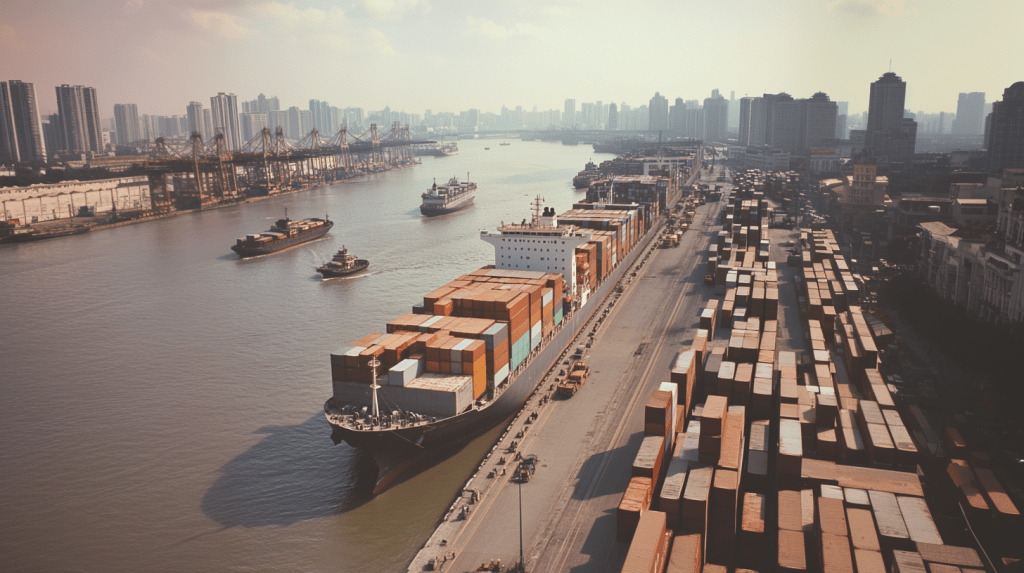
The history of tariffs in global trade from 1944 to 2025 reflects significant shifts in international economic policies, from post-war liberalization to recent protectionist measures. Tariffs used to be a major source of government revenue, until 1944 when Allies shaped a new economic world order, to rebuild after World War II.
Post-WWII Era (1944-1970s)
Bretton Woods System: Established in 1944, the Bretton Woods System primarily focused on stabilizing international finance and trade by creating a framework for fixed exchange rates and promoting international cooperation. While it did lay the groundwork for a more stable international economic environment, its direct impact on reducing tariffs was indirect rather than explicit.

General Agreement on Tariffs and Trade (GATT): Formed in 1947, GATT facilitated tariff reductions through rounds of negotiations. The first GATT round in 1947 and subsequent rounds like the Kennedy Round (1964-1967) and Tokyo Round (1973-1979) significantly lowered tariffs worldwide.
At the start of GATT in 1947, average U.S. tariff rates were approximately 22%, contrary to the often-cited but inaccurate figure of 40%.
Kennedy Round (1964-1967): Focused on reducing industrial tariffs by about 35%.
Tokyo Round (1973-1979): Addressed non-tariff barriers alongside further tariff reductions.
Trade Liberalization (1980s-1990s)
Uruguay Round (1986-1994): This GATT round led to the creation of the World Trade Organization (WTO) in 1995, further reducing tariffs and establishing a framework for global trade.
Read also : When Argentina was a Wealthy Nation
Neoliberal Policies: The 1980s saw a rise in neoliberal economic policies, emphasizing free trade and reduced government intervention, which led to lower tariffs and increased globalization.
Eight rounds of multilateral negotiations under GATT, from 1948 to 1994, progressively lowered tariffs. By the end of this period, average U.S. tariffs had fallen to under 5%.
Modern Era (2000s-2020s)
Regional Trade Agreements: The 2000s saw an increase in bilateral and regional trade agreements, such as NAFTA (now USMCA) and the EU’s single market, which reduced tariffs among member countries.
Read also : TAX MANAGEMENT STRATEGIES FOR DIGITAL NOMADS
Protectionist Policies: In recent years, particularly under the first Trump administration (2016-2020), there has been a shift towards protectionism, with increased tariffs on certain imports, notably from China and other countries.
Recent Developments (2025)
Trump Tariffs: On April 2, 2025, President Trump announced sweeping tariffs, including a universal 10% tariff on all imported goods and higher country-specific tariffs for nations with significant trade surpluses with the U.S.
Trump’s aggressive tariff policies unleased on April 2 have led to significant declines in the stock market, with the S&P 500 experiencing its largest weekly drop since March 2020.
Tariffs cover a wide range of imports, including a 125% tariff on many Chinese goods, 25% tariffs on steel and aluminum imports, and 25% tariffs on most imports from Mexico and Canada (with some exceptions and phased exemptions under USMCA).
As of October 2025, President Donald Trump has escalated tariffs on China significantly amid trade tensions. Currently, the U.S. imposes approximately 30-40% tariffs on many Chinese goods, with steel facing 50% and consumer products around 7.5%. Trump announced on October 10, 2025, plans to add an additional 100% tariff on top of existing ones, effective November 1 or sooner, potentially bringing some tariffs as high as 130-145%. These tariffs target a broad range of Chinese imports as retaliation for China’s export controls on critical rare earth elements, vital for electronics, defense, and automotive sectors.
The U.S. has significant trade deficits with many countries, which Trump views as a threat to national economic security. Tariffs are seen as a tool to address these deficits by reducing imports and encouraging more balanced trade relationships
Global Impact: These tariffs are expected to have a significant impact on the global economy, potentially fueling inflation and encouraging countries to seek alternatives to U.S. trade partnerships.
Read also : Gold : Build Your Wealth and Freedom
Overall, the period from 1944 to 2025 has seen a transition from post-war trade liberalization to recent protectionist measures, reflecting ongoing debates about the role of tariffs in global trade.
Our community already has nearly 170,000 readers!
Subscribe to our Telegram channel
Follow us on Telegram, Facebook and Twitter
© Copyright 2025 – Eurasia Business News. Article no. 1474.
 Eurasia Business News