
By Anthony Marcus for Eurasia Business News, April 26, 2025. Article no.1501.
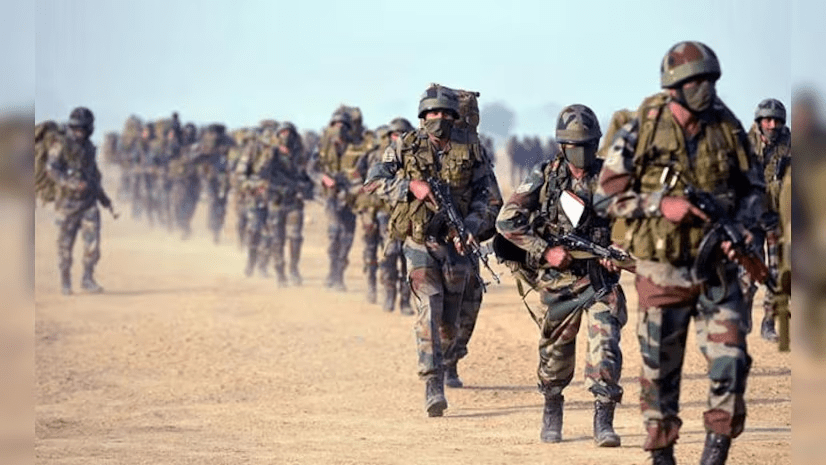
Tensions between India and Pakistan have sharply escalated following a deadly militant attack in Indian-administered Kashmir that killed 26 people, mostly Indian tourists, near the resort town of Pahalgam on April 22. India has described the incident as a terrorist attack with cross-border links and blamed Pakistan for backing the militants, specifically pointing to a group called Kashmir Resistance, which India alleges is a front for a Pakistani military-backed militant organization. Eyewitnesses reported that attackers questioned victims about their religion before shooting, indicating a targeted massacre.
In response, Indian Prime Minister Narendra Modi vowed to identify and punish those responsible, stating India would pursue terrorists “to the ends of the earth.”
India took punitive actions against Pakistan, including expelling diplomats, revoking visas, closing a border crossing, and suspending the Indus Waters Treaty of 1960, a crucial water-sharing agreement. India’s Foreign Secretary emphasized suspending the treaty until Pakistan permanently renounces support for cross-border terrorism.
Pakistan has denied any involvement in the attack, with Deputy Prime Minister and Foreign Minister Ishaq Dar calling India’s accusations a “blame game” and demanding evidence. Pakistan’s National Security Committee responded by closing its airspace to Indian aircraft, suspending trade with India, and expelling Indian diplomats. Pakistan’s Prime Minister warned that any Indian attempt to restrict water flow would be considered an “act of war,” underscoring the critical importance of the water treaty to Pakistan.
Read also : Gold : Build Your Wealth and Freedom
Amid these developments, there have been brief exchanges of gunfire between Indian and Pakistani troops along the Line of Control (LoC) in Kashmir, although no casualties have been reported. Both sides have accused each other of initiating these skirmishes, raising fears of further military escalation between the two nuclear-armed neighbors.
The attack and subsequent diplomatic and military responses have heightened the risk of a larger conflict in the region, with both countries on high alert and rhetoric intensifying. Indian security forces continue operations to track down the attackers, and Pakistan accuses India of engaging in “water warfare” and low-intensity conflict following the suspension of the water treaty.
The Kashmir terror attack has triggered a serious deterioration in India-Pakistan relations, involving diplomatic downgrades, trade suspensions, military skirmishes, and heightened fears of escalation in a historically volatile region.
India and Pakistan are both nuclear-armed countries with significant arsenals and distinct nuclear doctrines. India became a nuclear power in 1974 and currently has approximately 172 nuclear warheads as of early 2024, with a developing nuclear triad including aircraft, land-based missiles, and nuclear-powered ballistic missile submarines. India traditionally maintains a No First Use (NFU) policy, pledging not to use nuclear weapons first, though it has reconsidered aspects of this stance recently.
Our community already has nearly 150,000 readers!
Subscribe to our Telegram channel
Follow us on Telegram, Facebook and Twitter
© Copyright 2025 – Eurasia Business News. Article no. 1501.
 Eurasia Business News