
By William Miller, for Eurasia Business News, June 11, 2025. Article no. 1553.
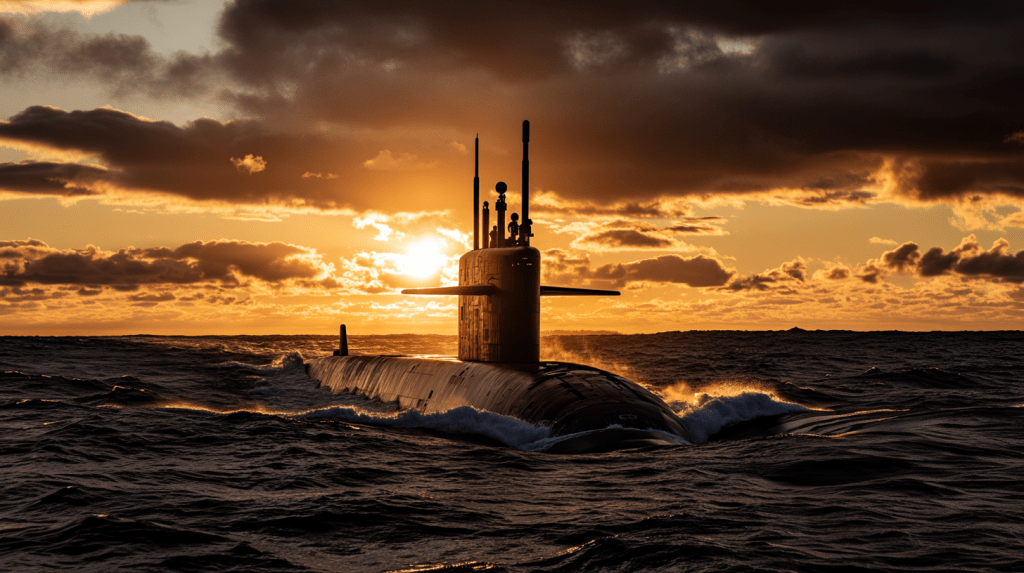
Poland and the Baltic states are actively accelerating efforts to acquire new submarines and attack boats to enhance their naval capabilities and deter Russian influence in the Baltic Sea region.
Poland’s Orka Submarine Program
Poland plans to order between three and four new submarines by the end of 2025 under the Orka program, aiming to replace its aging Soviet-era Kilo-class submarine, ORP Orzel, which no longer meets modern naval warfare requirements.
The Orka program envisions multipurpose, cruise-missile-capable submarines with air-independent propulsion, designed to strengthen Poland’s deterrence and maritime security in the Baltic Sea.
Eleven companies participated in market consultations, including France’s Naval Group, Germany’s ThyssenKrupp Marine Systems, Italy’s Fincantieri, Sweden’s Saab, Spain’s Navantia, South Korea’s Hanwha Ocean and Hyundai, and the UK’s Babcock.
The Polish Ministry of Defense has shortlisted offers from Germany, Sweden, and Italy as the highest scored, but talks with other governments, including South Korea, continue.
South Korea’s Hanwha Ocean has proposed delivering three next-generation KSS-III Batch-II submarines, emphasizing technology transfer, local industrial involvement, and long-term operational independence for Poland.
Despite repeated delays over the past decades, the Polish government has reiterated its commitment to signing the submarine contract by late 2025, recognizing the urgent need to modernize its submarine fleet for national security.
Baltic States’ Naval Enhancements
The Baltic States, specifically Lithuania and Latvia, are significantly enhancing their naval capabilities by procuring advanced multipurpose attack boats from the Finnish shipbuilder Marine Alutech under the Common Future Multipurpose Attack Craft (CFMAC) program. Lithuania will acquire two Watercat M18 fast multirole attack crafts, each equipped with SPIKE NLOS missile launchers capable of engaging targets up to 32 km away, and remote-operated heavy machine guns for close defense. These vessels are designed for rapid response and coastal defense, particularly suited to the shallow, complex waters of the Baltic Sea, including the Gulf of Finland and the Curonian Lagoon.
The Watercat M18 boats are about 20 meters long, powered by two 660 kW Scania diesel engines driving waterjets, allowing speeds up to 35 knots and a range of approximately 200 nautical miles. Their shallow draft enables operations in littoral and inland coastal waters where larger ships cannot maneuver effectively. This makes them ideal for patrol, combat support, troop transport, amphibious landings, evacuations, minelaying, and reconnaissance missions.
This procurement, valued at around €22 million for Lithuania, represents a strategic step in strengthening regional defense cooperation among Baltic states and Finland. It enhances the Baltic naval forces’ ability to respond quickly to asymmetric threats, including small fast boats and drones, thereby improving maritime security in a region facing increasing geopolitical tensions. The deal also supports local industries and establishes long-term supply chains in Lithuania and Latvia.
Strategic Importance
The Baltic Sea’s shallow and complex maritime environment demands specialized vessels for effective surveillance, deterrence, and protection of critical infrastructure such as LNG terminals and offshore wind farms.
The modernization of submarine and attack boat fleets is crucial for regional security, NATO interoperability, and countering Russian naval threats.
Our community already has nearly 150,000 readers!
Subscribe to our Telegram channel
Follow us on Telegram, Facebook and Twitter
© Copyright 2025 – Eurasia Business News. Article no. 1553.
 Eurasia Business News