
By Alexander Miller, consultant in energy markets. Eurasia Business News, July 22, 2025. Article n°1649.
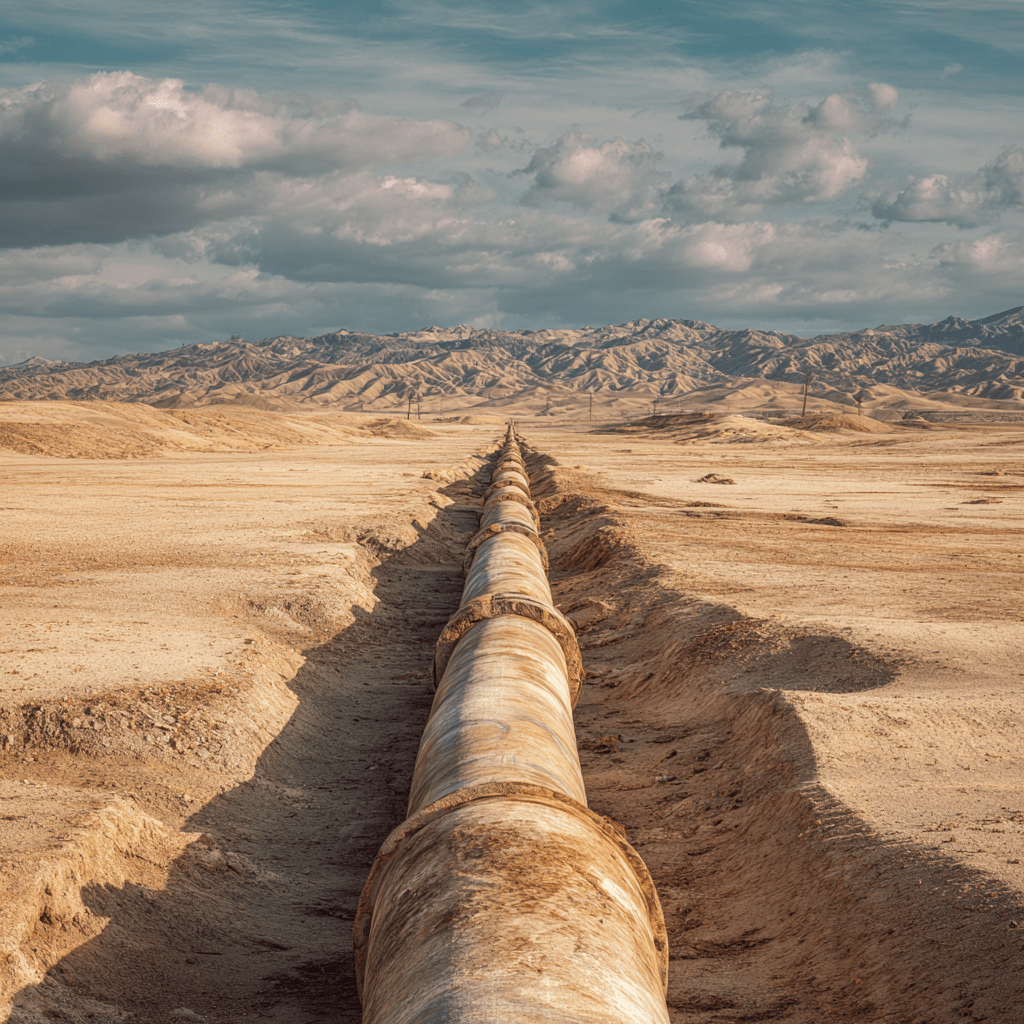
Turkey has submitted a draft proposal to Iraq seeking to renew and expand their existing energy agreement, aiming to broaden cooperation beyond oil to include gas, petrochemicals, electricity production, and infrastructure. This proposal comes as Turkey announced it will terminate the nearly 52-year-old Iraq-Turkey Crude Oil Pipeline Agreement, effective July 27, 2026.
The current pipeline agreement, which dates back to 1973 and was renewed multiple times, governs the Kirkuk-Ceyhan oil pipeline, capable of transferring up to 1.5–1.6 million barrels per day but has been inactive since 2023 due to disputes including a $1.5 billion arbitration ruling against Turkey for unauthorized Iraqi oil exports. Turkey contests this ruling and is pushing for a new, more modern framework that better reflects current regional energy dynamics.
Iraq’s oil ministry is reviewing Turkey’s draft proposal and negotiating to reach an agreement that benefits both nations. Discussions include expanding joint projects in crude oil and natural gas, developing hydrocarbon fields, petrochemical and refinery investments, electricity production and transmission, and enhanced trade in energy sectors.
A senior Turkish official emphasized the pipeline’s strategic importance, highlighting Turkey’s significant investments in its maintenance and its potential integration with the “Development Road” initiative, a transport corridor linking Basrah in Iraq to Turkey and Europe. Both countries seek a revamped partnership that revives the pipeline and boosts broader energy collaboration beyond the old agreement’s scope.
Read also : Turkish companies to begin offshore oil and natural gas exploration off the coast of Pakistan
Turkey is ending the longstanding pipeline agreement in July 2026 but is actively pursuing a new, expanded energy cooperation deal with Iraq covering oil, gas, petrochemicals, and electricity to strengthen bilateral ties and regional energy infrastructure.
Read also : Gold : Build Your Wealth and Freedom
Turkey, Syria, and Iraq are increasingly positioning themselves as regional energy powers through expanding cooperation and infrastructure development. This reflects a reconfiguration of power and partnership in the Middle East, where energy is once again the currency of diplomacy, influence, and recovery.
A memorandum of understanding (MoU) has been signed in Baku by Azerbaijan’s Economy Minister and Syrian Energy Minister Mohammed al-Bashir, on July 12. The agreement outlines the export of approximately 2 billion cubic meters (bcm) of natural gas annually from Azerbaijan to Syria. The gas will transit through Turkey.
Our community already has nearly 150,000 readers!
Subscribe to our Telegram channel
Follow us on Telegram, Facebook and Twitter
© Copyright 2025 – Eurasia Business News. Article no. 1649.
 Eurasia Business News