
By John Meyer, consultant in financial affairs – Eurasia Business News, August 15, 2025. Article no. 1711
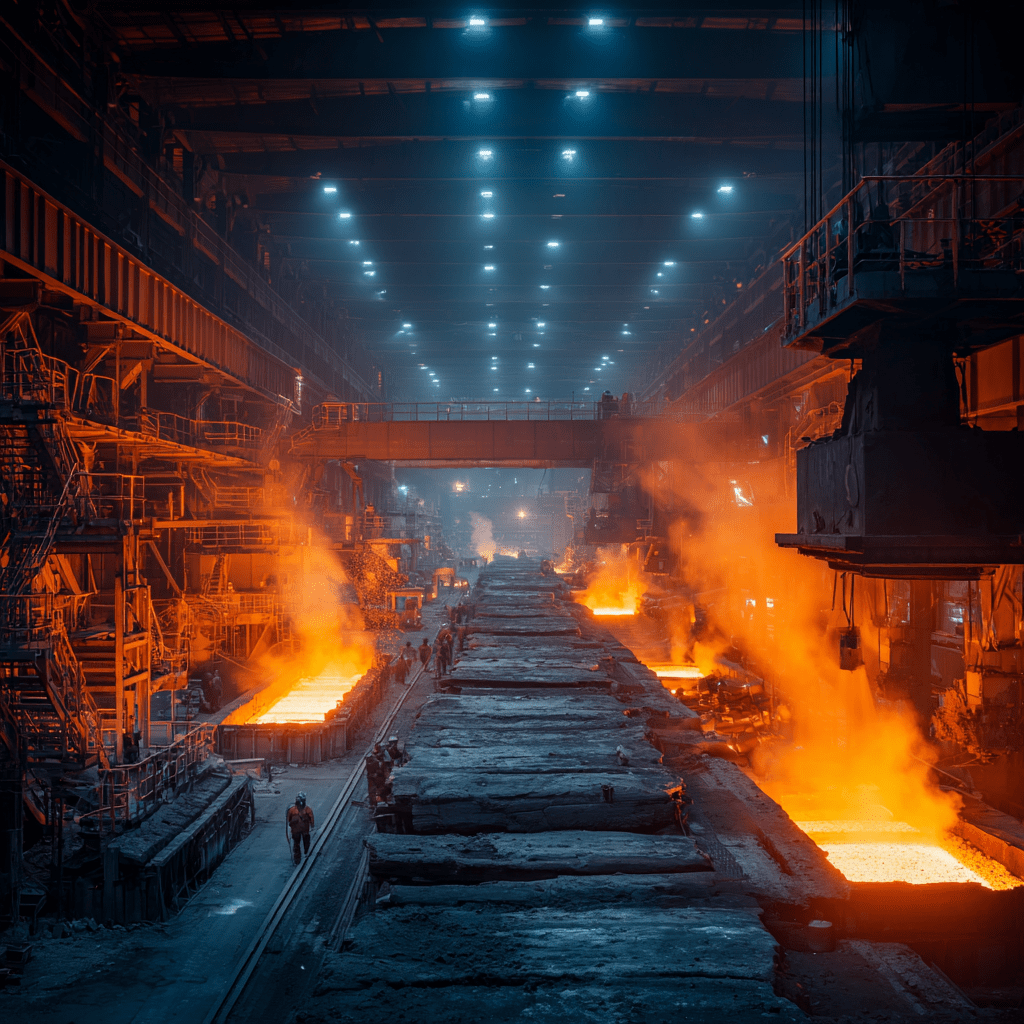
China’s industrial production grew in July by 5.7% year-on-year, marking a slowdown from June’s 6.8% increase and falling short of expectations which had anticipated about 5.9% growth. This represents the softest monthly expansion since November 2024. The slowdown was influenced by capacity curbs due to unusually high temperatures and heavy rainfall in some regions.
Manufacturing growth moderated to 6.2% from 7.4% in June, and mining output slowed to 5.0% from 6.1%. Meanwhile, electricity, heat, gas, and water production growth accelerated slightly. Despite the slowdown, 35 of 41 major manufacturing industries still recorded growth, including sectors such as automotive, computers and communications, railway and shipbuilding, and chemical products.
On a monthly basis, industrial output grew by a modest 0.38%. For the first seven months of 2025, industrial production rose 6.3% compared to the previous year.
The slowdown coincides with challenges including high temperatures, severe weather, ongoing trade tensions with the U.S., a weak property market, and government measures to reduce factory overcapacity in certain industries. These factors have contributed to a broad economic slowdown seen in factory output, retail sales, and investment growth in China.
Read also : Gold : Build Your Wealth and Freedom
The uncertainty of foreign trade conditions in relations with the United States restrained new orders, investments, and production plans. In March-May, a “trade war” initiated by the U.S. president Trump took place between America and China, which was supposed to lead to an increase in duties by 145% on Chinese goods and by 125% on American goods. According to the May truce extended in mid-August, the United States will keep tariffs at 30%, and China – 10%. This is good news, but there is no agreement yet, despite the overall export growth of 7%, uncertainty remains, and in July the contradictions between China and the EU escalated.
Overall, while industrial production is still growing, the rate of growth is notably decelerating, signaling caution about China’s economic momentum going into the second half of 2025. Policymakers may need to consider stimulus measures to support industrial activity and domestic demand amid these headwinds.
Our community already has nearly 150,000 readers!
Subscribe to our Telegram channel
Follow us on Telegram, Facebook and Twitter
© Copyright 2025 – Eurasia Business News. Article no. 1711
 Eurasia Business News