
By Anthony Marcus for Eurasia Business News, August 24, 2025. Article n°1734
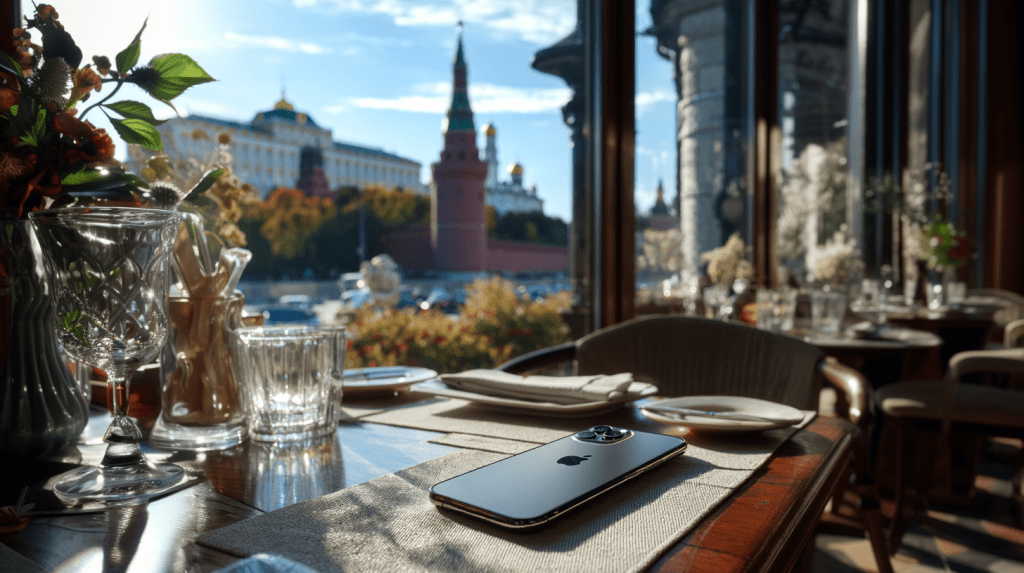
Russia has launched a new messaging application called Max, developed by the state-controlled VK company, as a replacement for WhatsApp and Telegram.
The Russian government has mandated that Max must be pre-installed on all smartphones and tablets sold in the country starting September 1, 2025.
This initiative is part of a broader move to exert greater control over the digital communications of Russian citizens, especially in light of tensions with the West and recent restrictions on calls via WhatsApp and Telegram.
Max was introduced in March 2025 and has gained about 18 million downloads, even while parts of it remain in beta testing.
The app functions not only as a messenger but is being developed into a “superapp” similar to China’s WeChat, allowing messaging, audio/video calls, payments, and integration with Russian government services like Gosuslugi (digital government platform).
Registration requires a valid Russian or Belarusian mobile phone number; virtual or substitute numbers are not supported.
Government Position & Criticism
The government claims Max is more secure and requests fewer user permissions than its Western competitors, though critics worry it enables expanded state surveillance.
The move to promote Max follows legislative and technical efforts to reduce dependence on foreign platforms and increase control over domestic internet usage, including restrictions or bans on Meta’s Facebook, Instagram, and now limitations on WhatsApp and Telegram.
Background
Max was developed by VK, a major Russian tech company under state control, currently aligned closely with the Kremlin. Its prior product, VK Messenger, will be replaced by Max. The rollout reflects Russia’s broader push for “digital sovereignty,” which includes mandating domestic app stores and state TV apps on devices. Many fears that Max will be used to social control like in China with WeChat.
Privacy Concerns
Max is widely seen as a tool for increased government surveillance on Russian citizens. Unlike WhatsApp and Telegram, which offer end-to-end encryption protecting user data from third-party access, Max does not provide comparable strong encryption safeguards. This raises fears that user communications are more exposed to government monitoring and control.
Max app wants to have access to everything: it requests access to geolocation, contacts, files, camera, microphone, Bluetooth, notifications, biometrics. The application also collects information about age, gender, phone, e-mail, social network identifiers, and also records all events in the application: registration, login, purchases, use of mini-applications, advertising activity.
Experts and rights groups warn that Max will enable enhanced Kremlin surveillance over Russian citizens’ digital communications, given its close ties to the state and integration with various government services.
Despite government claims that Max requests fewer permissions than Western alternatives and is safer, critics remain skeptical, viewing it as part of Moscow’s broader strategy to tighten control over internet and social media usage inside Russia.
The app’s mandatory pre-installation and close integration with state digital platforms (including government services and a digital marketplace) create a centralized system that can facilitate monitoring and data collection.
Broken communication with family and friends
The Max app, mandated by the Russian government to be pre-installed on all smartphones and tablets sold within Russia, is not available for Russians living abroad. Registration requires a valid Russian or Belarusian mobile phone number, which limits the app’s accessibility outside Russian territory. This situation essentially means Russians abroad cannot use Max to maintain communications with family and friends in Russia.
As a result, Russians living abroad face a communication barrier because they are cut off from the new mainstream domestic messaging platform inside Russia. With WhatsApp and Telegram increasingly restricted or limited in Russia, alternative communication channels with those inside the country have become scarce.
Our community already has 155,000 readers, joins us !
Subscribe to our Telegram channel
 Eurasia Business News