
By John Meyer, consultant in financial affairs – Eurasia Business News, September 8, 2025. Article no. 1773
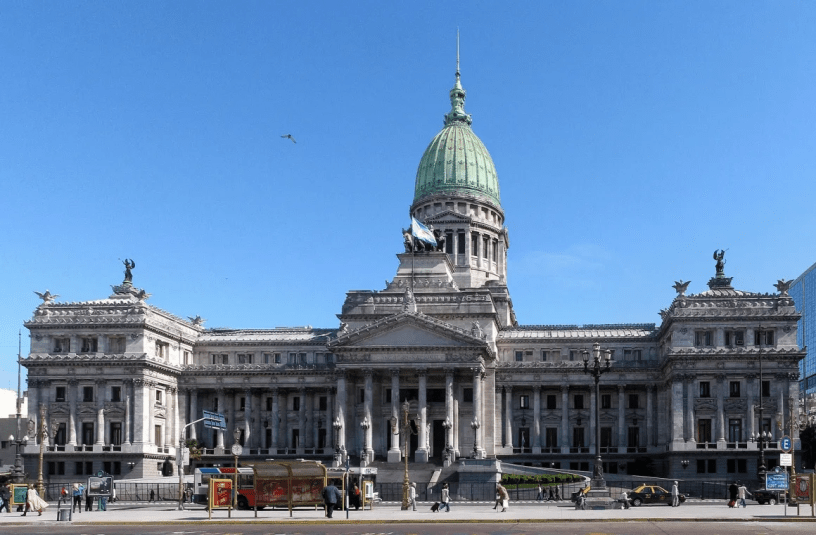
Argentina’s markets tumbled on September 8, 2025, following a heavy defeat for President Javier Milei’s party in the crucial Buenos Aires provincial election. Milei’s libertarian party, La Libertad Avanza, secured only about 33% of the vote, losing by a landslide to the Peronist opposition, led by Axel Kicillof and former President Cristina Fernández de Kirchner, who won nearly 47%.
This defeat is seen as a major blow to Milei’s reform agenda amid rising political challenges, including a bribery scandal involving Milei’s sister, which has weakened his political standing. The election loss raised concerns about the stability of Milei’s economic plans and increased uncertainty ahead of the upcoming national midterm elections in October. As a result, Argentina’s stock and bond markets fell sharply, reflecting investor anxiety about the government’s ability to maintain economic discipline and implement reforms.
Read also : Gold : Build Your Wealth and Freedom
Argentina’s GDP showed strong growth in the last two quarters leading up to September 2025. In Q2 2025, the economy grew by an impressive 7.6%, driven by rebounds in commerce, construction, manufacturing, and agriculture. Private investment surged 22.7%, construction activity increased by 8.8%, and private consumption rose 7.2%. Imports surged by 25.2% while exports increased by 3.7%.
Read also : When Argentina was a Wealthy Nation
Inflation remains high but has eased significantly compared to previous years, with annualized rates between 22.7% and 30%.
Javier Milei’s government has worked to stabilize the peso through dismantling capital controls (“cepo”), managing exchange rates with the IMF, and liberalizing currency markets, enhancing investor confidence.
Milei has also introduced the Incentive Regime for Large Investments (RIGI) to attract investments in key sectors, as well as a tax amnesty generating over $22 billion in financial flows.
Lastly, Milei secured a $20 billion IMF support program aimed at breaking the cycle of devaluation and inflation while advancing fiscal and monetary reforms.
On August 28, Argentina again tightened foreign exchange (FX) rules for banks as part of an effort to support the strengthening of the peso and ease inflation. The Central Bank of Argentina raised reserve requirements for banks by five percentage points to 50 percent, including cash and remunerated notes, and shifted to daily measurement instead of monthly averages.
Overall, Milei’s administration has brought macroeconomic stability, significantly curbed hyperinflation, revamped fiscal policy, reduced poverty, and put Argentina on a path to sustained growth and market-led recovery despite various social and political challenges.
Our community already has 160,000 readers, joins us !
Subscribe to our Telegram channel
Follow us on Telegram, Facebook and Twitter
© Copyright 2025 – Eurasia Business News. Article no. 1773
 Eurasia Business News