
By Anthony Marcus for Eurasia Business News, November 4, 2025. Article n°1884
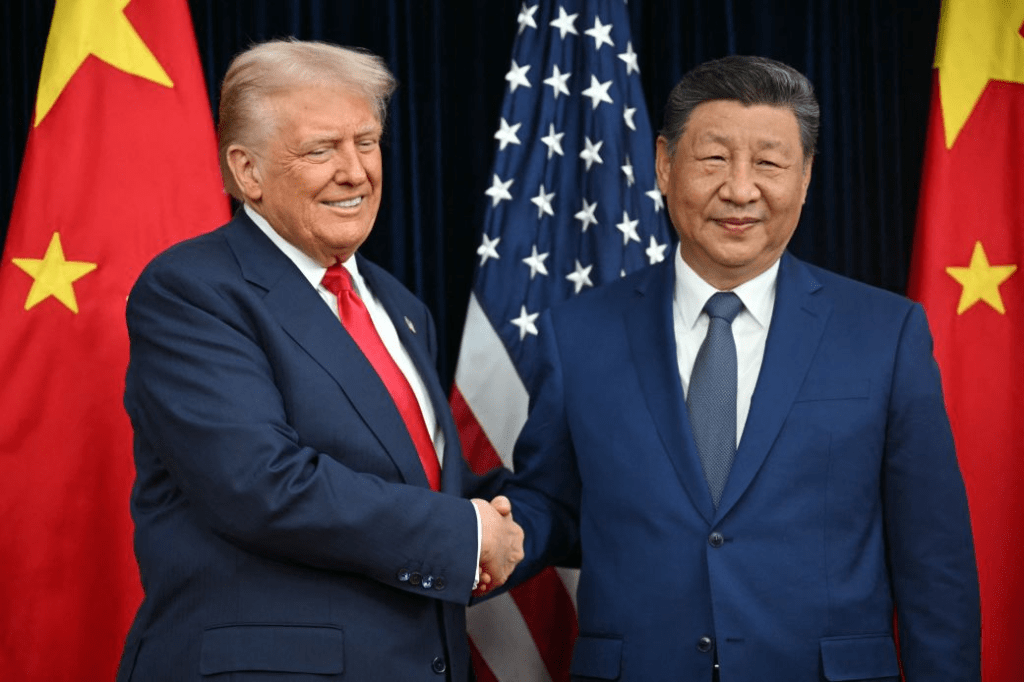
President Donald J. Trump has made a deal on economic and trade relations with China involving suspension of retaliatory tariffs by China, increased soybean purchases by China from the US, removal of certain China investigations targeting US companies, and tariff adjustments by the US effective November 10. This marks a significant step in easing US-China trade tensions.
On November 4, President Donald J. Trump and Chinese President Xi Jinping reached a significant trade and economic deal aimed at easing bilateral tensions and fostering cooperation between the United States and China. The agreement includes several key commitments:
- China will suspend export controls on rare earth elements and critical minerals and issue general export licenses for these materials benefiting U.S. manufacturers.
- China will work to end the flow of fentanyl precursor chemicals into the United States and reduce related tariffs from 20% to 10%.
- China will suspend all retaliatory tariffs and non-tariff countermeasures it imposed on U.S. goods since March 2025, including those on agricultural products like soybeans, corn, wheat, pork, beef, and dairy.
- China has committed to purchasing at least 12 million metric tons of U.S. soybeans in the last two months of 2025, and at least 25 million metric tons annually for 2026 through 2028.
- Investigations and sanctions targeting U.S. semiconductor companies and maritime sectors will be lifted.
- The United States will extend certain tariff exclusions and suspend new tariffs, including halting plans for a 100% tariff on Chinese imports that was scheduled to commence in November 2025.
- The deal also opens discussions for increased U.S. energy exports to China, including potential deals on Alaskan oil and gas.
This agreement marks a pause in the ongoing trade war, reducing overall tariffs on Chinese imports from about 57% to 47%, and sets a framework for review and renewal on an annual basis. The deal is seen as a de-escalation of tensions between the world’s two largest economies while addressing critical issues like fentanyl flow and rare earth mineral exports
Read also : 7 ways to retire comfortably with $1 million
The US Supreme Court is currently involved in a landmark case challenging Trump’s authority to impose tariffs on all imported goods, centered on trade policy.
The US is modifying duties to address the synthetic opioid supply chain linked to China as per an executive order dated November 4.
On October 10 the U.S. President Donald Trump had threatened a “massive increase” in tariffs on Chinese imports, citing China’s trade hostility and new export restrictions on rare earth minerals. This threat came after China imposed tighter controls on rare earth elements vital for manufacturing semiconductors and various advanced technologies. Trump’s announcement, including the possible cancellation of a planned meeting with Chinese President Xi Jinping, triggered a sharp selloff in the U.S. stock markets.
Our community already has 175,000 readers, joins us !
Subscribe to our Telegram channel
Follow us on Telegram, Facebook and Twitter
© Copyright 2025 – Eurasia Business News. Article no. 1884
 Eurasia Business News