
By Anthony Marcus for Eurasia Business News, November 5, 2025. Article no 1886
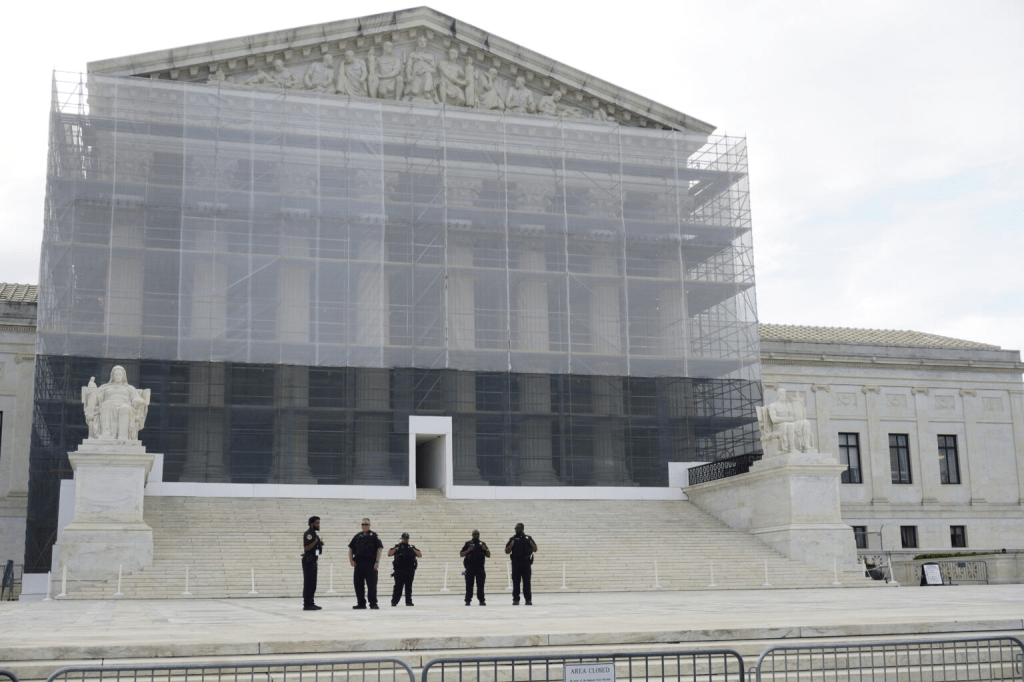
The U.S. Supreme Court cast significant doubt on the legality of President Donald Trump’s global tariffs unveiled this spring through oral arguments in a high-profile case. The court is reviewing whether Trump exceeded his authority under the 1977 International Emergency Economic Powers Act (IEEPA), which he invoked to impose broad-based tariffs on imports from multiple countries in the name of national security economic threats such as trade deficits and fentanyl trafficking.
During the hearings, the conservative majority justices expressed skepticism about the administration’s reliance on declared emergencies to justify the tariffs, with Chief Justice Roberts emphasizing that taxing Americans is fundamentally Congress’s power.
Justices questioned the scope of presidential power in economic matters and the applicability of the major questions doctrine, which requires clear congressional authorization for actions of substantial economic impact. While some justices acknowledged historical precedents for presidents having tariff powers, many challenged the expansive interpretation of emergency authority used by Trump.
Read also : 7 ways to retire comfortably with $1 million
The case has major implications not only for the fate of these tariffs but also for the limits of executive power in trade and economic policy. A decision from the court is expected by mid-2026. The Supreme Court’s scrutiny signals potential limits on using emergency powers to impose tariffs and could lead to overturning or scaling back Trump’s tariff policies, which have had widespread effects on global trade relations and U.S. markets.
Read also : Gold : Build Your Wealth and Freedom
Our community already has 175,000 readers, joins us !
Subscribe to our Telegram channel
Follow us on Telegram, Facebook and Twitter
© Copyright 2025 – Eurasia Business News. Article no. 1886
 Eurasia Business News