
By Alexander Miller, consultant in energy and mining markets. Eurasia Business News, November 25, 2025. Article n°1911
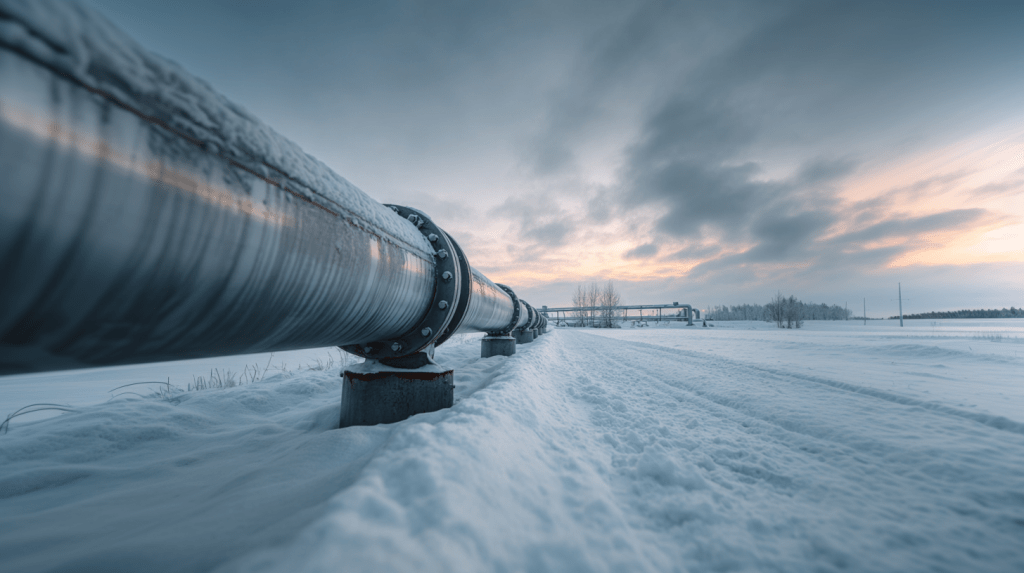
European benchmark natural gas has just dipped below 30 €/MWh for the first time since May 2024, reflecting an 18‑month low in wholesale prices across the region. This move signals a significant easing of the gas market compared with the peak of the energy crisis, though prices remain above pre‑2021 levels
What exactly happened?
The Dutch TTF front‑month contract, Europe’s key benchmark, has traded around 29–30 €/MWh, briefly moving under 30 €/MWh on November 23–24. That is the lowest level since May 2024, after many months of prices stuck in a tight range.
In percentage terms, TTF is down roughly 35–40% compared with a year ago, and nearly 40% since the start of 2025, depending on the exact contract and day referenced.
Why prices fell
Strong liquefied natural gas (LNG) inflows and steady Norwegian pipeline deliveries have boosted supply, offsetting reduced Russian gas and easing fears over winter shortages.
Weather forecasts for late November and early December point to milder‑than‑normal or seasonally normal temperatures in much of Europe, lowering expected heating demand.
Ongoing diplomatic efforts and talks about a possible pathway to end the Russia‑Ukraine war have reduced the geopolitical risk premium embedded in gas prices, even though no final agreement is in place.
The White House presented a 28-point plan to resolve the conflict in Ukraine. According to media reports, the plan includes, in particular, security guarantees based on Article 5 of the NATO charter, a non-aggression agreement between Russia and Ukraine, Kyiv’s refusal to join NATO, and a reduction in the number of Ukrainian armed forces.
What it means for consumers and risk
For households and small businesses, retail gas and power tariffs will not fall immediately, because many contracts are fixed or adjust with a delay and suppliers hedge purchases in advance. Some utilities are explicitly keeping their December–January customer prices unchanged for now despite the TTF drop.
Read also : Gold : Build Your Wealth and Freedom
EU gas storage is lower than last year (around 79–81% vs roughly 89–90% a year earlier), so a cold spell or renewed geopolitical tension could quickly push prices back up. Analysts warn that a few “gas‑positive” developments – such as unexpected outages or a sharp demand rebound – could reverse part of the recent decline.
Near‑term outlook
Market pricing and analyst models currently imply TTF staying roughly in the 30–35 €/MWh area over the coming months, with some upward drift into the next year if demand normalizes and storage needs to be rebuilt.
Read also : Tax Management strategies for Digital Nomads
Additional LNG projects expected online in late 2025–2026 should, over time, increase global supply and help cap extreme spikes, but short‑term volatility around weather and geopolitics will remain a key driver for European gas prices.
More LNG capacity in North America increases the pool of cargoes that can be redirected toward Europe during tight periods, making it harder for prices to reach the extreme peaks seen during the height of the energy crisis, provided shipping and regasification bottlenecks do not worsen. Over time, this should exert a dampening effect on structural price levels and on the severity of supply shocks.
Read also : How Russia is Reshaping Global Energy Markets
Europe’s surge in liquefied natural gas (LNG) demand is significantly reshaping the global gas market in 2025. Following the end of Russian pipeline gas flows through Ukraine in early 2022, Europe rapidly increased its LNG imports as a substitute to ensure energy security. This has made Europe the largest LNG importer since 2022, pulling cargoes away from traditional Asian markets, whose imports have weakened in comparison due to higher prices driven by European competition.
Moreover, the European Union is set to ban imports of Russian liquefied natural gas (LNG) earlier than initially planned. The EU proposed bringing forward the ban on Russian LNG imports to January 1, 2027, which is a full year earlier than the original schedule.
In the short term, European gas prices will remain volatile because factors such as a colder‑than‑normal winter, disruptions in key export regions, or shipping issues in chokepoints like the Suez Canal can quickly offset the comfort from new LNG supply. As a result, traders and policymakers still focus closely on weather forecasts, storage levels, and geopolitical developments when assessing price risks, even as the medium‑term supply outlook improves.
Our community already has 190,000 readers, joins us !
Subscribe to our Telegram channel
Follow us on Telegram, Facebook and Twitter
© Copyright 2025 – Eurasia Business News. Article no. 1911
 Eurasia Business News