
By Anthony Marcus for Eurasia Business News, December 17, 2025. Article n°1936
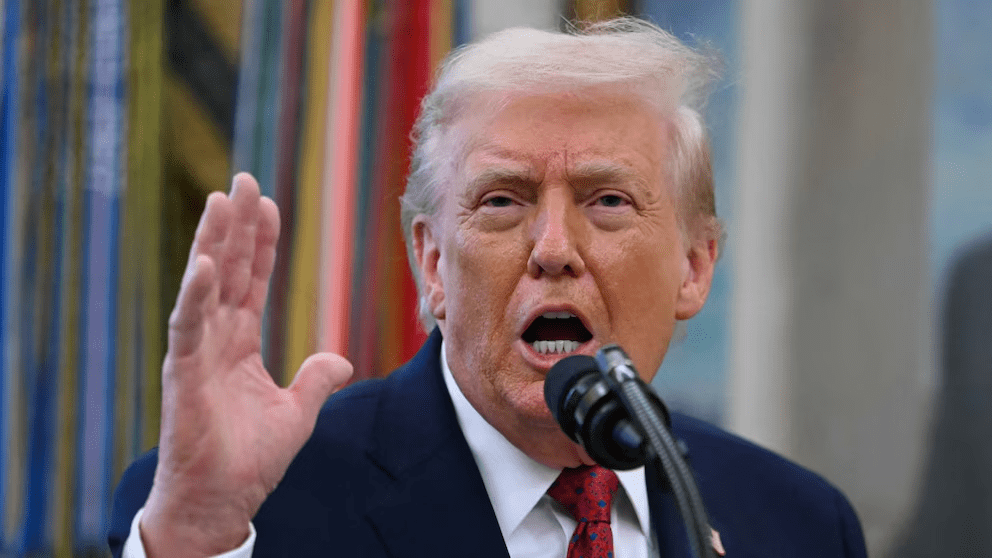
Tucker Carlson claimed on December 17 that U.S. President Donald Trump might announce a war declaration against Venezuela during his scheduled 9 p.m. ET address to the nation that evening.
Carlson’s statement
Appearing on the “Judging Freedom” podcast with Judge Andrew Napolitano, Tucker Carlson said a member of U.S. Congress informed him that lawmakers had been briefed the previous day about an impending war, potentially to be revealed in Trump’s speech. He noted uncertainty about whether the announcement would actually occur, framing it as based on secondhand information amid heightened U.S.-Venezuela tensions.
Over the past few weeks, President Donald Trump has escalated pressure on Venezuela through military deployments, oil tanker blockades, and airspace warnings, but has not declared war or ruled it out entirely.
Context of tensions
The claim follows Trump’s recent order for a “total and complete blockade” of sanctioned Venezuelan oil tankers, backed by a massive U.S. naval deployment in the Caribbean—including aircraft carriers and submarines—officially aimed at combating drug trafficking. U.S. actions have included airstrikes on suspected smuggling vessels, tanker seizures, and accusations of Venezuela stealing American oil assets, prompting Maduro’s government to denounce the moves as piracy and threats to stability.
Reactions and caveats
Lawmakers from both parties expressed concerns, with Democrats like Sen. Chris Van Hollen calling it potential unauthorized war acts and Republicans like Sen. Rand Paul labeling it an initiation of conflict; formal war requires congressional approval.
Read also : Gold : Build Your Wealth and Freedom
No official White House confirmation of war plans emerged, and the address topic remained unspecified beforehand, leaving Carlson’s prediction as unverified speculation tied to the anti-drug operations.
A U.S. war with Venezuela would devastate the Venezuelan economy while imposing moderate global disruptions, primarily through oil supply shocks and heightened regional instability.
Venezuela’s economy, already crippled by U.S. sanctions and mismanagement for decades, relies on oil for over 90% of export revenue; a full conflict or intensified blockade could halve exports, trigger hyperinflation exceeding 500%, cause fuel shortages, and force production cuts due to storage limits. Maduro’s regime would face collapse risks from lost foreign currency, recession, and domestic unrest, though regime change might require prolonged U.S. investment amid resistance.
Read also : Russia’s economy indicators for 2025 and 2026
Global oil markets
Venezuela’s ~3-4% share of world supply means war could spike Brent crude by 10-20%, raising U.S. gasoline prices and pressuring consumers, though markets have absorbed prior sanctions with limited effect. Remaining exports to China would deepen discounts, indirectly benefiting U.S. refiners like Chevron while deterring global shipping.
Read also : Tax Management strategies for Digital Nomads
U.S. and regional costs
Direct costs include billions in naval operations, potential civilian strike backlash, and disrupted Caribbean trade like fishing and tourism; Latin American solidarity with Venezuela could strain alliances. Broader escalation risks refugee surges, drug flows, and legal challenges under war powers, with unclear long-term gains from regime change
Our community already has 190,000 readers, joins us !
Subscribe to our Telegram channel
Follow us on Telegram, Facebook and Twitter
© Copyright 2025 – Eurasia Business News. Article no. 1936
 Eurasia Business News