
By Anthony Marcus for Eurasia Business News, December 18, 2025. Article n°1940
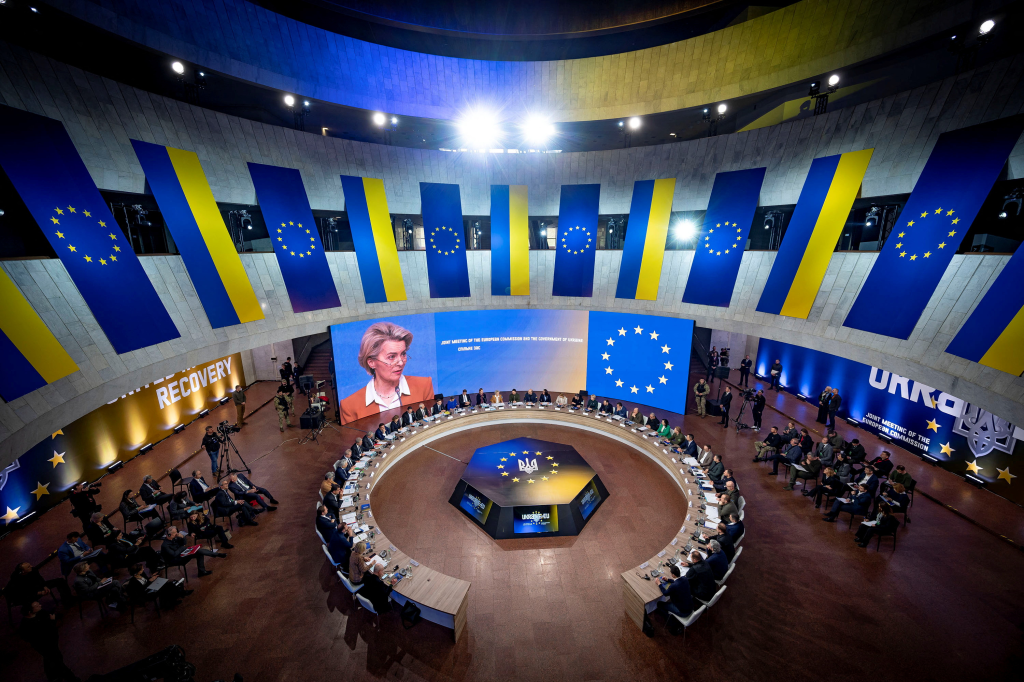
European leaders committed to lend Ukraine 90 billion euros, or around $105 billion, to help the country keep fighting Russia but failed to agree on a plan to use frozen Russian assets for the loan.
German Chancellor Merz has been advocating turning frozen Russian state assets held in the EU into collateral for a very large, long‑term loan to Ukraine (around €140–165 billion), structured as a “reparations loan” to be repaid only if Russia pays war damages. The loan could have financed purchases by Ukraine of German weapons and ammunitions. Merz could not get what he called for.
The plan is designed to front‑load support for Ukraine’s defense and budget while avoiding an outright confiscation of the assets, which would raise even bigger legal and financial risks for the EU
Where the resistance is coming from
Belgium, which hosts most of the frozen Russian central‑bank assets at Euroclear, has been the most openly skeptical, warning about legal exposure and insisting it cannot carry the risk alone.
Merz has therefore called for risk‑sharing guarantees so that all EU states, not just Belgium, bear potential liabilities proportionally to their economic weight, and he has lobbied leaders like Belgium’s prime minister to drop objections.
Role of Meloni and Macron
Public reporting ahead of recent EU meetings focuses on broader divisions among member states (for example, over legal design, risk, and how far to go beyond using only the interest on the assets). The Italian Prime minister Georgia Meloni would not support the Merz’s blueprint.
Meloni’s government disagree over details or sequencing inside the EU negotiations.
During the EU summit, the idea of expropriating assets was met with skepticism from representatives of Italy and France. According to inside sources, French president Emmanuel Macron was mostly silent, and it was the position of Giorgia Meloni that had a decisive impact and “changed the mood” in the negotiations.
The complexity of the scheme proposed by the European Commission frightened even those leaders of the EU countries who initially supported the idea.
Instead of expropriating frozen Russian assets, some EU states decided to issue an interest-free loan of €90 billion to Ukraine through collective loans. Hungary, Slovakia and the Czech Republic refused to participate in this plan.
Our community already has 190,000 readers, joins us !
Subscribe to our Telegram channel
Follow us on Telegram, Facebook and Twitter
© Copyright 2025 – Eurasia Business News. Article no. 1940
 Eurasia Business News