
By Anthony Marcus for Eurasia Business News, December 29, 2025. Article n°1954
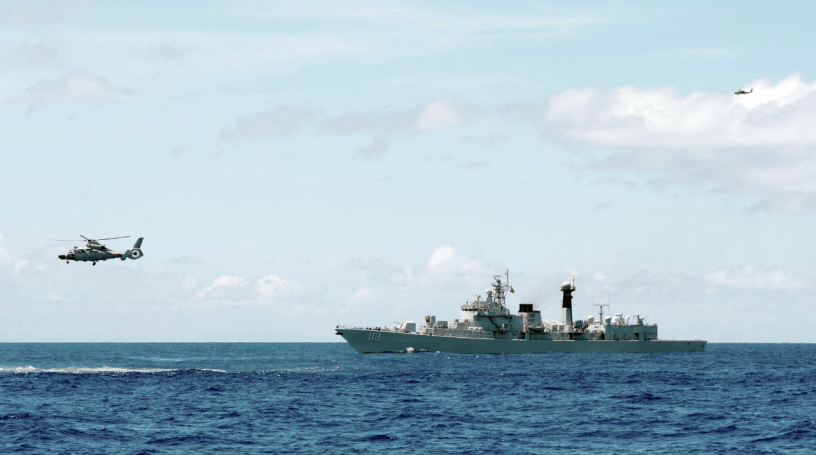
China has begun large-scale air, naval and missile drills around Taiwan that it calls a “stern warning” to pro-independence forces on the island and to foreign countries, especially the United States and Japan. The exercises, branded “Justice Mission 2025,” include simulated blockades of Taiwan’s major ports and are described by Beijing as necessary to defend its sovereignty after a major new U.S. arms package for Taipei.
What China is doing
The People’s Liberation Army has deployed army, navy, air force and rocket units in five zones around Taiwan, including the Taiwan Strait and waters to the north, south, east and southwest of the island.
Drills feature sea‑air combat readiness patrols, live‑fire exercises, and practice for blockading key ports such as Keelung in the north and Kaohsiung in the south.
China’s stated message
Chinese military spokespeople say the drills are a “serious” or “stern” warning to “Taiwan independence” forces and to “external interference,” language aimed at both Taipei and supporters like the U.S. and Japan.
State media frame “Justice Mission 2025” as a legitimate move to safeguard national sovereignty and territorial integrity and to demonstrate resolve against any attempt to use Taiwan to contain China.
Triggers and background
The exercises follow Washington’s approval of an approximately $11 billion U.S. arms sale to Taiwan, the island’s largest single package, prompting strong protests and sanctions on U.S. defense firms from Beijing.
They also come after comments by Japanese leaders suggesting Tokyo could respond if China used force against Taiwan, which Beijing denounced as dangerous interference.
Taiwan’s response
Taiwan said it had detected 89 military aircraft as well as 28 warships and Chinese coast guards near its territory. This is the highest number of Chinese aircraft reported in a single day since October 15, 2024. The Taiwanese Ministry of Defense also reported, without further details, a formation of Chinese amphibious assault ships operating in the Western Pacific.
Taiwan’s government has condemned the drills as “military intimidation” and “aggression,” saying its forces are on high alert and conducting their own rapid‑response and combat‑readiness exercises.
Regional and Western analysts view the drills as part of a pattern of increasingly frequent encirclement and blockade simulations designed both to send a political signal and to gather operational data for a potential future conflict scenario.
Japan’s Response
Last month, after Japanese Prime Minister Sanae Takaichi suggested her country could mobilize a military response if China tried to seize Taiwan, Beijing responded with angry statements and warplane sorties.
During a budget committee session, Sanae Takaichi stated that a Chinese military attack on Taiwan — such as a naval blockade or use of force — could constitute a “survival-threatening situation” for Japan.
Such an assertion is significant: by framing a Taiwan crisis as existential for her own country, Takaichi suggested that Japan might deploy its Self-Defense Forces under collective self-defense, a legally and historically sensitive move.
Our community already has 190,000 readers, joins us !
Subscribe to our Telegram channel
Follow us on Telegram, Facebook and Twitter
© Copyright 2025 – Eurasia Business News. Article no. 1954
 Eurasia Business News