
By Alexander Miller, consultant in energy markets. Eurasia Business News, January 10, 2025. Article no 1988
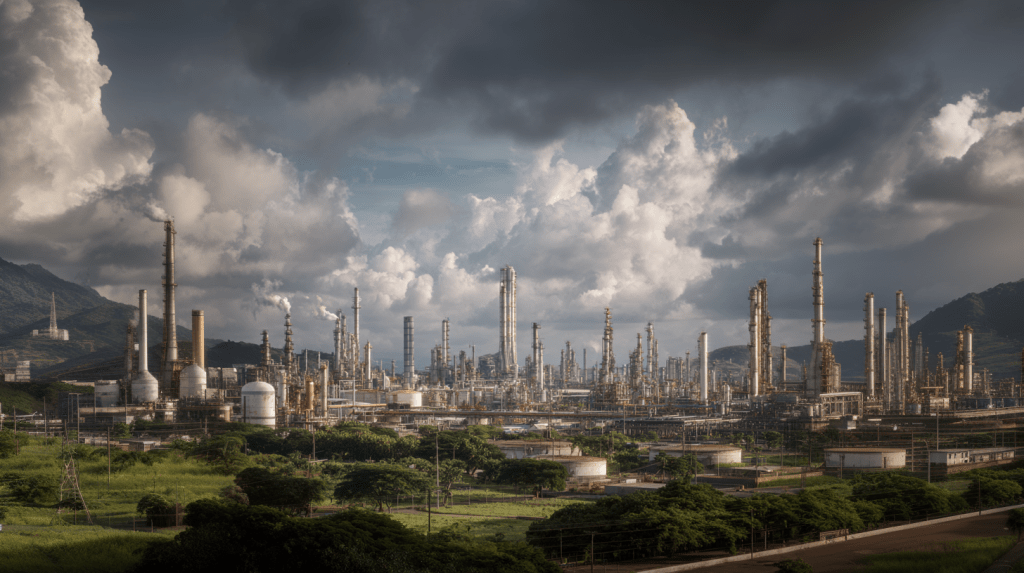
Donald Trump has told major oil executives they would have “total” or “complete” safety if they commit large-scale investments to Venezuela’s oil sector, framing U.S. backing as a security guarantee for their money rather than troops on the ground. He is seeking around 100 billion dollars in private oil investment after a U.S. military operation that removed Nicolás Maduro, but industry leaders have so far made no firm commitments, calling Venezuela “uninvestable” under current conditions.
What Trump promised
In a White House meeting, Trump said companies investing in Venezuela would have “total safety, total security,” stressing they would use their own funds and that the U.S. role is to provide protection, not direct subsidies.
He also claimed on social media that “BIG OIL” would invest at least 100 billion dollars in Venezuela’s oil industry, though that figure has not been matched by any signed agreements.
Structure of the plan
The administration is pitching a model where U.S. and other foreign firms expand drilling, production, and export of Venezuelan crude, with Washington helping control sales and providing political and security guarantees.
U.S. authorities have already seized multiple tankers linked to Venezuelan oil and say they will manage sales of tens of millions of barrels that were previously under sanctions.
Reaction from oil companies
Executives from firms such as ExxonMobil and Chevron have warned that Venezuela remains “uninvestable” without sweeping legal, contractual, and security reforms and credible protection against future expropriation.
Venezuela has the world’s largest proven crude oil reserves, at roughly 303 billion barrels, equal to about 17–20% of global reserves. These reserves are largely extra‑heavy crude concentrated in the Orinoco Belt, which makes extraction and processing more complex and capital‑intensive than many Middle Eastern light crudes. However, the U.S. oil extraction companies have the technology and the funds to extract this extra‑heavy crude.
Venezuela is currently producing on the order of about 1 million barrels of oil per day, which translates to roughly 365 million barrels per year when annualized. This is only a fraction of its historical output of more than 3 million barrels per day in the 1990s and early 2000s.
Several CEOs praised the idea of stabilizing Venezuela’s oil sector but stopped short of promising new projects or specific investment amounts at the meeting.
Criticism and concerns
Critics argue that the U.S. initiative risks looking like a “mafia-style” arrangement in which military power clears the way for private profit from Venezuela’s resources.
Questions remain about how revenues from increased oil exports would be shared with Venezuela and whether funds would effectively reach the local economy rather than mainly benefiting foreign investors.
Our community already has nearly 200,000 readers!
Subscribe to our Telegram channel
Follow us on Telegram, Facebook and Twitter
© Copyright 2025 – Eurasia Business News. Article no. 1984
 Eurasia Business News