
By Anthony Marcus for Eurasia Business News, January 23, 2026. Article n°2007
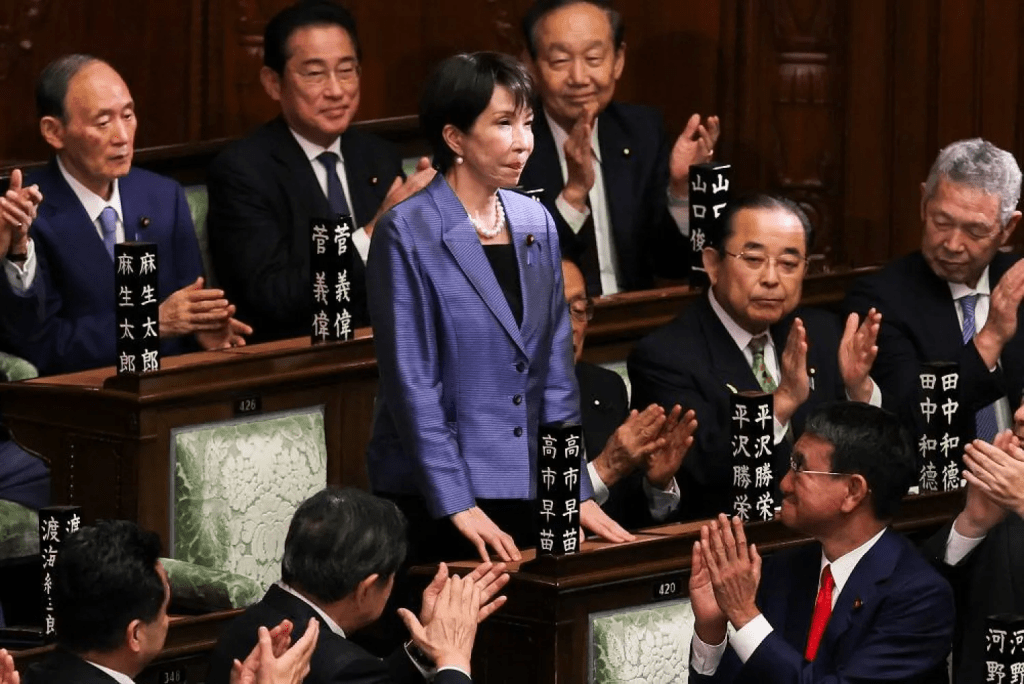
Japan’s Prime Minister Sanae Takaichi has dissolved the lower house of parliament, triggering a snap general election scheduled for February 8.
On Friday, the Takaichi Cabinet approved a plan to dissolve the 465-seat chamber. The prime minister has the right to dissolve the lower house of parliament, this is the first time in 60 years that the dissolution took place on the first day of a regular parliamentary session.
Prime Minister Takaichi, Japan’s first woman premier, formally disbanded the 465-seat House of Representatives on 23 January 2026.
The dissolution immediately ends all lower-house lawmakers’ terms and starts a short campaign period leading up to the 8 February vote.
Why she dissolved parliament
Takaichi aims to capitalize on relatively high cabinet approval ratings only about three months after taking office in October, and to secure her own mandate from voters.
She also seeks public backing for her new ruling coalition between the Liberal Democratic Party (LDP) and the Japan Innovation Party, formed last autumn.
What this means politically
The election will decide whether the LDP-led coalition can recover from past electoral setbacks and retain or strengthen its majority in the more powerful lower house.
The move carries risk: if voters punish the ruling parties, Takaichi’s leadership and the coalition’s stability could be seriously weakened.
Policy stakes
Takaichi has framed the election as a bid for support for higher spending to counter rising prices and to advance a new security strategy that accelerates Japan’s defense buildup.
The dissolution delays Diet approval of a planned budget aimed at stimulating Japan’s slowing economy and easing the cost-of-living burden.
The Takaichi government wants voters to endorse higher overall public spending so it can respond to inflation and cost-of-living pressure (for example through tax cuts or relief measures).
At the same time, it seeks approval for a rapid expansion of defense outlays under a new security strategy that raises military budgets toward around 2% of GDP and prioritizes missiles, drones, and other deterrence capabilities, amid rising tensions with China and North Korea in Eastern Asia.
What happens next
A roughly 12-day official campaign will begin next week, with parties announcing candidates and policy platforms nationwide.
By law, the general election must be held within 40 days of dissolution; the 8 February date sits near the early end of that window, underscoring the snap nature of the vote.
Our community already has nearly 200,000 readers!
Subscribe to our Telegram channel
Follow us on Telegram, Facebook and Twitter
© Copyright 2026 – Eurasia Business News. Article no. 2007
 Eurasia Business News