
By Swann Collins, consultant in international affairs, for Eurasia Business News, February 18, 2026. Article n°2027
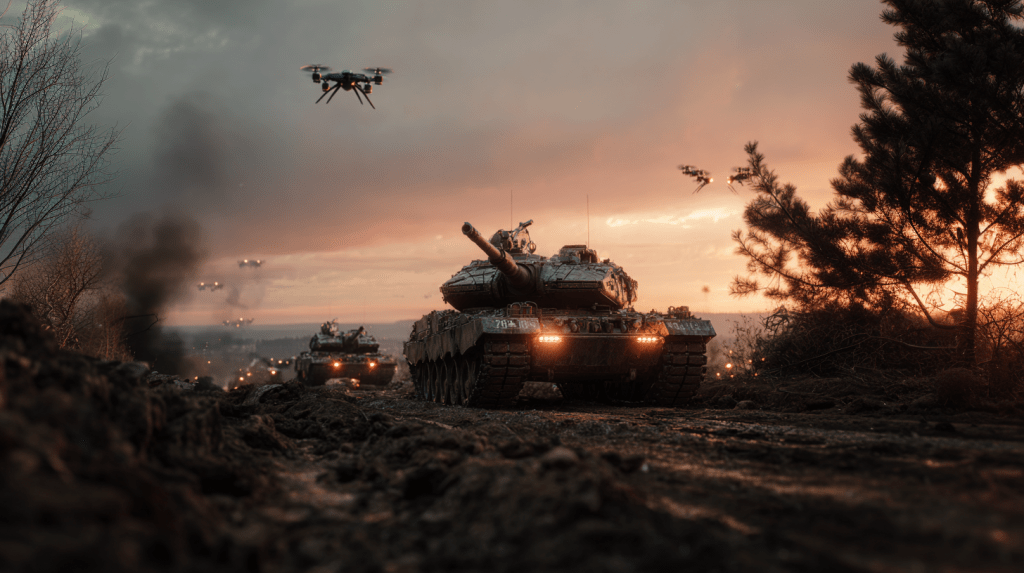
As the conflict in Ukraine enters its fifth year in 2026, the geopolitical landscape of Eastern Europe—and by extension, the broader international order—remains profoundly unsettled. Having spent the past 15 years analyzing Russia and Ukraine, I have witnessed the evolution of Kremlin strategy, Ukrainian resilience, and the shifting posture of Western alliances. The year 2026 promises to be pivotal, not only for Kyiv and Moscow, but also for NATO, the EU, and global energy and security networks.
The latest U.S.-brokered talks between envoys from Moscow and Kyiv over war in Ukraine ended Wednesday in Geneva with no sign of a breakthrough and with both sides saying the talks were “difficult”.
1. The Military Front: Stalemate or Strategic Shift?
By early 2026, the battlefield in eastern Ukraine is likely to consolidate into a protracted conflict, with neither side achieving decisive victory. Russia, despite extensive territorial gains in 2022–2024, has faced persistent logistical challenges, sanctions-induced equipment shortages, and high attrition among frontline units. Ukraine, for its part, continues to benefit from Western intelligence, advanced missile systems, and drone warfare capabilities.
Key dynamics to watch are the following :
- Frontline stabilization: Certain sectors of Donetsk and Luhansk will likely become entrenched, with trench warfare reminiscent of World War I, slowing large-scale offensives with heavy losses and small gains.
- Counteroffensive capabilities: Ukraine’s limited but high-tech offensive actions could focus on disrupting Russian supply lines with armies of drones rather than territorial conquest.
- Mobilization trends: Russia may increasingly rely on irregular units, paramilitary formations, and technological warfare, including cyber and electronic operations, as well as on missiles and artillery to damage energy infrastructure.
2. Russian Domestic Pressure
As the war stretches into its fifth year, internal pressures within Russia are intensifying in ways that could shape both domestic politics and Moscow’s strategic decisions in 2026.
Economic strain and industrial output have become increasingly pronounced. Russia has been one of the most heavily sanctioned countries in the world since 2022, with over 20 000 measures imposed by roughly 50 governments from major countries—sanctions that have frozen about $340 billion in central bank reserves and inflicted hundreds of billions in financial sector losses. Data from 2025 indicate Russia’s economy slowing sharply: GDP growth decelerated to roughly 1% in 2025 from more robust figures before the war or even the 4% figure in 2023-2024, while industrial production outside the defense sector has stagnated or contracted.
The Russian civilian economy, including construction and consumer goods manufacturing, has suffered sharper declines as investment and capital are diverted into war-related industries. Russian manpower is sent to the war machine, not innovation and economic growth. About 650,000 Russians who left the country after February 2022 were still abroad roughly two and a half years into the war. Among them are engineers, scientists, graduated workers, specialists, physicians, intellectuals, entrepreneurs.
High inflation and currency volatility amplify public economic discomfort. Periods of inflation exceeding 9‑10 % have been reported, and the ruble has experienced significant fluctuations, prompting the central bank to adjust monetary policy with surprise rate cuts aimed at stimulating growth amid stagnation. Meanwhile, the state budget remains under pressure: military spending consumes a substantial share of expenditures, and reserve funds have been heavily drawn down, limiting fiscal flexibility.
In order to fund the state budget in wartime, Russia adopted a major tax overhaul that raise its value-added tax to 22% from 20%, a reform starting in January 2026. This tax move is aimed at closing the fiscal gap created by soaring military expenditures and falling oil and gas revenues amid Western sanctions. As VAT affects and food products, medicines, consuming goods and services, this raise adds pressure on the budgets of millions of Russian citizens.
Read also : Tax Management strategies for Digital Nomads
Public sentiment is shaped by the human cost of the war as well as economic hardship. Recent reporting estimates Russian military casualties in Ukraine well into the hundreds of thousands, with monthly losses remaining high. While reliable polling inside Russia is limited, external analyses suggest that a significant portion of the population has come to view the conflict through a civilizational lens, in large part due to state media narratives that frame the war as a struggle against Western encroachment. Nonetheless, prolonged hardship and mounting death tolls—especially in urban areas—risk eroding passive support, even if open dissent is constrained by legal and extralegal pressures.
Read also : Wealthy Russians are more active in “packing” foreign assets in Dubai
Within the political elite, cohesion remains intact but not unchallengeable. Kremlin loyalty networks are sustained by political patronage and control over key state institutions, yet rising economic discontent could expose fissures if the cost of war begins to outweigh perceived benefits for influential stakeholders. Analysts note that heavy reliance on defense spending crowds out investment in other sectors and may exacerbate regional budget deficits, placing additional pressure on local leaders.
Finally, propaganda and state media will continue to play a central role in shaping domestic perception. Moscow is expected to sustain narratives emphasizing national resilience, portraying Western sanctions as ineffective, and framing Russia’s strategic posture as defensive against external hostility. Expanded funding for state-run media and informational operations indicates that controlling public perception remains a priority for the Kremlin in 2026.
3. Ukraine’s Strategic Outlook
Kyiv faces the dual challenge of sustaining military pressure while maintaining internal political stability. Ukraine’s prospects in 2026 will hinge on several factors:
Western aid continuity: Ukraine’s ability to sustain military pressure in 2026 remains heavily dependent on continued Western support. Kyiv spent much of the past year realigning its relations with Washington and establishing mechanisms to sustain Western support.
Since the full‑scale invasion began, NATO allies have pledged unprecedented military assistance—roughly €40 billion annually—including weapons, training, and logistical support that have helped Kyiv defend key sectors of the front.
However, the nature of this support is evolving. Recent Reuters reporting shows that European allies are arranging new energy and defense aid packages to arrive by February 24, 2026, indicating persistent but tightly negotiated support amid rising costs on the battlefield. Meanwhile, an initiative led by Czech partners aimed at supplying millions of artillery rounds has fallen short of its €5 billion goal, with only €1.4 billion raised so far, highlighting funding gaps that could constrain long‑term operations.
In response to these pressures, EU leaders agreed in late 2025 to mobilize a €90 billion loan for 2026–27, targeting both budgetary support and defense industrial capacity—a vital lifeline given Ukraine’s fiscal needs. But political shifts in key donor states and public fatigue with high defense spending could test this support, especially if competing domestic priorities rise.
Political unity: Internally, Ukraine faces significant political challenges. Kyiv’s leadership under President Volodymyr Zelensky has promoted broad national unity as part of its resilience strategy, but political cohesion is tested by ongoing territorial losses and economic strain. As seen in prior outlook analyses, deep political divisions can weaken strategic focus—even leading to shifts in public support for current leaders or policy direction.
Elections scheduled in or after 2026, coupled with constitutional requirements for political plurality and democratic process, introduce potential volatility. Ukraine’s strategic planning will therefore need careful management of electoral cycles alongside defense priorities to maintain consistent long‑term policy.
Economic resilience: Economically, Ukraine’s outlook in 2026 remains fragile yet resilient. Inflation has eased from extremes above 15 % to around 11.9 % by late 2025, but remains high compared with pre‑war stability. Ukraine’s budget deficit continues to be large—estimated at €45–50 billion annually—and heavily reliant on foreign aid.
Read also : Gold : Build Your Wealth and Freedom
The World Bank and EU frameworks project that reconstruction needs over the next decade could exceed $480 billion, spanning housing, transport, agriculture, energy, and industry—an enormous undertaking requiring coordinated international funding. New IMF financing expected in early 2026—an $8.2 billion program pending approval—will further underpin financial stability and growth planning amid wartime conditions.
Longer‑term recovery scenarios depend heavily on sustained security improvements. Some forecasts suggest GDP growth could accelerate to over 3 % in 2026 with sufficient external support, a marked improvement from the stagnation typical under protracted conflict.
Read also : The Private Investor Deal Evaluation Handbook
In summary, Ukraine’s strategic prospects in 2026 will pivot on the continuity and scale of Western aid, the coherence of its political leadership through election cycles, and the resilience of its economy under persistent wartime stress. Each of these dimensions will be decisive in shaping whether Kyiv can sustain both defense and reconstruction efforts amid an extended conflict.
4. The International Dimension
As the war enters its fifth year, its repercussions extend well beyond Eastern Europe, reshaping global alliances, great‑power competition and energy structures.
NATO and EU cohesion have been tested but remain central pillars of the Western response. The crisis has driven Europe to significantly increase defence spending and strengthen collective security; several traditionally neutral countries such as Finland and Sweden joined NATO, and member states have boosted defence budgets above the 2 % GDP target in many cases. This renewed focus reflects broader strategic realignments prompted by Russia’s war in Ukraine. However, the alliance faces internal pressures as domestic political shifts in the United States and key European capitals could influence future commitments and burden‑sharing, raising questions about the endurance of transatlantic solidarity.
China and emerging powers occupy a complex position. Beijing has maintained a cautious balance between supporting Russia diplomatically and safeguarding its broader economic relations with the West. China has not joined Western sanctions, and its trade with Russia—particularly in energy—has expanded significantly. From 2022 to 2025, China purchased more than US $230 billion in Russian energy, with gas deliveries through the Power of Siberia pipeline exceeding contractual volumes and additional expansions underway. This reflects Beijing’s strategic hedging: strengthening ties with Moscow while avoiding overt alignment that could jeopardise its global economic integration.
Global energy markets have been profoundly transformed. Europe’s reliance on Russian fossil fuels plummeted—from roughly 40 % of its gas supply pre‑war—to small residual volumes by 2023–2024, prompting a rapid shift to LNG imports (notably from the U.S. and Qatar) and accelerated renewable deployment. At the same time, Russia has pivoted its exports toward Asia, yet revenues from these markets remain lower than those previously earned from Europe. This reconfiguration of energy flows continues to influence pricing, supply stability and geopolitical leverage across regions.
5. Potential Diplomatic Scenarios
While military escalation remains probable, several diplomatic pathways could emerge in 2026:
Frozen conflict represents one likely scenario. If frontline positions solidify in Donetsk, Luhansk, Kherson, and Zaporizhzhia, a de facto partition could emerge, resembling protracted stalemates in Transnistria, Abkhazia, or South Ossetia. Such an outcome would allow both sides to consolidate resources, while leaving unresolved sovereignty disputes. Analysts suggest that, given the current pace of offensives and supply limitations, large-scale territorial changes in 2026 may be minimal, increasing the probability of entrenched positions.
Negotiated settlement remains possible if internal Russian pressures escalate. Russia’s economy is forecast to grow only 1–2 % in 2026, while defense expenditures continue to strain state finances. Under such conditions, Moscow could be compelled to engage in conditional negotiations, potentially offering limited territorial concessions to secure international recognition or security guarantees. The EU and U.S. are likely to favor mediated talks, leveraging economic incentives, sanctions relief, and security assurances to encourage compromise.
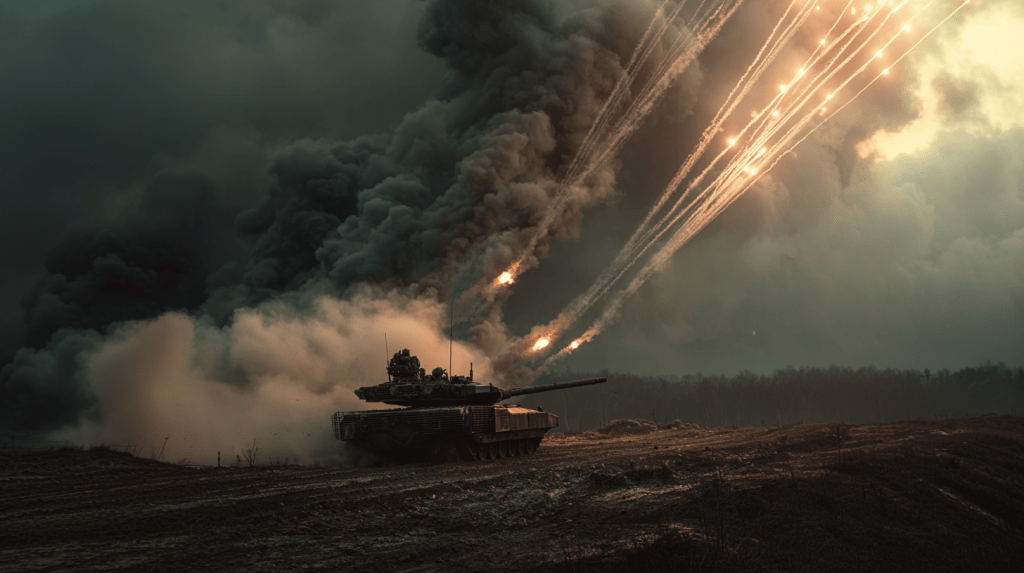
A tank in battle in Ukraine, 2026. Photo credits : Eurasia Business News.
Escalation risk cannot be ignored. Miscalculations in conventional operations, strikes on critical infrastructure, or nuclear signaling could trigger a broader regional crisis. NATO has increased rapid-reaction readiness on its Eastern flank and enhanced monitoring of nuclear thresholds, reflecting heightened awareness of this contingency. European states want to continue supporting Ukraine, even if the U.S. president Trump paused the military aid to Kyiv.
Overall, 2026 is likely to see a combination of entrenched conflict and tentative diplomacy, with outcomes contingent on battlefield developments, domestic pressures in Moscow, and Western cohesion in response. Contingency planning remains essential to prevent escalation beyond Eastern Europe.
6. Key Takeaways for Analysts and Policymakers
Entering 2026, the Ukraine conflict is increasingly defined by attritional dynamics rather than rapid offensives. Analysts should anticipate protracted engagements along established frontlines, where incremental territorial shifts will be the norm, and decisive breakthroughs remain unlikely. This pattern reflects both Russia’s defensive adaptations and Ukraine’s reliance on high-tech Western support to blunt conventional offensives.
Russia’s domestic cohesion remains a core determinant of its strategy. Economic fragility, stemming from sustained sanctions and declining industrial output outside the defense sector, constrains Moscow’s operational flexibility. Public tolerance for casualties and inflationary pressures may also influence the Kremlin’s willingness to sustain protracted military campaigns. Elite cohesion, maintained through patronage networks and media narratives, is resilient but vulnerable to long-term economic stress.
Ukraine’s strategic calculus is similarly linked to external support. Sustained NATO and EU assistance—including advanced weaponry, economic aid, and reconstruction financing—remains critical to both Kyiv’s battlefield operations and domestic political stability. Any erosion in donor commitment could weaken Ukraine’s negotiating position and reduce its capacity for sustained operations.
The broader international system—energy markets, alliances, and non-Western actors such as China—will increasingly shape conflict outcomes. Europe’s accelerated energy diversification, Russia’s pivot toward Asian markets, and Beijing’s cautious balancing act all influence both economic and strategic pressures on the warring parties.
Finally, contingency planning is essential. Analysts and policymakers must consider scenarios ranging from frozen conflicts and negotiated settlements to escalatory miscalculations. The year ahead will not necessarily resolve the war but will determine whether Eastern Europe stabilizes into a long-term stalemate or undergoes a strategic realignment with significant global consequences. Success in 2026 will require integrating battlefield intelligence, domestic political analysis, alliance cohesion, and global economic trends into comprehensive policy planning.
Our community already has nearly 215,000 readers!
Subscribe to our Telegram channel
Follow us on Telegram, Facebook and Twitter
© Copyright 2026 – Eurasia Business News. Article no. 2027
 Eurasia Business News