
By William Collins, consultant in stock markets – Eurasia Business News, February 23, 2026. Article no 2033
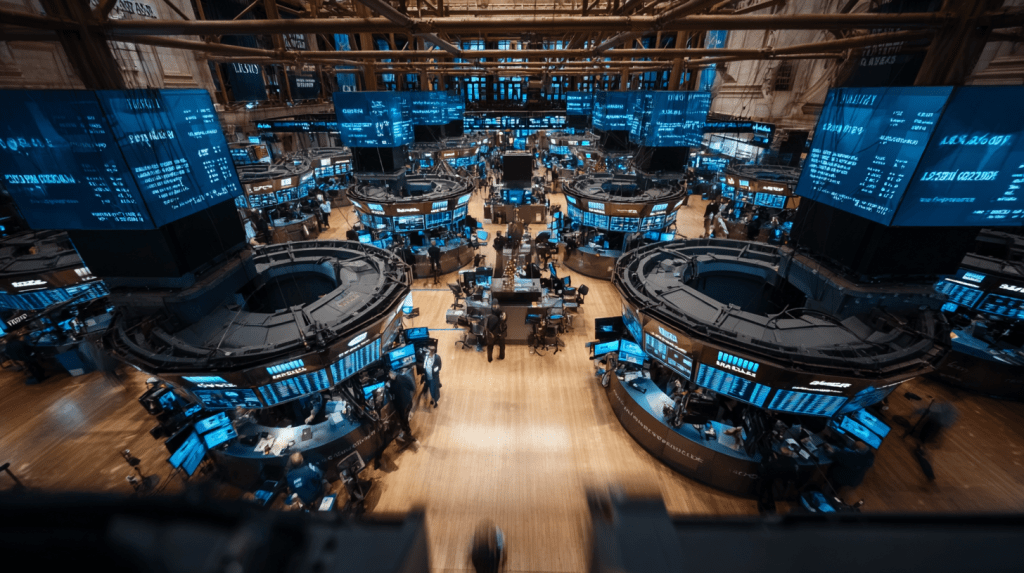
Donald Trump’s move to hike a new “global” tariff rate from 10% to 15% has knocked U.S. stock futures lower on February 23, and injected fresh uncertainty into the short‑term investment climate.
What actually happened
The U.S. Supreme Court struck down much of Trump’s earlier tariff program that relied on emergency powers, which initially sent stocks higher at the end of last week.
In response, Trump announced a new across‑the‑board global tariff, first at 10% and then raised it to 15%, using Section 122 of the 1974 Trade Act instead of the emergency law the Court rejected.
Many prior, more targeted tariffs under Sections 301 and 232 (steel, autos, China, etc.) remain in place; the new measure is a broad, temporary overlay, and many exemptions still apply, so the effective average tariff rises by about 2 percentage points, not a full 5.
Immediate market reaction today
Dow, S&P 500, and Nasdaq futures are down around 0.3–0.6% in early trading as investors reassess the growth and inflation impact of a higher baseline tariff.
Safe‑haven assets like gold are a bit firmer, and the dollar is slightly weaker, reflecting a mild “risk‑off” tone rather than panic.
Asian and European markets are mixed; some exporters and trade‑sensitive names are under pressure, while defensive sectors are relatively resilient.
Why this matters for the 2026 climate
Higher tariffs are seen as mildly negative for global growth and potentially inflationary, which complicates the Federal Reserve’s path for rate cuts and raises uncertainty for multinational companies and supply chains.
The Supreme Court ruling plus Trump’s workaround create a sense of “legal and policy fog” around U.S. trade, making planning harder for businesses and foreign investors even if the macro impact is not catastrophic.
Read also : The Private Investor Deal Evaluation Handbook
Analysts widely note that markets have grown somewhat used to tariff headlines since 2018; as long as the new regime is temporary and partially exempted, it is more of a volatility shock than a clear trend break.
Likely winners and losers
Potential losers: import‑heavy retailers and manufacturers, autos, some semiconductors and industrials with complex global supply chains, and foreign exporters facing higher U.S. border taxes.
Relative winners or defensive spots: domestically focused small‑caps that rely less on imports, select U.S. energy and materials, some beneficiaries of “on‑shoring” and trade diversion, and traditional havens like gold
Gold price at $ 5,148
Gold and silver prices are trading sharply up in early U.S. trading Monday, with gold scoring a three-week high and silver a two-week high. Safe-haven demand is featured in the two metals as the new U.S. tariff regime has thrown new uncertainty into the marketplace—at a time when traders and investors are also uneasy about U.S.-Iran tensions.
April gold was last up $89.30 at $5,170.00. March silver prices were up $4.037 at $86.345.
Our community already has nearly 215,000 readers!
Subscribe to our Telegram channel
Follow us on Telegram, Facebook and Twitter
© Copyright 2026 – Eurasia Business News. Article no. 2033
 Eurasia Business News