
By Anthony Marcus for Eurasia Business News, March 1st, 2026. Article no. 2039
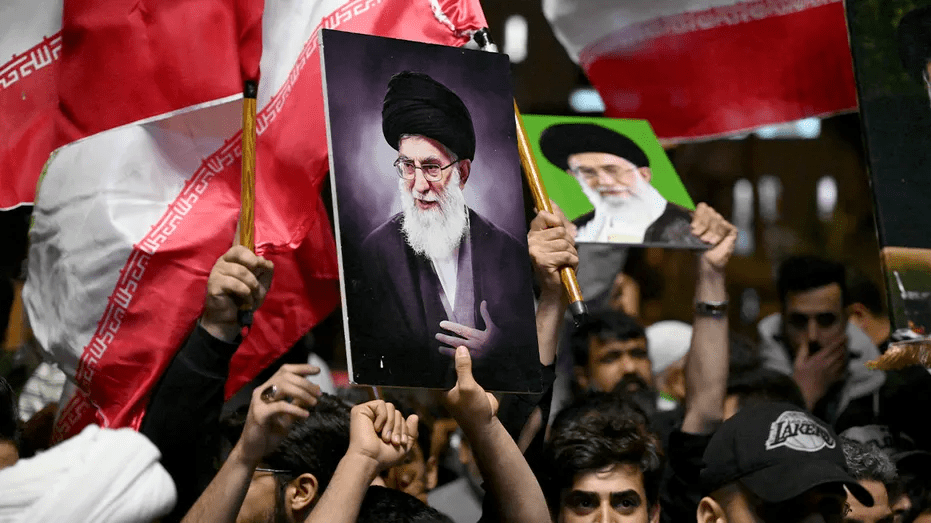
The confirmed death of the Iranian Supreme Leader Ali Khamenei, killed during coordinated U.S.–Israeli airstrikes in the morning of 28 February 2026, represents the most consequential turning point for the Islamic Republic since the 1979 revolution. Khamenei’s passing is not merely the end of an era; it confronts Iran with existential choices that will shape its internal structure, regional posture, and global alignment for decades to come.
For nearly four decades, Khamenei stood as the embodiment of the velayat-e faqih — the rule of the supreme jurist — in its most expansive and uncompromising form. After succeeding Ayatollah Ruhollah Khomeini in 1989, he consolidated authority over the clerical hierarchy, the military-security apparatus, and the ideological direction of the regime. Under his stewardship, the Islamic Republic institutionalized its revolutionary identity while insulating its core decision-making from popular accountability. Domestically, this produced a tightly securitized state that quelled challenges such as the 2009 Green Movement and the 2022 Woman, Life, Freedom protests with lethal force, deepening societal fractures and mistrust.
Internationally, Khamenei anchored Iran’s geopolitical strategy in resistance and deterrence. His vision elevated the Islamic Revolutionary Guard Corps (IRGC) into the pre-eminent instrument of statecraft, extending Tehran’s influence through proxy networks — from Hezbollah in Lebanon to the Houthis in Yemen. Iran’s asymmetric posture confronted U.S. interests and allied states across the Middle East while advancing its nuclear and missile capabilities as central pillars of strategic deterrence.
Geopolitical Vacuum and Succession Uncertainty
Khamenei’s death abruptly creates a constitutional and strategic vacuum. In the short term, an Interim Leadership Council — comprising President Masoud Pezeshkian, Chief Justice Gholam-Hossein Mohseni-Ejei, and senior cleric Alireza Arafi — assumed de facto leadership on 1 March 2026. Yet the absence of a designated successor, combined with an ambiguous succession process governed by the Assembly of Experts, raises questions about the future locus of authority.
Unlike Yugoslavia’s post-Tito fragmentation or the Soviet Union’s dissolution after the failed August 1991 coup, Iran possesses state institutions designed to endure leadership transitions. However, this system — meticulously constructed to withstand internal dissent — now confronts competing forces: the ideological clerical establishment, the IRGC’s security-military leadership, and an increasingly disaffected population. Each faction holds divergent visions for Iran’s path forward.
Strategic Reckoning: Concession or Escalation
Iran now faces a stark geopolitical dilemma. On one axis lies concession and recalibration — possibly reengaging diplomatically with the United States and other Western powers to alleviate sanctions, reduce regional tensions, and stabilize its economy, deeply hit by decades of sanctions and embargo. This path would echo historical precedence: in 1988, after eight years of devastating conflict with Iraq, Iran accepted a ceasefire that preserved state continuity at the cost of revolutionary momentum.
On the opposing axis is entrenchment of confrontation — doubling down on asymmetric deterrence, proxy warfare, and strategic autonomy. Within days of Khamenei’s death, Iran’s Revolutionary Guards indicated preparations for retaliatory strikes against U.S. and allied positions across the Middle East.
Our community already has nearly 220,000 readers!
Subscribe to our Telegram channel
Follow us on Telegram, Facebook and Twitter
© Copyright 2026 – Eurasia Business News. Article no. 2039
 Eurasia Business News