
By Alexander Miller, consultant in energy markets. Eurasia Business News, March 26, 2026. Article n°2061.
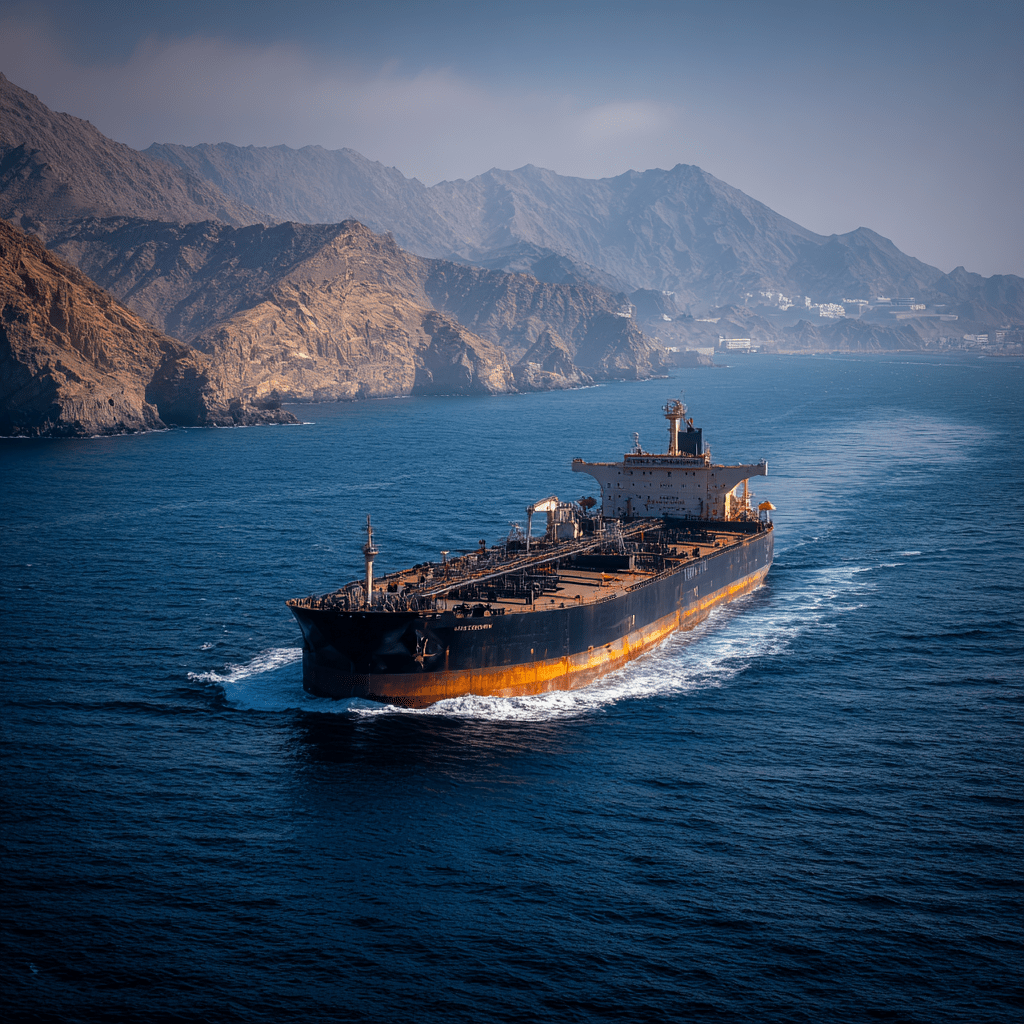
Ship‑tracking and press reports showed a Pakistan‑flagged crude tanker (the Karachi, operated by Pakistan National Shipping Corp.) transited the Strait of Hormuz with Iranian permission around March 15, 2026, heading toward Pakistan.
During a March 26 Cabinet meeting, the U.S. President Donald Trump said Iran had allowed “at least eight” and ultimately “10” Pakistan‑flagged oil tankers to sail through Hormuz as a “present” to the United States during negotiations to end the war.
“Eight large tankers loaded with oil” passed, after which Tehran “apologized for something said and said: “We will send two more boats,” the president added. As a result, “there were ten boats,” Trump said, and expressed confidence that the United States was dealing with “the right people.”
Trump’s comments indicate that a group of Pakistan‑flagged tankers was among the first non‑Iranian ships allowed safe passage during the crisis, framed by Washington as a test of U.S. leverage and Iranian willingness to ease the blockade.
Read also : The Private Investor Deal Evaluation Handbook
Iran’s foreign ministry also announced around this period that ships owned by several countries, including Pakistan, would be allowed to transit the strait, signaling a partial relaxation of earlier restrictions that had severely reduced traffic.
One daily pricing snapshot for oil price on March 26 shows Brent at about 105.85 dollars per barrel by 9 a.m. Eastern Time, up roughly 6 dollars from the previous morning and more than 30 dollars above its level a year earlier.
Trump previously said the U.S. had had “very good and productive talks” with Iran. He also instructed the Pentagon to stop strikes on Iran’s power plants and energy infrastructure for five days. In response, Iranian President Masoud Pezeschkian denied the fact of negotiations. According to Axios, the messages were transmitted by intermediaries – Egypt, Turkey and Pakistan.
The other day, the United States also offered Iran a 15-point plan. Among the US demands were the recognition of the Strait of Hormuz as free for navigation, as well as Iran’s renunciation of its nuclear program.
In response, Tehran made its five demands. These included the payment of reparations, as well as international recognition of Iran’s right to the Strait of Hormuz. The Iranian side added that it will not cease hostilities until these demands are fully met.
White House press secretary Caroline Levitt said that Trump, by offering the deal to Tehran, “is not bluffing and is ready to give hell” to Iran if it refuses.
Our community already has nearly 230,000 readers!
Subscribe to our Telegram channel
Follow us on Telegram, Facebook and Twitter
© Copyright 2026 – Eurasia Business News. Article no. 2061
 Eurasia Business News