
By Anthony Marcus for Eurasia Business News, April 11, 2026. Article n°2084
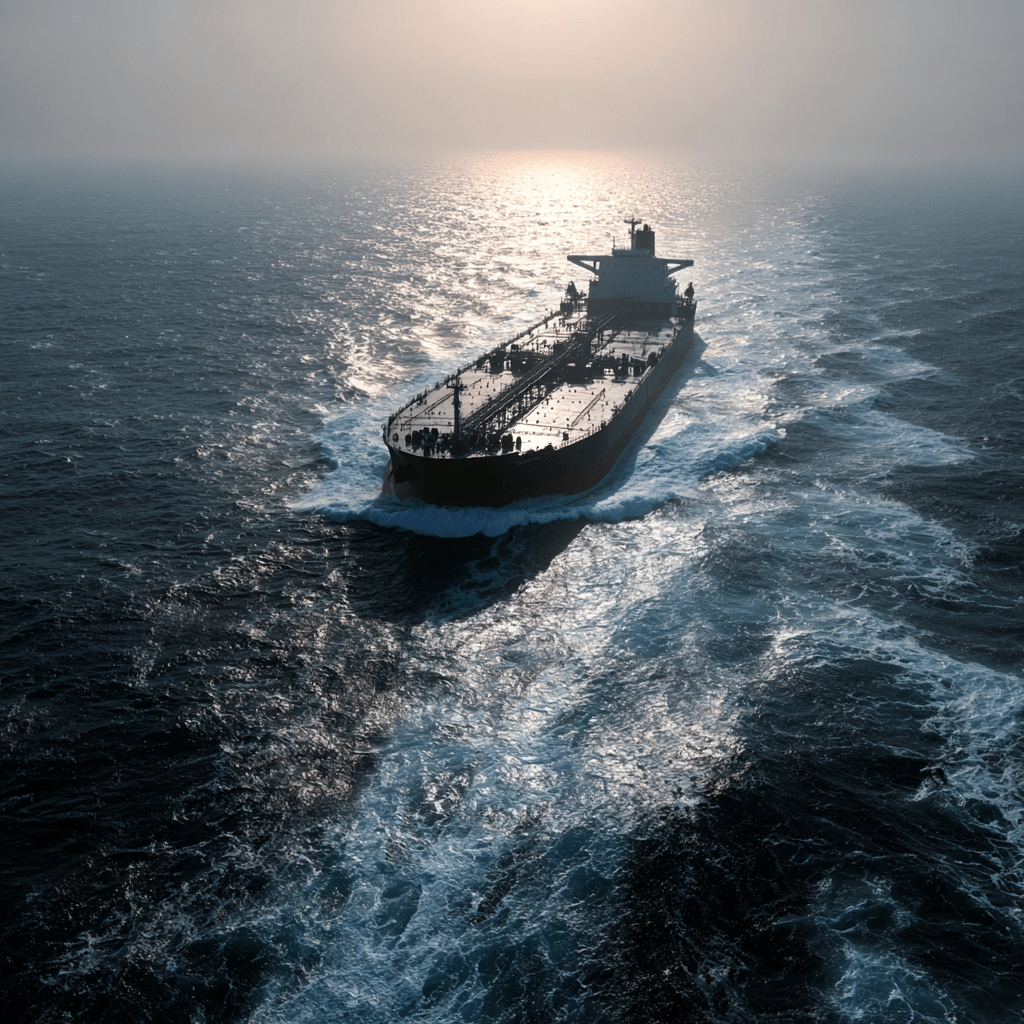
Two fully laden Chinese oil tankers were approaching or crossing the Strait of Hormuz on April 10-11, alongside a Greek vessel, marking the biggest oil-exit day since traffic nearly stopped weeks earlier.
The key point is that these ships were not carrying Iranian crude and had no obvious direct link to Iran, which is why the movement was treated as a broader reopening signal rather than an Iran export flow.
This matters because the Strait of Hormuz handles roughly a fifth of global oil flows, so even a modest pickup in tanker crossings can quickly affect freight rates, risk premia, and crude sentiment.
The reopening of Hormuz is critical to the world’s oil trade because its closure has resulted in the loss of millions of barrels of supply to global markets. A resumption would alleviate pressure on increasingly tight physical markets everywhere. The US and Iran are set to hold peace talks in Islamabad in the coming days.
The three tankers between them have a transport capacity of about 6 million barrels of crude. In addition, Iran, the only country really sending barrels through, exported at a rate of about 1.7 million barrels a day last month. That would imply roughly half the normal rate of shipments through the waterway — and only on a single day.
Read also : The Private Investor Deal Evaluation Handbook
A French-owned, Malta-flagged CMA CGM container ship did pass through the Strait of Hormuz on April 2, according to Reuters, BBC, WSJ, and Bloomberg coverage. It was reported as the first French-owned vessel to make that crossing since the conflict disrupted the waterway.
The war involving Iran illustrates the integration of economic pressure with military escalation. Financial sanctions, payment system exclusion, and export controls by the U.S. and its allies now operate as components of a broader strategic toolkit. On the other side, Iran closed the Straits of Hormuz and has targeted the oil tankers trying to navigate through it, provoking an oil price crisis worldwide.
This war is the fifth major shock to the region since 1979, following the Iranian Revolution, the Iran–Iraq War, the first Gulf War and the US invasion of Iraq.
Our community already has nearly 235,000 readers!
Subscribe to our Telegram channel
Follow us on Telegram, Facebook and Twitter
© Copyright 2026 – Eurasia Business News. Article no. 2084
 Eurasia Business News