
By Anthony Marcus for Eurasia Business News, April 12, 2026. Article n°2086
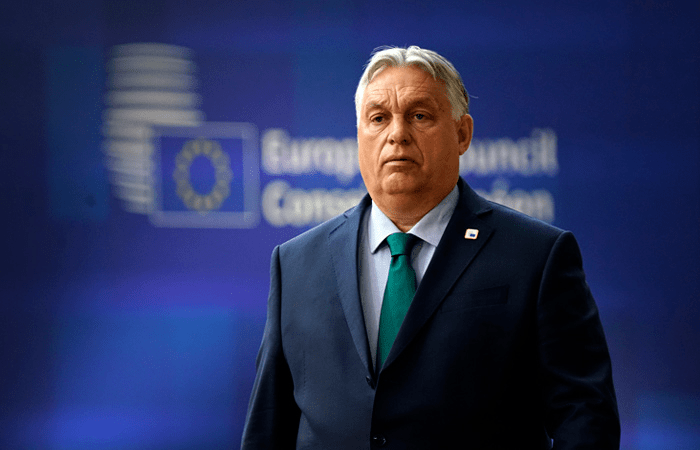
Hungary’s Viktor Orbán has conceded defeat in the 2026 parliamentary election, ending his 16 years in power. Early results point to opposition leader Péter Magyar and his Tisza party forming the next government.
Orbán called the result “painful” and congratulated Magyar after votes were counted on April 12, 2026. Reports say the outcome is a major reversal for a leader who had become one of Europe’s most durable nationalist incumbents.
Why it matters
The result could shift Hungary’s stance toward the European Union, NATO, and Ukraine, where Orbán had often resisted stronger backing for Kyiv. It is also a setback for the broader populist-nationalist network Orbán was seen as part of, including his ties with President Trump.
The 62-year-old Orban first served as prime minister of Hungary in 1998-2002, and then returned in 2010, and this is a record figure for the current leader in the EU countries. He was seeking another term before this election. Appealing to conservative values within the country, in foreign policy, Orban believed that Brussels’ policy contradicted the national interests of his country (in particular, on the issue of energy supplies from Russia). Thus, he has repeatedly expressed a dissenting opinion when discussing anti-Russian sanctions and allocating new funds to Kyiv.
Peter Magyar, 45, comes from a family close to the establishment and has a law degree. He began his political career in Fidesz, of which he remained a member until 2024, at various times he worked in the structure of the Ministry of Foreign Affairs and the Permanent Mission of Hungary to the EU. Magyar associated the withdrawal of Orban’s supporters from the camp, in particular, with his dissatisfaction with corruption and the quality of governance of the country as a whole. After that, he moved to the Tisza created in 2020 (its abbreviation coincides with the name of the tributary river of the Danube), soon becoming its unequivocal leader. In 2024, he received one of the party’s seven mandates in the European Parliament.
During the campaign, the parties accused each other of procedural violations, and the press and polls produced information consistent with proximity to one side or the other.
Read also : The Private Investor Deal Evaluation Handbook
At the same time, US Vice President James Vance came to support Orban a few days before the election. At the same time, a number of Western mainstream media, for example, Bloomberg, shortly before the elections, published transcripts of telephone conversations between Orban and Foreign Minister Petr Szijjarto with the Russian leadership, designed to convince the audience of their actions in favor of Moscow.
The leadership of Ukraine, including President Volodymyr Zelensky, has stepped up its criticism of Orban due to dissatisfaction with opposition to EU initiatives in support of Kyiv. However, harsh responses also came from Budapest – for example, Szijjarto accused Kyiv of interfering in internal affairs.
Our community already has nearly 235,000 readers!
Subscribe to our Telegram channel
Follow us on Telegram, Facebook and Twitter
© Copyright 2026 – Eurasia Business News. Article no. 2086
 Eurasia Business News