
By David Antonov, consultant in AI technology. Eurasia Business News, August 24, 2026. Article n°3116
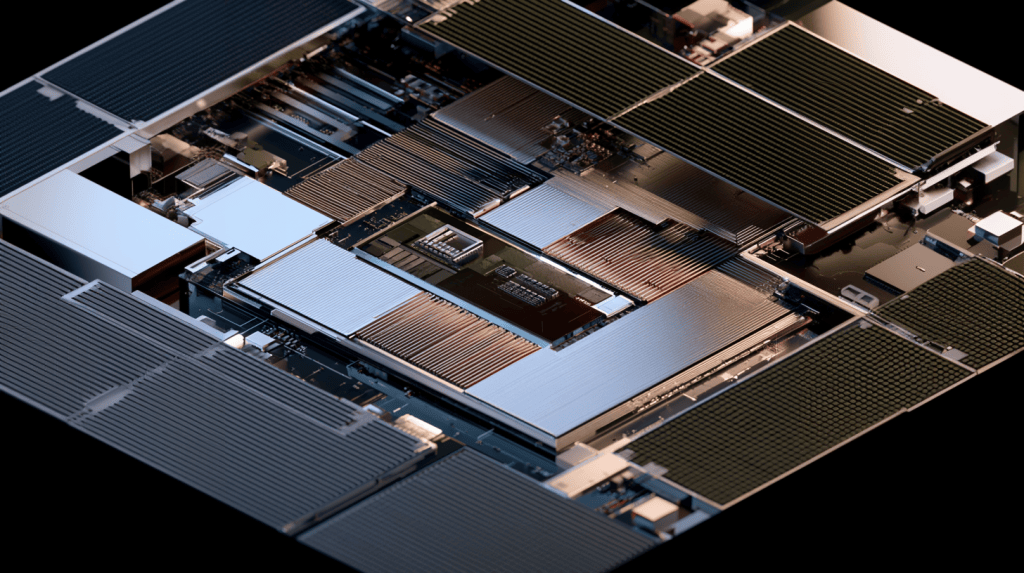
IBM has announced the first dual-architecture mainframe processor designed to run IBM and Arm computing environments on future IBM Z and LinuxONE systems. The development marks a significant shift in enterprise computing, potentially allowing organisations to combine established mainframe workloads with the rapidly expanding ecosystem of Arm-native Linux applications and artificial-intelligence software.
The processor was revealed at the Hot Chips 2026 conference and represents the first major milestone from IBM’s collaboration with Arm, established in April 2026. The chip is being designed for organisations that need the reliability, security and scalability of IBM mainframes while gaining direct access to modern Arm-based software.
IBM and Arm Platforms on One Processor
Traditional mainframe environments are built around IBM’s own instruction architecture and are widely used for banking, insurance, government services and large-scale transaction processing. Arm processors, meanwhile, have become increasingly important in cloud computing, mobile technology and energy-efficient data-centre infrastructure.
IBM’s new dual-architecture processor is designed to bridge those ecosystems. It will allow companies to run Arm-native Linux environments alongside z/OS and Linux workloads on IBM Z systems. According to IBM, the processor will not rely on separate Arm and IBM cores. Instead, each core will be able to execute the relevant instruction sets natively and concurrently.
This approach could simplify system design and reduce the need to divide workloads across separate processor platforms. Enterprises may be able to run traditional transaction systems and newer cloud-native applications in a more integrated environment.
Designed for AI and Enterprise Workloads
IBM said the processor will be built using a 2-nanometer manufacturing process and will feature 11 high-performance cores operating at more than 5.7 GHz. The design will also include AI inference accelerators for applications such as real-time fraud detection, a dedicated on-chip data-processing unit for faster input and output operations, and a large cache architecture for demanding enterprise workloads.
AI-powered fraud detection is a particularly important use case for financial institutions. Banks process enormous volumes of payment and account data, and the ability to analyse transactions within established mainframe systems could help identify suspicious activity more quickly while reducing data-movement requirements.
The processor’s design also targets data-intensive workloads that require high availability, encryption and consistent performance. IBM said the new architecture will preserve the security and resilience characteristics associated with its Z and LinuxONE platforms.
Why the Announcement Matters
The IBM dual-architecture processor could help enterprises modernise gradually rather than replace their existing mainframe infrastructure. Many organisations still depend on legacy applications that are critical to daily operations but also want to adopt Arm-native software, open-source tools and new AI frameworks.
By supporting both environments, IBM is seeking to make its mainframes more flexible and relevant to hybrid-cloud and AI strategies. Developers could build or deploy modern applications without abandoning the transaction systems that underpin core business processes.
Read also : Gold : Build Your Wealth and Freedom
The announcement also strengthens IBM’s position in the competition for enterprise AI infrastructure. Mainframes hold large volumes of valuable business data, but companies often move that data to external systems for AI processing. Running Arm-native AI applications closer to mainframe data could improve efficiency, reduce latency and simplify governance.
Expected Availability
IBM has not yet announced a commercial product name or final release date for the processor. The chip is expected to appear in a successor to the current IBM z17 generation. Industry observers note that IBM generally follows a multi-year mainframe development cycle, suggesting that systems based on the new processor could arrive around 2028.
Read also : Tax Management strategies for Digital Nomads
IBM’s first dual-architecture mainframe processor represents more than a chip upgrade. It signals an effort to connect the dependable world of mainframe computing with the flexible, AI-focused future of Arm and Linux infrastructure.
Our community already has nearly 320,000 readers!
Subscribe to our Telegram channel
Follow us on Telegram, Facebook and Twitter
© Copyright 2026 – Eurasia Business News. Article no. 3116

