
By William Collins, consultant in stock markets – Eurasia Business News, November 10, 2026. Article no 3254
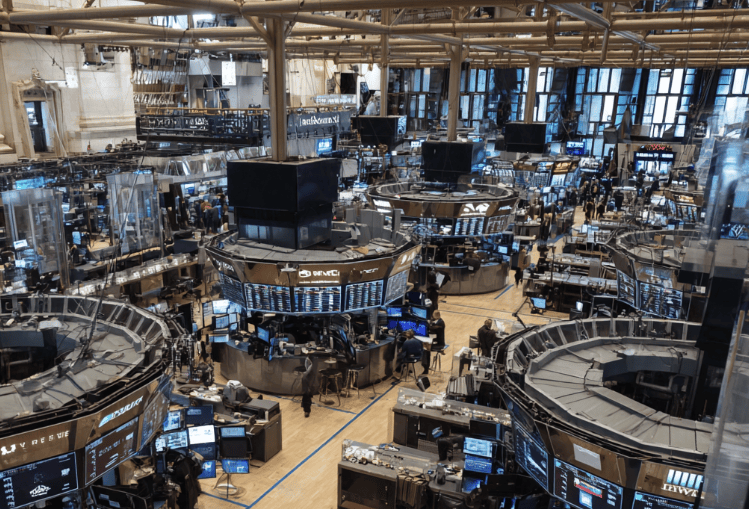
U.S. stocks finished lower on Tuesday, November 10, 2026, as hotter-than-expected inflation revived concerns about further Federal Reserve interest rate increases. The Dow Jones Industrial Average fell 0.30%, the S&P 500 slipped 0.38%, and the Nasdaq Composite declined 0.74%. Brent and WTI crude oil also settled lower, while gold faced heavy selling pressure as Treasury yields and the dollar climbed.
The session highlighted a difficult combination for investors: easing oil prices offered some relief, but persistent underlying inflation kept monetary policy concerns firmly in focus. According to Kitco’s late U.S. trading report, spot gold traded near $4,031.80 per ounce, down 2.60%.
Stock Market Today: Dow Jones, S&P 500 and Nasdaq Closing Prices
Wall Street surrendered part of Monday’s strong rebound, with the technology-heavy Nasdaq posting the largest percentage decline among the three major benchmarks. Tuesday’s closing figures were:
| Index | November 10 close | Points change | Percentage change |
|---|---|---|---|
| Dow Jones Industrial Average | 52,231.89 | −157.86 | −0.30% |
| S&P 500 | 7,520.93 | −29.01 | −0.38% |
| Nasdaq Composite | 25,065.87 | −187.26 | −0.74% |
The closing figures show a broad but relatively contained retreat, rather than a complete reversal of the previous session’s rally.
Technology shares remained particularly vulnerable as rising bond yields complicated the outlook for highly valued growth companies. CNBC identified Nvidia’s decline as one contributor to weakness across the major averages. Investors were simultaneously reassessing inflation, borrowing costs and the durability of the recent technology rebound.
Why Did the Stock Market Fall Today?
The main economic catalyst was October’s consumer price index report. Headline CPI increased 0.4% month over month, exceeding economists’ expectations for a 0.3% rise. Core CPI, which excludes food and energy, increased 0.3%, compared with forecasts for 0.2%.
Those differences mattered because they suggested inflation remained broader than an energy-driven problem. Kitco reported that shelter costs rose 0.3%, food prices increased 0.5%, and several other categories continued to show price pressure. Falling crude prices therefore did not eliminate concerns about persistent consumer inflation.
Federal Reserve Governor Christopher Waller added to the cautious mood by signaling support for a December interest rate increase and leaving open the possibility of a half-percentage-point move if inflation warranted stronger action. Traders consequently faced a less supportive interest rate outlook than Monday’s equity rally might have implied.
Treasury Yields Rise as Rate Expectations Shift
The bond market reinforced the message from equities. The benchmark 10-year Treasury yield briefly moved above 5%, while the two-year yield approached 4.75%, according to Kitco’s market report. The dollar also strengthened following the inflation release.
These moves connected the day’s stock and precious-metals declines. Higher yields increased competition from interest-bearing assets, while expectations for restrictive monetary policy weighed on risk appetite. For gold, the combination of rising yields and a firmer dollar outweighed support that might otherwise have come from geopolitical uncertainty.
Read also : TAX MANAGEMENT STRATEGIES FOR DIGITAL NOMADS
The inflation report thus became the central thread linking Tuesday’s markets, even as crude oil responded to a separate set of supply and diplomatic developments.
Oil Prices Today: Brent and WTI Settle Lower
Crude oil prices extended their decline as traders reduced some of the premium associated with potential Middle Eastern supply disruptions.
- Brent crude for January settlement fell $1.08, or 1.17%, to $91.49 per barrel.
- WTI crude for December delivery declined $0.81, or 0.93%, to $86.04 per barrel.
Both benchmarks recorded their lowest settlements since August 31. Brent briefly traded below $90 during the session before recovering some of its losses. The intraday rebound illustrates why an earlier trading quote should not be presented as the final settlement price.
Bloomberg’s report, published by Rigzone, attributed the decline to expectations of de-escalation involving Iran and recovering Persian Gulf oil flows. Trend-following traders also reduced bullish positions, amplifying the downward move.
However, lower prices did not mean supply risks had disappeared. The same report described continuing threats to shipping and regional energy infrastructure. Oil markets were pricing improved expectations, not a confirmed end to geopolitical uncertainty.
Gold Price Today
Late U.S. trading update placed spot gold near $4,031.80 per ounce, down $107.60, or 2.60%, on Tuesday. Spot silver also weakened, trading near $51.410 per ounce, down 3.55%.
Earlier in the session, spot gold was around $4,054.90, down approximately 2%. The later quote showed selling pressure had deepened as markets absorbed the inflation surprise and the accompanying rise in yields. These are time-specific spot quotations, not interchangeable closing or futures settlement prices.
Read also : Gold : Build Your Wealth and Freedom
Kitco identified initial gold support around $4,020 and $4,000, with resistance near $4,051.45 and $4,088.51. These technical levels represent potential trading reference points rather than guaranteed turning points.
Futures Snapshot Versus Official Market Closes
The supplied screenshot displays positive moves in Dow, S&P and Nasdaq futures, alongside gold at $4,032.99 and a crude-oil quote of $86.38. Those figures should remain separate from Tuesday’s cash-index closes and oil settlements. The image does not identify the crude benchmark or contract month clearly enough to label that quote as Brent or WTI.
What Investors Are Watching Next
Attention now turns to whether incoming economic data confirm persistent inflation. Kitco highlighted weekly jobless claims and October producer prices as upcoming releases that could influence expectations for the Federal Reserve’s December decision. For stocks, gold and oil alike, the balance between inflation pressure, interest rates and geopolitical developments remains the immediate market driver.
Our community already has nearly 346,000 readers!
Subscribe to our Telegram channel
Follow us on Telegram, Facebook and Twitter
© Copyright 2026 – Eurasia Business News. Article no. 3254

