
By John Meyer, consultant in financial affairs – Eurasia Business News, August 7, 2026. Article No 3059
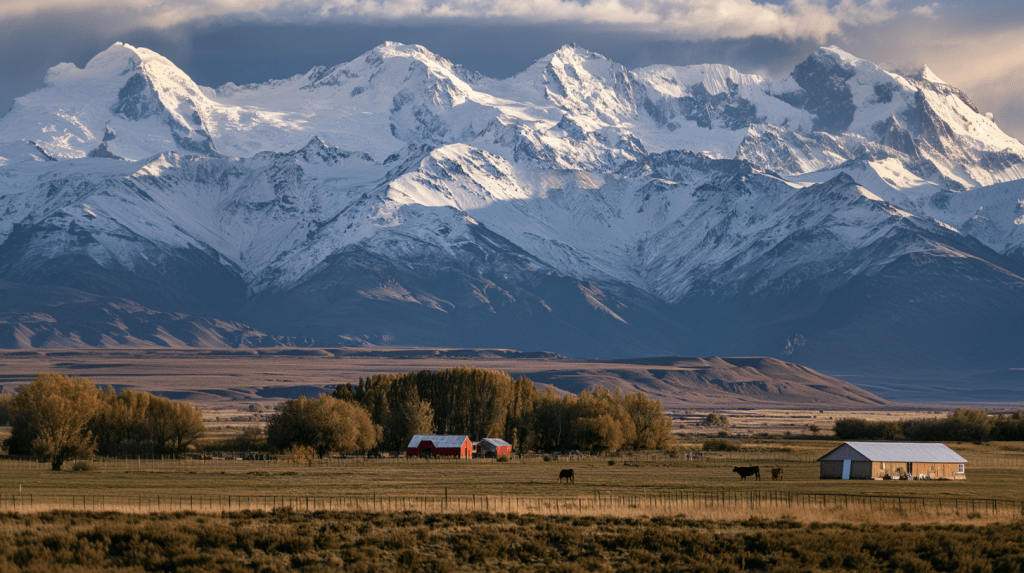
Wealthy technology investors are increasingly looking to Argentina for rural ranches, second homes, and long-term contingency plans amid concerns over geopolitical conflict, AI disruption, and instability in the Northern Hemisphere.
Argentina is emerging as an unlikely destination for technology billionaires seeking a hedge against global disruption. From luxury properties in Buenos Aires to remote ranches near Mendoza, wealthy investors are looking at the country not merely as a lifestyle destination, but as a potential refuge should geopolitical instability, economic turmoil, nuclear conflict, or uncontrolled artificial intelligence reshape life in the United States and Europe.
The New York Times reported that Peter Thiel has been exploring Argentina as a possible “backup nation,” reflecting a wider interest in Southern Hemisphere contingency planning.
Why Argentina Appeals to Tech Billionaires
The appeal of Argentine ranches rests on geography, scale, and relative isolation. Argentina is far from the major military flashpoints of the Northern Hemisphere and has extensive agricultural land, freshwater resources, and a comparatively low population density outside Buenos Aires and other large cities.
For ultra-wealthy individuals thinking in terms of resilience, an estate with independent power, water access, food production, security, and air transport links can serve as an insurance policy. That does not necessarily mean every buyer expects an imminent catastrophe. Rather, the logic is comparable to portfolio diversification: a family can maintain several jurisdictions, passports, residences, and asset bases in case political or economic conditions deteriorate elsewhere.
Read also : The Million-Dollar Retirement Blueprint for U.S. citizens in 2026
This strategy is sometimes called “sovereign diversification.” A source quoted by Business Insider described the model as maintaining multiple tax regimes, multiple citizenship options, and at least one “Plan B” jurisdiction in the Southern Hemisphere.
Peter Thiel and the Argentina Trend
Palantir and PayPal co-founder Peter Thiel has become the most visible example of this shift. Reporting indicates that he relocated with his family to Buenos Aires, purchased a home in an exclusive neighborhood, and has engaged with Argentine President Javier Milei’s administration. Fortune reported that Argentina is actively seeking to attract foreign capital and high-net-worth residents as part of its broader economic strategy.
Read also : Tax Management strategies for Digital Nomads
Thiel’s concerns are not limited to conventional political risk. He has publicly expressed anxiety about nuclear conflict and artificial intelligence, two threats that can make remoteness and self-sufficiency more attractive to wealthy technology figures. According to the New York Times, Spanish-Argentine entrepreneur Martin Varsavsky, who is close to Thiel, has built a ranch in Mendoza.
“The moment China takes Taiwan or Russia takes Lithuania, I’m in Buenos Aires,” Varsavsky, a Spanish-Argentine tech entrepreneur, was quoted as saying. “It’s good to have a Plan B for civilization.”
Thiel, a supporter of President Trump’s, has also forged close ties with President Milei, the libertarian whose crusade against taxes, regulation and government spending closely aligns with Thiel’s own worldview.
The broader pattern is global. Billionaires have bought remote land in New Zealand, developed highly secured compounds in Hawaii, and invested in bunkers or autonomous communities. The Financial Times noted that prominent figures including Thiel and Mark Zuckerberg have pursued remote-property strategies in different jurisdictions.
Argentina’s Investment Opportunity
Argentina is not a risk-free refuge. The country has a history of inflation, currency crises, capital controls, and abrupt policy shifts—factors that normally discourage long-term investors. But President Milei’s government is trying to change that perception through deregulation, fiscal reform, and policies designed to attract foreign wealth.
In July 2025, Argentina established an agency to develop a citizenship-by-investment program. Proposed structures reportedly include investment routes involving substantial donations or government-bond purchases, although final program terms remain under development.
Argentina’s citizenship gains additional appeal following the country’s July 29, 2025 application to rejoin the US Visa Waiver Program. Successful entry would grant Argentine passport holders visa-free access to the United States, enhancing the program’s attractiveness to potential investors.
For tech tycoons, Argentine ranches represent more than luxury real estate. They combine land, distance, mobility, food security, and political optionality. Whether described as apocalypse bunkers, “bug-out” locations, or strategic second homes, these properties reveal how the global elite are increasingly treating geography itself as a form of risk management.
Read also : When Argentina was a Wealthy Nation
The World Bank sees Argentina’s economy growing 3.6% in 2026. The country’s economy grew 4.4% in 2025. The World Bank said this would put Argentina on track for three consecutive years of growth for the first time since 2008.
Our community already has nearly 280,000 readers!
Subscribe to our Telegram channel
Follow us on Telegram, Facebook and Twitter
© Copyright 2026 – Eurasia Business News. Article no. 3059

