
By Anthony Marcus for Eurasia Business News, August 31, 2026. Article n°3131
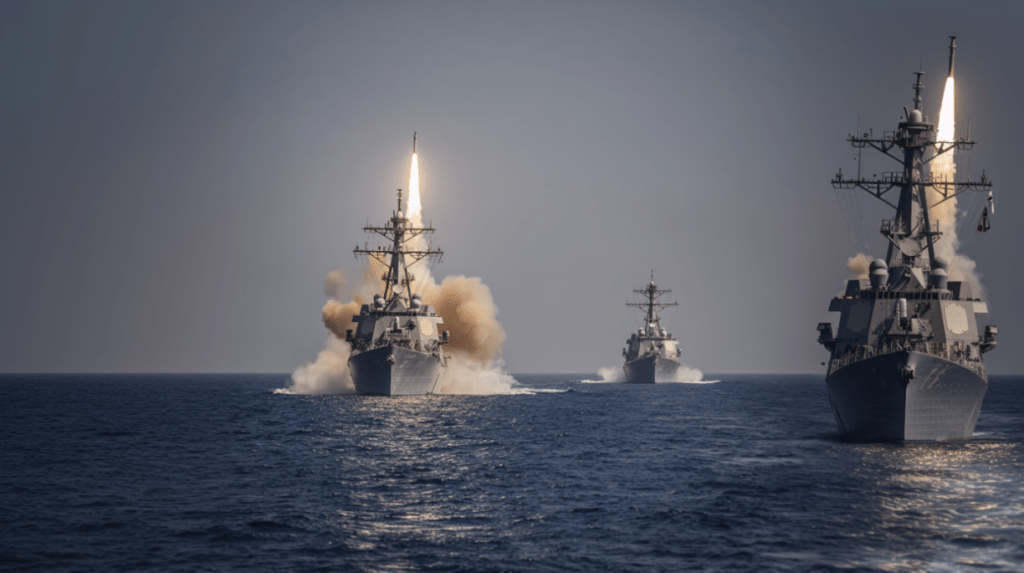
Fighting between the United States and Iran has escalated after U.S. forces struck two Iranian rocket launchers on Larak Island near the Strait of Hormuz. The U.S. military said the launchers were being prepared to fire rockets carrying sea mines into the waterway, creating what Central Command described as an imminent threat to commercial shipping and international navigation.
The attack marked the first publicly known U.S. strike inside Iran in weeks. Iran responded with missile strikes against U.S. forces in Jordan and the United Arab Emirates, ending a month-long period of relative restraint and raising fears of a broader regional conflict.
U.S. Targets Larak Island Launchers
U.S. Central Command said its forces carried out “limited, precise action” against Islamic Revolutionary Guard Corps, or IRGC, units on Larak Island. The island lies near Iran’s port city of Bandar Abbas and overlooks critical shipping lanes through the Strait of Hormuz.
According to Navy Capt. Tim Hawkins, a CENTCOM spokesperson, U.S. forces observed IRGC personnel preparing rocket launchers capable of firing sea mines into the strait. The launchers were targeted before they could be used.
CENTCOM said its action was defensive and aimed at protecting civilian mariners, commercial vessels and the free flow of global commerce. “Iran created the threat, and the U.S. military eliminated it,” the command said.
Iran rejected that account and described the strike as an act of aggression. Iranian officials said the U.S. action caused deaths and injuries among military personnel and civilians, though independent verification and detailed casualty figures were not immediately available.
Iran Fires Missiles at Jordan and UAE
Iran retaliated early Monday by launching ballistic missiles toward U.S. military facilities in Jordan and the UAE. Jordanian armed forces said air-defence systems intercepted eight missiles that entered the country’s airspace.
The Iranian Revolutionary Guards claimed responsibility for attacks against two U.S. bases in Jordan, saying it had targeted aircraft infrastructure and technical facilities used to support the U.S. strike on Larak Island.
U.S. officials said American air defences intercepted nearly all of the incoming missiles. Two Jordanian security sources said some missiles were not successfully intercepted, but no casualties were reported.
The retaliatory strikes demonstrate how quickly a limited attack at sea can trigger a wider military response across the Middle East. U.S. bases in Jordan and the Gulf are central to American regional military operations, and further attacks could force Washington to increase defensive deployments or conduct additional retaliatory strikes.
Strait of Hormuz Remains Critical
The Strait of Hormuz is one of the world’s most important energy chokepoints. It links the Persian Gulf to the Gulf of Oman and the Indian Ocean, and normally carries about one-fifth of global oil consumption, as well as significant volumes of liquefied natural gas.
The U.S. military said it had completed clearing Iranian sea mines from internationally recognised shipping routes in the strait last week. However, the reported preparation of new mine-launching systems indicates that maritime security risks remain high.
Sea mines can disrupt trade even without being detonated. Their presence may force tankers to wait, divert, seek naval escorts or pay higher insurance premiums. Such delays can raise global oil prices, increase freight costs and threaten energy supplies to Asia, Europe and other major consuming regions.
The confrontation has already contributed to sharp swings in Brent crude and WTI oil prices. Markets are watching whether Iran takes further action against tankers, ports, offshore platforms or regional energy infrastructure.
Regional and Global Implications
The latest fighting comes after a six-month conflict between the United States, Israel and Iran. The war began with U.S. and Israeli strikes on Iranian targets and has since expanded to include missile attacks, regional proxy activity and military operations involving Lebanon, Jordan and Gulf states.
The resumption of direct strikes raises the risk of miscalculation. Even if both sides want to avoid a wider war, attacks on military bases, shipping routes or civilian infrastructure can create pressure for escalation.
For global markets, the immediate concerns are oil prices, inflation and shipping costs. A prolonged disruption in the Strait of Hormuz would likely support energy producers and defence companies but increase costs for airlines, manufacturers, retailers and consumers.
Central banks are also monitoring the conflict. Higher fuel prices can revive inflation pressures and make it more difficult for policymakers to lower interest rates.
What Happens Next
The next stage of the crisis will depend on Iran’s response and whether the United States conducts additional military operations. Washington has said it will protect commercial shipping and prevent new mining of the Strait of Hormuz. Tehran has signalled that it will retaliate against attacks on its territory and military personnel.
Diplomatic efforts may still reduce the risk of further escalation, but the exchange around Larak Island has shown that tensions remain extremely high. For now, the Strait of Hormuz will remain at the centre of global security and energy-market risk.
Our community already has nearly 320,000 readers!
Subscribe to our Telegram channel
Follow us on Telegram, Facebook and Twitter
© Copyright 2026 – Eurasia Business News. Article no. 3131
 Eurasia Business News