
By Anthony Marcus for Eurasia Business News, August 31, 2026. Article n°3132
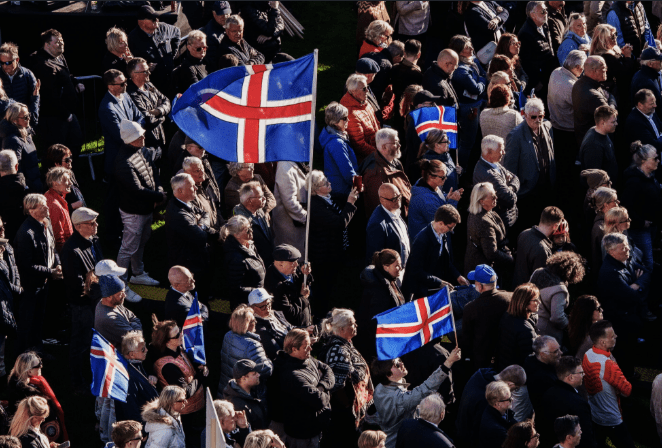
Iceland has voted against reopening talks to join the European Union, preserving its position outside the bloc while remaining a strategically vital NATO member between North America and Europe.
In a closely contested referendum, 52.8% of voters rejected the proposal to resume EU accession negotiations, while 47.2% supported it. Turnout reached 82.5%, reflecting the high political importance of the issue.
The result is not a vote against Europe. Iceland will remain connected to the EU through the European Economic Area and the Schengen free-movement area. However, it highlights the difficulty the European Union faces in persuading affluent, stable democracies that full membership offers enough benefits to justify sharing greater authority over fisheries, trade rules and regulation.
What Iceland Voted On
The referendum asked Icelanders whether the government should resume negotiations on joining the European Union. It was not a direct vote on whether Iceland should become an EU member.
Had the “yes” side prevailed, Iceland would have reopened accession negotiations with Brussels. Any final agreement would then have required a second referendum before Iceland could join the 27-member bloc.
The vote now ends, at least for the current parliamentary term, the government’s effort to restart a process halted more than a decade ago. Prime Minister Kristrún Frostadóttir said the government would respect the result and would not proceed with accession negotiations, while continuing to strengthen Iceland’s existing ties to the European Economic Area.
Iceland is already highly integrated with Europe. Through the EEA, it participates in the EU single market and adopts many EU regulations. Through Schengen, Icelanders can travel freely across much of Europe. The country also has close trading, cultural and institutional links with the Nordic countries and the wider European continent.
Fisheries and Sovereignty Decide the Vote
Control over Iceland’s fisheries was the decisive issue for many voters. Fishing remains a central pillar of Iceland’s economy, identity and political independence. Opponents of EU membership argued that accession could eventually expose Icelandic waters to greater access from other European fishing fleets under the EU’s Common Fisheries Policy.
Supporters of EU talks argued that Iceland could negotiate safeguards for fishing rights, particularly given the country’s importance as a North Atlantic fishing nation. However, scepticism proved stronger outside central Reykjavík.
Only the two central Reykjavík constituencies backed reopening negotiations. Rural regions and suburban districts voted against the proposal, indicating a divide between more internationally oriented urban voters and communities that place greater emphasis on sovereignty, natural-resource control and the economic importance of fisheries.
For Iceland, the debate was therefore not simply about tariffs or technical regulations. It was about whether the economic benefits of deeper integration justified sharing authority over a resource that has shaped the country’s modern history.
Iceland’s Strategic NATO Role
The referendum also occurred during heightened concern about Arctic security and NATO’s future. Iceland is a founding member of NATO but has no standing military. Its defence depends on alliance cooperation, particularly with the United States and other NATO partners.
Iceland’s geographic location gives it major strategic importance. The island sits across the Greenland-Iceland-United Kingdom, or GIUK, gap—an area used to monitor naval movements between the Arctic and North Atlantic. It also hosts Keflavík Air Base, a critical location for NATO air policing, surveillance and maritime operations.
The country’s role has become more significant as Russia increases military activity in the Arctic and North Atlantic. Iceland’s decision to remain outside the EU means that NATO, rather than EU defence structures, will remain the central framework for its security.
The question of EU membership gained added urgency because President Donald Trump has raised doubts about the U.S. commitment to NATO and has taken a more assertive position toward Greenland. Some Icelanders saw EU membership as a potential additional layer of geopolitical protection. Others concluded that NATO membership and close bilateral ties with the United States remain sufficient.
A Challenge for EU Enlargement
Iceland’s result provides a broader lesson for the European Union. The EU can be highly attractive to countries seeking economic stability, access to the single market, legal certainty and security ties. But wealthy democracies that already enjoy many of those benefits through alternative arrangements may be less willing to surrender control over major national policies.
Iceland has access to the single market through the EEA, while maintaining its own currency, independent fisheries policy and distinct approach to agriculture. This arrangement reduces the urgency of EU membership compared with candidate countries that seek stronger institutional integration or economic convergence.
The vote demonstrates that enlargement is not solely a matter of economic calculation. National identity, democratic control and resource sovereignty can outweigh the perceived benefits of closer integration.
What Happens Next
Iceland will remain outside the European Union for the foreseeable future, while retaining close economic and political links through the EEA and Schengen. The referendum result is technically nonbinding, but Iceland’s government has pledged to honour it.
For NATO and the United States, the outcome preserves Iceland’s familiar strategic position: deeply tied to Europe, firmly anchored in the transatlantic alliance and still independent from EU institutions. For the EU, the vote underscores a continuing challenge—how to persuade prosperous democracies that full membership is more valuable than close partnership without political integration.
Our community already has nearly 320,000 readers!
Subscribe to our Telegram channel
Follow us on Telegram, Facebook and Twitter
© Copyright 2026 – Eurasia Business News. Article no. 3132

