
By Anthony Marcus, consultant in geopolitics. – Eurasia Business News, November 19, 2026. Article no 3279
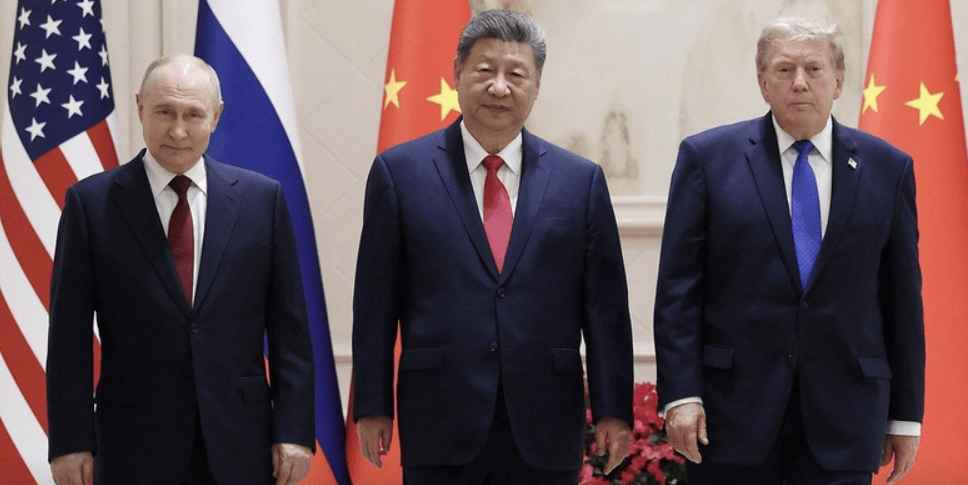
The meeting between Xi Jinping, Donald Trump and Vladimir Putin at the APEC summit in Shenzhen delivered something Moscow prizes: recognition as an indispensable participant in discussions about international security. Whether it produced the foundations of a new geopolitical settlement is another question. Our local sources describe an encounter rich in symbolism but limited in concrete results, with diplomatic choreography outpacing evidence of substantive agreement.
That distinction anchors the debate over a “new Yalta.” The comparison evokes a world in which major powers negotiate security arrangements over the heads of smaller states, treating sovereignty as a bargaining variable rather than a guiding principle. Yet a photograph of three presidents does not establish a shared strategic vision, let alone an enforceable settlement. The question is not simply what Xi, Trump and Putin discussed, but whose interests shaped the conversation, who remained outside the room, and whether recognition will translate into lasting concessions.
What Happened at the Shenzhen APEC Summit?
The U.S., Chinese and Russian presidents held approximately 90 minutes of trilateral talks on November 19. The meeting followed ceremonial encounters the previous evening and took place alongside APEC’s wider economic programme.
We cannot deny that the meeting of Vladimir Putin, Donald Trump, and Xi Jinping in Shenzhen was a demonstration of growing influence in world politics for Moscow and Beijing.
However, a summit can open channels, change perceptions and establish negotiating priorities without resolving the disputes that brought leaders together.
The analytical task is therefore to separate three outcomes: access to leaders, agreement on diplomatic language, and enforceable changes in policy. Shenzhen clearly produced the first; reporting describes some of the second, but much less of the third.
Why the “New Yalta” Comparison Resonates
The original Yalta Conference brought Franklin D. Roosevelt, Winston Churchill and Joseph Stalin together from February 4–11, 1945. They discussed Germany, Poland, Eastern Europe and the future United Nations as World War II approached its conclusion.
Yalta was not simply a meeting at which three men drew arbitrary lines across a map. It combined military realities, institutional bargaining and promises about political representation, including commitments to elections in Poland. Its legacy nevertheless became inseparable from the unequal power of states whose futures were being discussed.
The Shenzhen analogy rests principally on exclusion: powerful governments discussing regional security without all affected countries present. The Ukrainian President Volodymyr Zelensky warned against decisions about ending the war without Ukraine’s participation.
The comparison is therefore most useful as a warning about diplomatic hierarchy, not as proof that a comprehensive territorial bargain has already been concluded.
Putin’s Immediate Gain: Status Before Substance
For the Russian President Vladimir Putin, participation itself carried value. The Russian president wanted to project superpower status and demonstrate that efforts to isolate Russia had failed.
This helps explain why an inconclusive summit can still serve Moscow’s interests. Recognition changes the setting in which demands are presented: Russia appears not merely as a subject of international pressure, but as a participant claiming authority over the rules of regional security.
Yet recognition is not the same as acceptance. Standing beside Trump and Xi does not establish that either endorsed Russia’s territorial claims, its preferred settlement for Ukraine or its demands concerning Europe.
The more defensible conclusion is narrower: Putin gained a platform from which to promote those objectives. Whether access becomes leverage depends on subsequent decisions by other governments.
China’s Advantage: Hosting Without Owning Every Dispute
China’s role extends beyond providing the venue. By bringing Washington and Moscow together, Beijing positions itself as a central diplomatic hub while preserving room to maneuver on individual disputes.
The Shenzhen meeting also fits into an established pattern of Russia-China engagement. Earlier discussions surrounding the Shanghai Cooperation Organisation summit in Bishkek encompassed bilateral coordination, international security and energy cooperation, including the proposed Power of Siberia-2 pipeline. Shenzhen therefore represents another stage in an ongoing diplomatic relationship rather than an isolated encounter.
The strategic implication is clear: Beijing can cultivate close ties with Moscow while managing its relationship with Washington on a separate track. A three-way meeting does not amount to a three-way alliance, nor does cooperation on selected issues erase competing interests.
Hosting strengthens China’s visibility and its ability to bring major powers to the negotiating table. It does not, however, automatically make Beijing a guarantor of any future Ukraine settlement or demonstrate that Chinese and Russian priorities are fully aligned.
Trump’s Test: Diplomatic Access or Durable Results?
For Trump, the meeting offered an opportunity to pursue direct engagement with two major counterparts. The central question is whether personal diplomacy produces commitments that officials can translate into workable arrangements.
The leaders agreed on a “peace declaration” addressing United Nations reform, refined petroleum supplies and concerns about the International Criminal Court’s treatment of world leaders. Its analysis nevertheless describes the summit as heavier on symbolism than concrete outcomes.
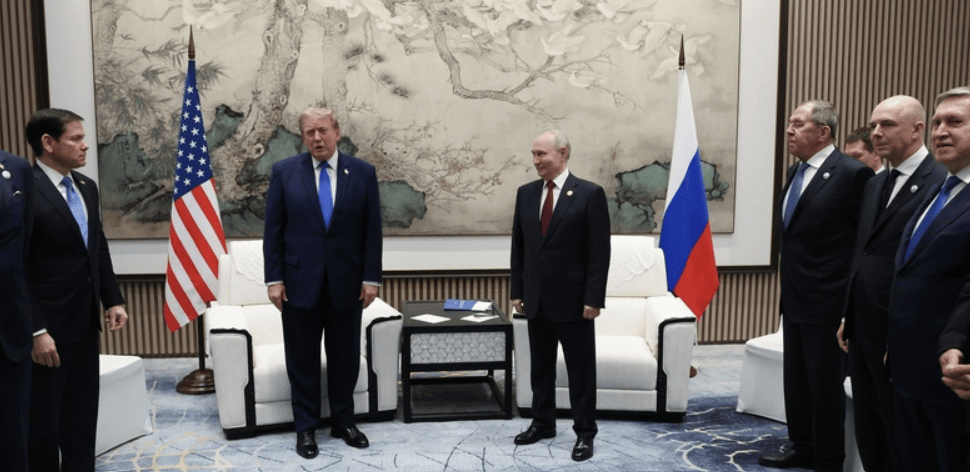
Those reported subjects should not be confused with a Ukraine peace agreement. Institutional language, energy commitments and discussions of accountability involve different legal and political processes.
A meaningful assessment of Trump’s diplomacy must therefore examine implementation: what governments actually change, what conditions apply, and whether other affected states accept the arrangements. A declaration supplies evidence of dialogue; it does not by itself demonstrate conflict resolution.
Ukraine and Europe Are Not Merely Bystanders
The strongest objection to a “new Yalta” approach is practical as well as political. Agreements negotiated without the meaningful participation of those expected to implement them risk resistance, funding shortfalls and a lack of legitimacy.
Ukraine’s negotiating position depends on more than decisions taken by outside powers. Continued Western support, domestic political cohesion and economic resilience shape Kyiv’s ability to sustain its defence and evaluate proposed compromises. These realities place limits on what negotiations conducted over Ukraine’s head can achieve.
Europe’s role further exposes the shortcomings of a simplistic three-power framework. European governments command financial, military and diplomatic resources that would matter to any durable settlement. Their absence from a particular meeting does not diminish their importance in financing reconstruction, supporting security arrangements or sustaining economic pressure.
Exclusion can increase pressure, but it cannot eliminate the agency of those excluded. Kyiv’s acceptance, credible European commitments and workable security guarantees would remain essential to turning a diplomatic announcement into a settlement capable of enduring.
Energy and Business: Where Diplomacy Meets Execution
For businesses, the summit’s importance lies less in historical comparisons than in its potential implications for sanctions, trade, energy supplies and investment risk.
Discussions involving refined petroleum products place energy within the broader diplomatic equation. Russia’s growing focus on Asian energy markets, alongside China’s efforts to maintain Russian ties without compromising its wider economic relationships, creates overlapping interests—but also competing priorities.
These connections offer opportunities for bargaining, not automatic commercial openings. A conciliatory statement does not amend sanctions; a proposed pipeline is not a financed project; and a declaration supporting peace does not make operating conditions commercially viable or insurable.
Businesses must therefore distinguish diplomatic announcements from regulatory authorization, binding contracts and actual delivery. The decisive question is not whether leaders project cooperation, but whether their discussions lead to measurable changes in legal restrictions, payment channels, transport access and supply reliability. Until those conditions change, political optimism remains a signal to assess—not a substitute for commercial due diligence.
Why a Three-Power Order Remains an Incomplete Model
The “new Yalta” framing also risks exaggerating the coherence of the three participants. A shared photograph does not establish shared interests across trade, technology, security and regional influence.
Eurasia Business News’s coverage of the Bishkek summit highlights relationships extending beyond this triangle, including India, Iran, Turkey and Central Asian states. That wider network complicates any suggestion that Washington, Beijing and Moscow alone can determine Eurasia’s trajectory.
Read also : Gold : Build Your Wealth and Freedom
The summit may demonstrate concentrated diplomatic influence without demonstrating comprehensive control. Other governments can cooperate, resist, hedge or demand compensation, depending on the issue.
This distinction matters for forecasting. A negotiated understanding among three leaders could alter incentives substantially while still producing uneven implementation and competing interpretations elsewhere.
Three Tests for What Comes Next
The summit’s consequences can be assessed through three practical tests.
First, participation: do subsequent negotiations incorporate Ukraine and relevant European governments, or continue discussing their security without meaningful involvement?
Second, specificity: do official documents contain identifiable obligations, timelines and verification arrangements, rather than broad statements supporting peace and stability?
Third, implementation: do governments change military practices, financial measures or negotiating positions in ways consistent with their commitments?
These tests separate a diplomatic opening from an enforceable settlement. They also avoid the opposite mistake of dismissing symbolic recognition as irrelevant. Status can influence negotiations, but it cannot substitute indefinitely for agreements that affected parties are prepared to carry out.
A New Yalta—or a Contest Over the Next Negotiation?
Shenzhen has not yet demonstrated that a new international order has been agreed. The available account supports a more measured conclusion: Putin gained recognition, China displayed convening power, and Trump pursued direct great-power diplomacy, while major substantive questions remained open.
The “new Yalta” risk is therefore not an established partition of the international order announced in China. It is the normalization of a negotiating method in which powerful states treat others’ sovereignty as a bargaining instrument. Whether Shenzhen becomes a precedent for that method—or an opening toward broader diplomacy—will depend on who participates next and what the participants actually implement.
Our community already has nearly 350,000 readers!
Subscribe to our Telegram channel
Follow us on Telegram, Facebook and Twitter
© Copyright 2026 – Eurasia Business News. Article no. 3279

