
By Anthony Marcus for Eurasia Business News, October 9, 2026. Article n°3205
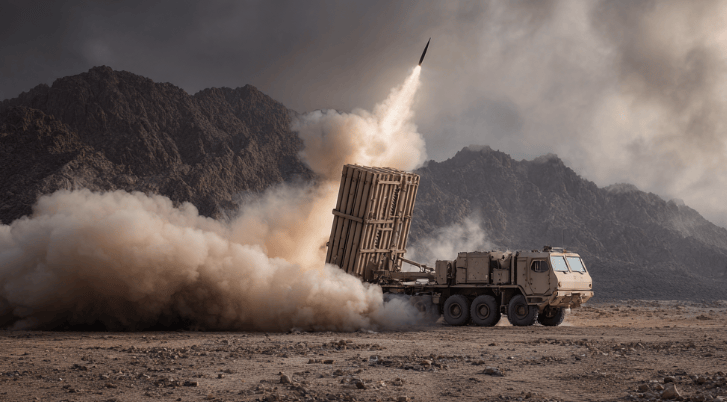
Lockheed Martin unveiled its PAC-3 Edge missile interceptor on Friday, October 9, introducing a next-generation Patriot-family weapon designed to counter hypersonic and advanced missile threats. The company says the interceptor will offer greater speed, maneuverability, range and altitude coverage than existing PAC-3 variants as the U.S. Army strengthens its layered air-defense capabilities.
PAC-3 Edge builds on the combat-proven PAC-3 Missile Segment Enhancement, or MSE, interceptor. It is being developed for the Army’s competitive Future Interceptor programme, with testing scheduled to begin in 2027 and deployment targeted for 2031. Those dates remain development objectives rather than confirmed operational milestones.
New Seeker, Flight Controls and Rocket Motor
The PAC-3 Edge incorporates three major upgrades: a new seeker, improved flight-control systems and a multi-pulse solid rocket motor supplied by Northrop Grumman. Together, these technologies are intended to improve its ability to engage demanding targets at longer distances and higher altitudes.
Lockheed developed the seeker through its Strigo Product Center. The seeker helps detect and track incoming threats, while the upgraded controls support maneuverability. Northrop Grumman’s propulsion system provides precisely managed thrust throughout the missile’s flight, supporting the interceptor’s intended performance improvements.
These enhancements are particularly relevant to advanced missiles that challenge existing defenses through speed and maneuvering. However, the announced capabilities are company claims awaiting validation through the planned testing programme.
Lockheed Commits Hundreds of Millions
Tim Cahill, president of Lockheed Martin’s Missiles and Fire Control division, said the company intends to invest hundreds of millions of dollars of its own money in the interceptor, alongside additional spending on its seeker and rocket motor.
Cahill said approximately $50 million to $100 million or more had already been invested in the missile. Lockheed also plans roughly $800 million in seeker-related investment, having already committed several hundred million dollars to that technology. These figures cover distinct development efforts and should not be treated as a single finalized programme budget.
Cost and Production Targets
Cahill told Reuters that PAC-3 Edge should cost approximately the same as the existing PAC-3 MSE. At full production, annual output could reach about 2,000 interceptors, comparable with Lockheed’s planned MSE manufacturing capacity.
Read also : Why European Navies Should Secure the Red Sea for Oil Supplies
The production target comes as conflicts in Ukraine and the Middle East strain air-defense inventories. Lockheed previously agreed to expand PAC-3 manufacturing capacity from approximately 600 missiles annually to 2,000.
Competitive Development Still Matters
The U.S. Army has advanced Lockheed to the next development phase, but the Future Interceptor programme remains competitive. PAC-3 Edge is therefore not yet a fielded replacement for existing Patriot interceptors.
Its ultimate significance rests on testing, affordability and manufacturing execution: promised improvements must translate into reliable protection against increasingly sophisticated missile threats.
Our community already has nearly 355,000 readers!
Subscribe to our Telegram channel
Follow us on Telegram, Facebook and Twitter
© Copyright 2026 – Eurasia Business News. Article no. 3205

