
By William Collins, consultant in stock markets – Eurasia Business News, November 23, 2026. Article no 3282
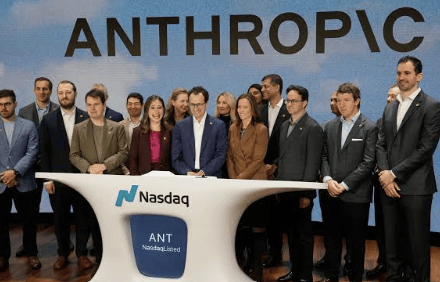
Anthropic raised more than $100 billion last week and was valued at roughly $1.18 trillion in a Wall Street Journal market snapshot. Yet several large bond-fund managers expect the company behind Claude to receive a BB rating if it issues public debt. That would put its bonds below investment grade, even as its stock-market value exceeds those of Walmart and JPMorgan Chase in the Journal’s comparison.
The apparent contradiction comes down to what investors are buying. Stockholders stand to benefit if Claude becomes a dominant platform. Bondholders are more concerned with whether Anthropic can repay them while honoring roughly $900 billion in spending commitments, mainly for computing power. Its turbulent stock-market debut showed how quickly investors can change their minds about the first question. A credit rating would give them a benchmark for the second.
What Anthropic Committed to Spend—and When
The $900 billion figure is not a bill due today, and it is not the amount Anthropic has borrowed. It represents spending commitments spread over several years, largely for the computing infrastructure needed to train and operate its AI models. That distinction matters: the more relevant question for creditors is how much cash Anthropic needs in each period and what resources it will have available at the time.
The Wall Street Journal reported that roughly half of the commitments do not begin until 2030. That gives Anthropic time to expand revenue before a substantial portion of its spending begins. But it also gives competitors time to improve their models and customers time to find cheaper alternatives. The timing makes the commitments less immediately burdensome than the headline suggests without making them less consequential.
Securing computing capacity in advance can help Anthropic serve customers if demand grows as expected. The same decision becomes costly if demand falls short, competitors drive prices down, or improvements in efficiency reduce what customers are willing to pay for a given amount of computing power. The credit question is whether Anthropic can absorb those outcomes without struggling to meet its obligations.
Why a Trillion-Dollar Company Can Have Junk-Rated Debt
Market capitalization measures what investors are paying for a company’s outstanding shares. It is not cash available to pay bills. Anthropic’s equity valuation reflects expectations about future growth, while its creditors would have a fixed claim. A lender does not receive more than the promised interest and principal simply because Claude becomes more successful than expected. That asymmetry helps explain why equity and credit investors can reach very different conclusions about the same company.
Anthropic is also less than six years old and remains unprofitable. Last week’s fundraising gives it a larger financial cushion, but it does not establish that the business can consistently generate enough cash to fund its operations and meet its long-term commitments. For credit analysts, the test is how much of that cushion would remain if revenue growth slowed or financing became more expensive.
Crucially, a BB rating is an expectation among bond managers, not an announced verdict from the major ratings agencies. The Journal reported that the agencies could disagree, with some potentially awarding an investment-grade rating. Investors may not know how the major firms will rate Anthropic’s public debt until the company moves to issue it.
How a Junk Rating Could Change Anthropic’s Financing Plans
A below-investment-grade rating would not shut Anthropic out of the bond market. It would, however, limit access to some investors whose mandates restrict them to investment-grade debt. Dow Jones reported that an investment-grade rating would open the door to an approximately $8.6 trillion high-grade corporate bond market. That figure describes the size of the market, not how much Anthropic could raise.
The difference could show up in both price and flexibility. If investors demand a higher yield, borrowing becomes more expensive. If they are reluctant to lend over longer periods, Anthropic might have to refinance sooner, leaving it more exposed to market conditions at the time. And if the company turns to equity instead, it can avoid adding interest payments but may dilute existing shareholders.
The eventual terms could tell investors as much as the letter grade. The amount Anthropic seeks, when repayment comes due, and what investors demand above comparable Treasury yields would show how comfortable the market is financing its plans. A manageable first deal would demonstrate access to capital, though not necessarily at the scale Anthropic may need over time.
What Anthropic’s Credit Outlook Means for the AI Industry
Anthropic’s spending commitments highlight a financing challenge that extends beyond one company: leading AI developers need computing capacity before they can sell the services that capacity makes possible. Chipmakers, cloud providers and data-center operators benefit when customers sign big contracts. For those suppliers, though, a long-term commitment is only as valuable as the customer’s ability to pay for it.
If capital becomes more expensive for independent AI developers, companies with established businesses that generate cash may have an advantage. They can fund more of their spending internally and wait longer for new products to pay off. Companies without that cushion may have to rely more heavily on partners, phase in capacity, or prioritize products that bring in revenue sooner. None of those outcomes would mean demand for AI has disappeared; they would change who can afford to serve it at scale.
Read also : Gold : Build Your Wealth and Freedom
The distinction also matters for investors in AI suppliers. A chipmaker’s order book can look strong while the customers placing those orders face rising financing costs. Anthropic’s credit outlook offers a way to track that risk independently of daily moves in AI stocks.
What to Watch After Anthropic’s IPO
The next milestones are any formal ratings, the terms of any public bond offering, and evidence that Claude’s growth is producing cash—not just higher revenue. The key comparison is between the cash Anthropic can generate or raise and the payments it owes as its computing contracts take effect.
Last week’s fundraising showed that investors were willing to put substantial capital behind Anthropic’s growth. Its first major test in the public bond market would ask something different: whether lenders will finance the buildout on terms that still leave the company room to compete.
Our community already has nearly 355,000 readers!
Subscribe to our Telegram channel
Follow us on Telegram, Facebook and Twitter
© Copyright 2026 – Eurasia Business News. Article no. 3282

