
By Alexander Miller, consultant in energy markets, for Eurasia Business News, April 18, 2026. Article n°2087
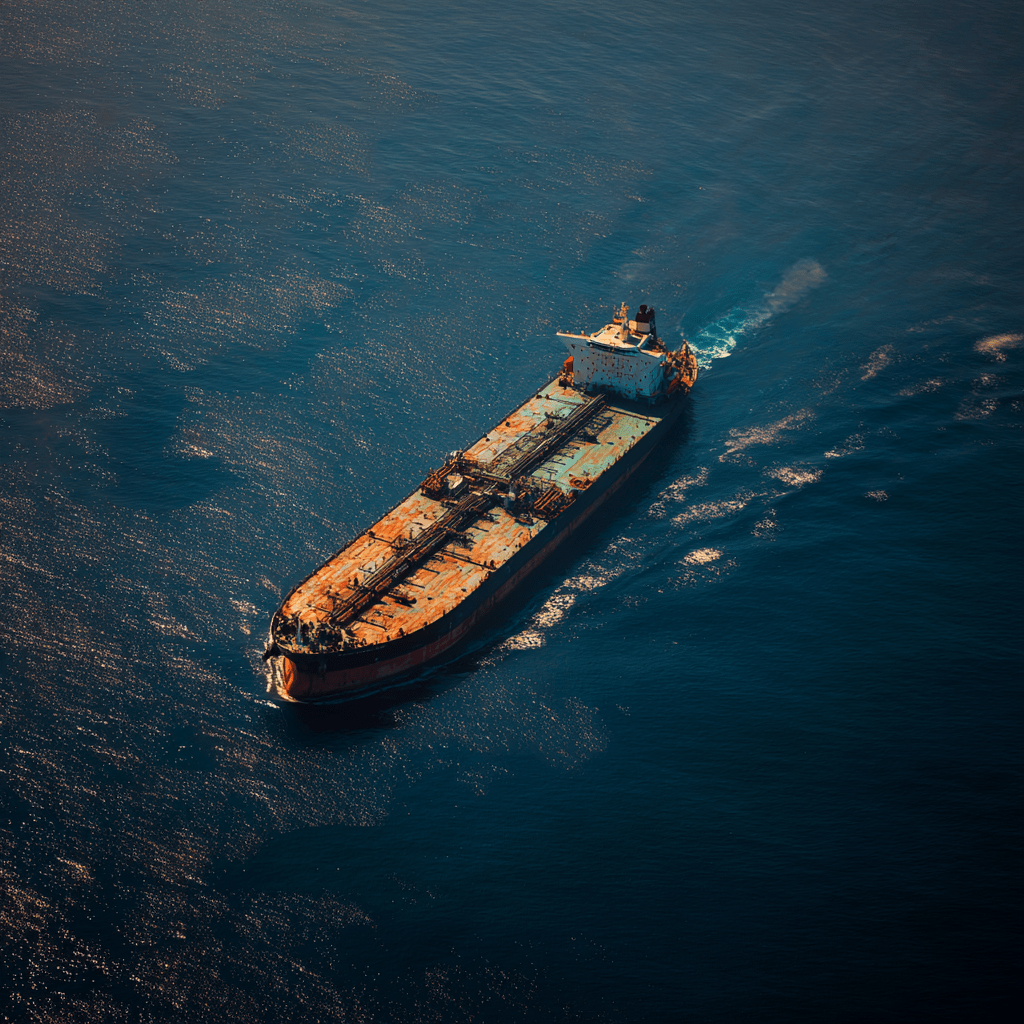
Iranian forces reportedly fired on tankers and announced a renewed “strict control” or closure of the Strait of Hormuz on April 18, forcing multiple ships to turn back and raising immediate shipping-risk concerns. The reports describe at least two vessel incidents in the strait, with UKMTO-linked reporting that Iranian gunboats opened fire on a tanker without prior radio warning.
Iran said it was reverting the waterway to its “former condition” and maintaining strict control unless the United States lifted its blockade on Iranian ports. At the same time, shipping advisories and news reports said vessels altered course after the attacks, including ships reportedly coming under fire near the strait.
Why it matters
The Strait of Hormuz is one of the world’s most important energy chokepoints, so even short disruptions can quickly affect oil shipping, tanker insurance, and market sentiment. That is why headlines about a shutdown or attacks there tend to move crude prices and raise broader geopolitical risk almost immediately.
Market implications
Near-term effects are usually higher freight and war-risk premiums, plus possible delays for Gulf crude and LNG cargoes. If the disruption persists, the biggest pressure point is not just physical supply but uncertainty over whether commercial traffic can transit safely.
Oil prices plummeted by over 9% to below $91 per barrel today, reversing recent gains following news that Iran would reopen the strategic Strait of Hormuz during a ceasefire in Lebanon. Brent crude settled at approximately $90.38 a barrel, while U.S. West Texas Intermediate (WTI) fell to around $83.85 after earlier trading significantly lower.
Based on the reports available, the closure of the Strait of Hormuz looks like an active maritime escalation rather than a clean, fully enforced closure of the strait. The practical effect is that ship operators are already treating the area as hazardous and rerouting where possible.
Read also : The Private Investor Deal Evaluation Handbook
A two-week truce between Iran and the United States is going to expire on April 21. The date of new negotiations has not been announced. The U.S. president Donald Trump said that the United States is still negotiating with Iran, and promised new information on this matter in the near future. Iran said it did not want to continue negotiations due to the “excessive demands” of the United States.
Iran’s Supreme National Security Council is discussing new U.S. proposals for a peace deal, state television said.
Financial sanctions, payment system exclusion, and export controls by the U.S. and its allies now operate as components of a broader strategic toolkit. On the other side, Iran closed the Straits of Hormuz and has targeted the oil tankers trying to navigate through it, provoking an oil price crisis worldwide.
This war is the fifth major shock to the region since 1979, following the Iranian Revolution, the Iran–Iraq War, the first Gulf War and the US invasion of Iraq.
Our community already has nearly 240,000 readers!
Subscribe to our Telegram channel
Follow us on Telegram, Facebook and Twitter
© Copyright 2026 – Eurasia Business News. Article no. 2087

