
By Anthony Marcus, correspondent. Eurasia Business News, August 9, 2026. Article n°3066.
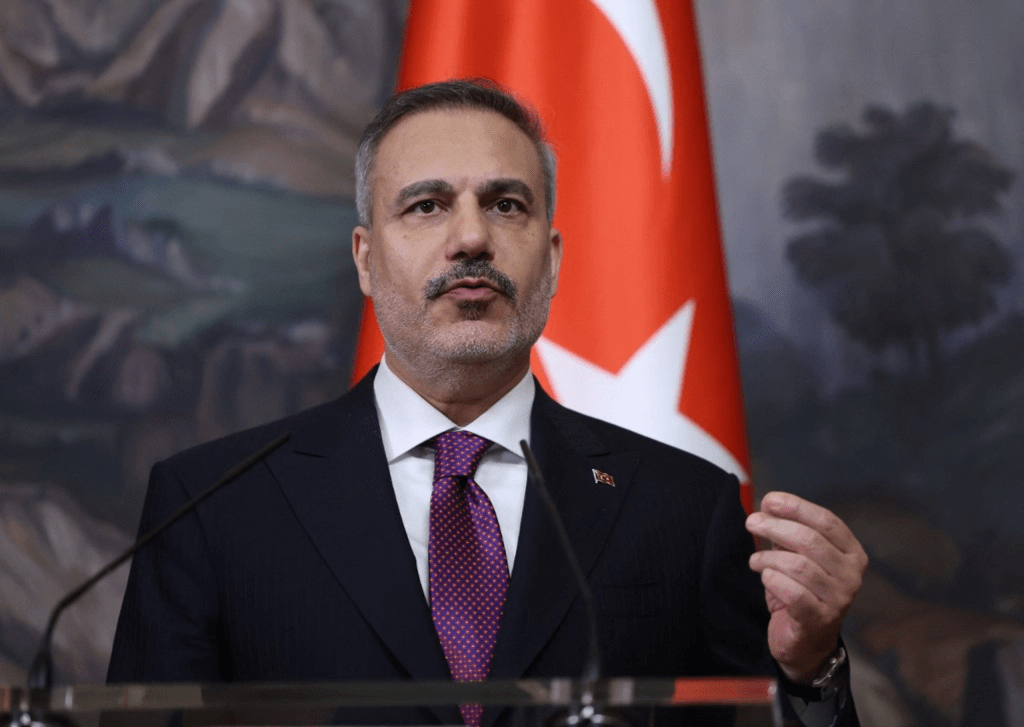
Turkey has proposed that Russia and Ukraine establish a moratorium on attacks against ships in the Black Sea, seeking to protect civilian maritime traffic from the expanding consequences of the war. Turkish Foreign Minister Hakan Fidan said Ankara had conveyed the proposal to both sides and was awaiting their responses.
The initiative comes after a series of attacks involving civilian and commercial vessels operating in the Black Sea. Ankara is increasingly concerned that the conflict is spreading into a strategically vital maritime corridor used for energy exports, grain shipments, industrial goods and regional trade.
Turkey Calls for a Maritime Ceasefire
Speaking in an interview with Anadolu Agency, Fidan said Turkey had urged Russia and Ukraine to create a mechanism capable of declaring a limited ceasefire at sea.
“We called on the parties to establish a mechanism to declare a ceasefire,” Fidan said, adding that Ukrainian officials had already raised the possibility of such an arrangement. Turkey subsequently passed the proposal to Russian representatives and is now waiting for Moscow’s response.news.l
The proposed moratorium would focus specifically on attacks against vessels rather than constitute a comprehensive peace agreement. Its objective would be to reduce immediate risks to commercial navigation, protect civilian crews and prevent further deterioration of maritime security.
A narrowly defined maritime arrangement could potentially include a commitment not to target merchant ships, tankers, port infrastructure and civilian cargo vessels. It could also require the parties to establish communication channels for reporting incidents and verifying compliance.
Civilian Shipping Faces Rising Risks
Fidan warned that continued hostilities in the Black Sea pose a direct threat to civilian shipping and commercial transportation. Turkey is particularly exposed because Turkish-owned vessels, Turkish-flagged ships and ships carrying Turkish crews regularly operate in the region.
“If Turkish ships or ships with Turkish owners or Turkish crews are attacked, this becomes a serious problem for us,” Fidan said.
The warning followed reports that Turkish-owned civilian vessels, including the Yaşar and Nadezhda, were attacked by unmanned aerial vehicles after departing from the Russian port of Novorossiysk, on August 3. Turkish authorities said crew members, including Turkish citizens, were injured in one of the incidents.
Ankara said the attacks demonstrated that the Russia-Ukraine war was increasingly affecting civilian maritime activity. It warned that further escalation could have wider consequences for regional stability, trade and food security.
Black Sea Trade Under Pressure
The Black Sea is a major commercial route connecting Russia, Ukraine, Turkey, Bulgaria, Georgia and international markets. Its ports handle agricultural commodities, oil products, metals, fertiliser and other strategic goods.
Military activity in the region has already increased insurance costs and forced shipping companies to reassess routes, cargo risks and crew safety. Maritime operators must also consider drone attacks, missile strikes, naval mines and the possibility of mistaken identification in congested waters.
Turkey has reportedly restricted the movement of some commercial vessels in the Black Sea as attacks have increased. Such restrictions may reduce immediate exposure to danger, but they can also delay shipments, increase freight costs and weaken confidence in regional supply chains.
The consequences could extend beyond the Black Sea. Disruptions to grain, fertiliser and energy shipments may affect importers in the Mediterranean, Middle East and Africa, particularly if shipping companies avoid vulnerable ports or demand higher risk premiums.
Ankara’s Diplomatic Role
Turkey has maintained diplomatic contacts with both Moscow and Kyiv since the beginning of the war in Ukraine in February 2022. Its geographic position, NATO membership, large armed forces, control of the Bosphorus and Dardanelles, and strong economic ties with both sides give Ankara a unique diplomatic role.
A important moment came when Russia proposed direct talks with Ukraine in Istanbul in May 2025. The initiative highlighted President Recep Tayyip Erdoğan’s continuing ambition to position Turkey as a diplomatic bridge between Moscow and Kyiv.
In July 2025, Turkey again positioned itself as a facilitator when Istanbul hosted discussions on Russia-Ukraine peace negotiations. The proposed agenda included prisoner exchanges, the return of Ukrainian children and efforts to reduce active fighting.
Although Istanbul negotiations have not ended the war, the city remains one of the few locations where direct contact between the two sides has been politically possible.
The current proposal also builds on Turkey’s previous efforts to protect maritime commerce. The earlier Black Sea grain initiative demonstrated that limited agreements can temporarily facilitate shipping even when broader political negotiations remain stalled.
However, implementing a new moratorium would be difficult. Russia and Ukraine would need to agree on the definition of civilian shipping, the geographic scope of the arrangement, monitoring procedures and the response to alleged violations. Each side could also fear that a pause would constrain its military operations or provide an advantage to the opponent.
What Happens Next?
Turkey’s proposal offers a potential mechanism for reducing risks without requiring Russia and Ukraine to reach an immediate comprehensive ceasefire. Its success will depend on whether both parties consider maritime restraint compatible with their military and political objectives.
For Ankara, the priority is preventing the Black Sea from becoming a closed or unsafe zone for trade. For shipping companies, insurers and coastal economies, a credible moratorium could reduce uncertainty and protect commercial navigation.
The coming weeks will show whether Turkey’s initiative can produce practical commitments—or whether continued attacks will further militarise one of Europe’s most important maritime corridors.
Our community already has nearly 300,000 readers!
Subscribe to our Telegram channel
Follow us on Telegram, Facebook and Twitter
© Copyright 2026 – Eurasia Business News. Article no. 3066

