
By Paul de Neuville, Paris correspondent, for Eurasia Business News – October 1st, 2026. Article no 3188
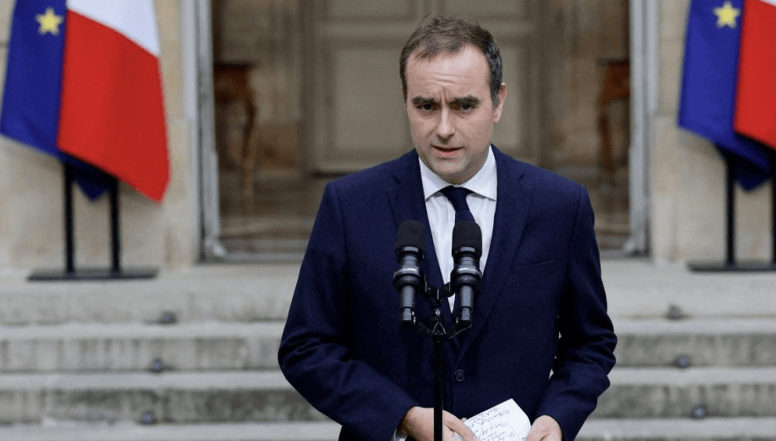
France’s government has presented its draft 2027 budget as the country faces rising borrowing costs, record public debt and intense political opposition. Prime Minister Sébastien Lecornu’s administration is proposing €43 billion in new adjustment measures for 2027, bringing the total fiscal effort to approximately €54 billion when measures introduced in previous years are included.
The budget aims to reduce France’s public deficit to 5% of GDP in 2027, from an expected 5.4% in 2026. Without the proposed measures, the government estimates that the deficit could reach roughly 6.5% of GDP next year.
The draft State budget and Social Security financing bill were presented to the Council of Ministers on Thursday, October 1, before moving to Parliament for debate. The government faces a difficult task: restoring fiscal credibility while avoiding a parliamentary defeat that could trigger another political crisis.
France’s Debt Burden Keeps Rising
France’s public debt is expected to reach 119.3% of GDP in 2026 and rise to 121.7% in 2027, its highest level in decades. The increase comes despite the government’s planned budget savings, reflecting the continuing impact of large annual deficits and higher interest payments.
Debt-servicing costs are becoming one of the most serious pressures on the French budget. The Finance Ministry expects interest payments to reach approximately €79 billion in 2026, including €65 billion for central-government debt. The bill could climb to around €91 billion in 2027.
Read also : 7 ways to retire comfortably with $1 million
France’s 10-year borrowing rate has risen above 4.8%, its highest level since the global financial crisis. Higher yields increase the cost of refinancing maturing bonds and issuing new debt. They also reduce the funds available for public services, investment and tax relief.
| French fiscal indicator | 2026 | 2027 target or forecast |
|---|---|---|
| Public deficit | 5.4% of GDP | 5.0% of GDP |
| Public debt | 119.3% of GDP | 121.7% of GDP |
| New budget measures | — | €43 billion |
| Total fiscal effort, including previous measures | — | €54 billion |
| Debt-interest costs | About €79 billion | About €91 billion |
Spending Cuts and Revenue Measures
The government says the main adjustment will come from spending restraint rather than a broad increase in taxation. The State budget is expected to be frozen in real terms, except for higher debt-servicing costs and an increase in military spending. Defense expenditure is set to rise by approximately €6.4 billion.
The plan also includes measures affecting retirees, high-income households and large companies. The government proposes extending the temporary differential contribution on very high incomes, which guarantees a minimum tax rate of 20% for certain taxpayers. The measure could raise around €600 million in additional revenue in 2027.
The tax applies to single taxpayers with more than €250,000 in taxable income and couples with more than €500,000. It was introduced in 2025 and renewed in 2026.
The government also plans to increase revenues from existing taxes:
- VAT revenue is expected to rise by more than €7 billion compared with 2026.
- Income-tax revenue is forecast to increase by €5.7 billion.
- Corporate-tax revenue is expected to fall by €1.8 billion.
- Total net tax revenue is projected at €375.7 billion, €18 billion higher than in 2026.
The draft budget also proposes reducing excessive remuneration under older renewable-energy support schemes. The government argues that reforming these legacy mechanisms could reduce what it describes as “rents” and make renewable-energy financing more efficient.
Political Opposition Intensifies
The budget is likely to face fierce opposition in the National Assembly. Socialist lawmakers have warned that they could vote against the plan unless the government makes significant changes, while the National Rally has also rejected measures seen as reducing household purchasing power.
The government’s room for maneuver is limited. It needs to demonstrate to financial markets and European institutions that France is serious about reducing its deficit, but aggressive spending cuts could provoke public protests and undermine economic confidence.
The timing is especially sensitive because France is approaching major political deadlines. Any budget compromise will need to balance fiscal consolidation with demands from voters for stronger purchasing power, better public services and protection from higher energy and housing costs.
Markets Watching France
Investors will closely monitor parliamentary negotiations and the government’s ability to pass the 2027 budget without triggering a confidence crisis. France is one of Europe’s largest bond issuers, meaning any sustained loss of market confidence could widen the spread between French and German government borrowing costs.
Higher yields would increase debt-servicing costs further, creating a potentially damaging cycle in which larger interest payments make it harder to reduce the deficit.
Read also : Tax Management strategies for Digital Nomads
The government’s €54 billion plan is therefore more than a budgetary exercise. It is an attempt to convince voters, lawmakers and bond investors that France can stabilize its finances while maintaining economic growth.
Success will depend on whether the proposed €43 billion of new measures are politically enforceable, economically realistic and sufficient to offset rising interest costs. Without a credible compromise, France could face deeper political instability and further pressure from financial markets.
Our community already has nearly 355,000 readers!
Subscribe to our Telegram channel
Follow us on Telegram, Facebook and Twitter
© Copyright 2026 – Eurasia Business News. Article no. 3188

