
By Alexander Miller, consultant in energy markets. – Eurasia Business News, September 19, 2026. Article no 3178
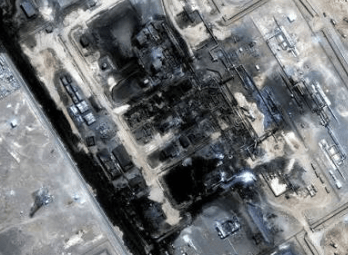
Saudi Aramco has reportedly told European refiners that they will receive no Saudi crude oil allocations for October, extending a disruption caused by the drone attack on Saudi Arabia’s strategic East-West pipeline. The decision threatens to tighten Europe’s crude market at a time when oil prices remain elevated and Middle East shipping routes face severe security risks.
At least two European buyers were informed that their October allocations under long-term supply contracts would be zero, according to people familiar with the matter cited by Bloomberg. The reports said the decision applies broadly to European term customers, although Aramco has not publicly confirmed the full extent of the cutoff.
Why Saudi Crude Deliveries to Europe Were Halted
The supply disruption follows drone attacks that damaged three pumping stations on Saudi Arabia’s East-West pipeline, also known as Petroline. The line transports crude from the kingdom’s eastern oil fields to the Red Sea port of Yanbu, allowing Saudi exports to bypass the Strait of Hormuz.
The pipeline is capable of carrying up to 7 million barrels per day, though recent flows were estimated at around 4 million barrels per day before the outage. After the attacks, Saudi Arabia shut the system as a precaution and suspended loadings at Yanbu.
This created an immediate logistics problem for European buyers. Saudi crude destined for Europe had been rerouted through Yanbu because access to the Persian Gulf and Strait of Hormuz had become more difficult and costly amid regional military escalation. With the Red Sea export route impaired, Aramco has had fewer options to deliver contracted barrels to Europe.
| Key factor | Impact on Europe |
|---|---|
| East-West pipeline damage | Reduced Saudi ability to move crude to Yanbu |
| Yanbu loading suspension | Delayed or cancelled Europe-bound cargoes |
| Hormuz shipping risks | Limited alternative Gulf export routes |
| October zero allocations | European refiners must buy replacement barrels |
| High crude prices | Raises feedstock and consumer-fuel cost pressure |
Europe Faces a Search for Replacement Barrels
European refiners normally purchase Saudi crude under term contracts designed to provide reliable monthly deliveries. These contracts help refiners plan their feedstock mix, product yields and refinery operations well in advance.
The loss of October cargoes means affected buyers must seek alternative supplies in the spot market. Poland’s Orlen is among the refiners reported to be looking for replacement barrels after Saudi cancellations, with traders saying the company purchased North Sea crude grades to compensate for disrupted imports.
Potential alternatives include Brent-linked North Sea crude, West African grades, U.S. exports, Middle Eastern cargoes available through different routes and regional Mediterranean supplies. But replacement crude may be more expensive, may not match a refinery’s preferred quality and may take longer to arrive.
For example, Saudi medium and heavy sour grades are processed differently from lighter North Sea or U.S. crude oils. A refiner can switch grades, but doing so can affect the volume and type of fuels it produces, including diesel, gasoline, jet fuel and marine fuel. That means the disruption could influence refined-product markets as well as crude prices.
Saudi Oil Is Being Redirected Toward Asia
The reported European cutoff does not necessarily mean Saudi Arabia is removing the same volume from the global oil market. Instead, the disruption appears to be reshaping where Saudi crude can be sent.
Saudi Aramco has reportedly sold around 60 million barrels for September and October loading from its Ras Tanura terminal on the Persian Gulf. Those cargoes are expected to move through the Strait of Hormuz and may involve ship-to-ship transfers near Sohar, Oman. Buyers reportedly include refiners in China, India, Japan and South Korea.
Read also : Tax Management strategies for Digital Nomads
The arrangement would restore roughly 1 million to 1.5 million barrels per day of Saudi Gulf exports to Asian markets. Europe, however, is not expected to receive those volumes because of the logistical disruption created by the pipeline outage and difficulties with its traditional Yanbu-based supply route.
What It Means for Oil Prices
Brent crude remains above $100 a barrel, even after retreating from highs near $110. The Saudi supply disruption reinforces a geopolitical risk premium that has increased since attacks on energy infrastructure and ships intensified across the Middle East.
European crude buyers are particularly exposed because the region imports much of its oil and relies heavily on long-distance shipping. The sudden loss of contracted Saudi supply can increase competition for North Sea, U.S. and West African barrels, potentially widening price differentials and raising freight costs.
Read also : The Private Investor Deal Evaluation Handbook
The impact may be more pronounced in diesel and jet-fuel markets. European refiners often use medium and heavy crude grades that can produce substantial middle distillate volumes. If alternative crude is lighter or more expensive, the cost of producing diesel could rise further.
Pipeline Repairs Will Determine the Outlook
Saudi officials have reportedly indicated that the East-West pipeline could partially resume within days, with a full restoration potentially taking up to six weeks. However, no definitive public timetable has been provided, and repair progress remains uncertain.
Read also : Why European Navies Should Secure the Red Sea for Oil Supplies
The key question is whether Aramco can restore enough pipeline capacity and Yanbu loading operations to resume November deliveries to Europe. If repairs proceed quickly, the October cutoff may be a temporary logistical shock. If damage proves more extensive or Red Sea security worsens, Europe could face a longer period of reduced access to Saudi crude.
For now, the decision illustrates the vulnerability of global oil trade to regional infrastructure attacks. Saudi Arabia’s East-West pipeline was designed as a strategic bypass around the Strait of Hormuz. Its disruption shows that even alternative routes can become bottlenecks—and that European refiners may be among the first buyers forced to adapt.
Our community already has nearly 330,000 readers!
Subscribe to our Telegram channel
Follow us on Telegram, Facebook and Twitter
© Copyright 2026 – Eurasia Business News. Article no. 3178

