
By William Collins, consultant in stock markets – Eurasia Business News, October 16, 2026. Article no 3211
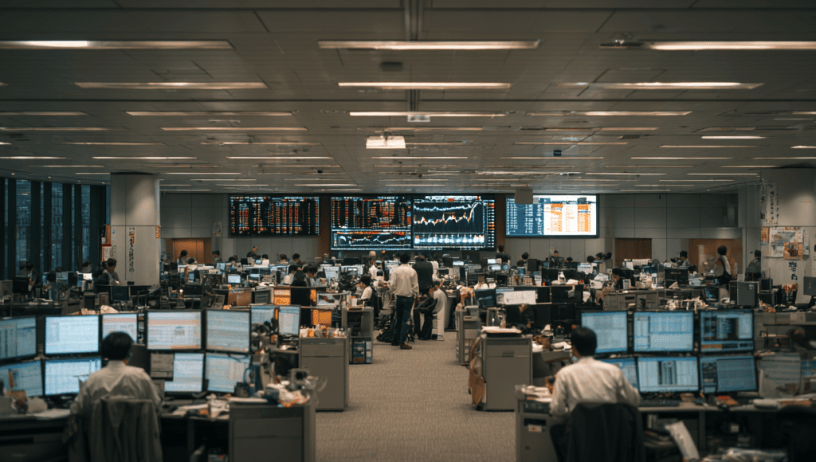
Asian stock markets mostly recovered on Friday, October 16, as semiconductor shares bounced after a bruising technology selloff. Japan and South Korea advanced, supported by improved sentiment toward artificial intelligence and comments from Federal Reserve Chairman Kevin Warsh. Indonesia moved sharply against the regional trend, plunging approximately 11% after MSCI proposed removing its emerging-market classification.
The rebound offered relief rather than proof that technology’s difficulties were over. Investors remained concerned about AI companies’ borrowing requirements, competition among chipmakers and whether infrastructure spending would deliver sufficient returns. Friday’s gains recovered only part of the previous session’s losses.
Asian Stock Market Performance
Japan’s Nikkei 225 closed 1.39% higher at 65,324.29, while the broader TOPIX gained 1.67% to 4,066.00. South Korea’s Kospi finished up 2.1% at 5,668.05, according to AFP’s closing report. Hong Kong and mainland China recorded smaller advances.
| Index | October 16 performance | Closing level |
|---|---|---|
| Nikkei 225 | +1.39% | 65,324.29 |
| TOPIX | +1.67% | 4,066.00 |
| Kospi | +2.1% | 5,668.05 |
| Hang Seng | +0.52% | 24,186.83 |
| Shanghai Composite | +0.24% | 3,716.28 |
| Indonesia equity benchmark | -11.57% | 5,185 |
The Japanese, Korean and Chinese figures above use closing reports. Earlier updates showed larger gains—including around 1.9% for the Nikkei and 3%–4% for the Kospi—but those readings should not be confused with final results.
Japan and South Korea Lead the Technology Recovery
Japanese technology shares helped reverse some of Thursday’s decline. An earlier market update showed Tokyo Electron rising 2.8%, Kioxia gaining 3.2% and SoftBank advancing 1.7%. These were session readings rather than verified individual closing changes.
South Korea also rebounded as buyers returned to Samsung Electronics and SK Hynix. Its recovery followed a fall of nearly 8% on Thursday, demonstrating how strongly sentiment had shifted against semiconductor-heavy markets.
The earlier selloff had several drivers. Investors worried about the financing behind AI infrastructure, while progress reported by China’s ChangXin Memory Technologies raised concerns about competition in advanced memory chips. Friday’s buying reduced immediate pressure without resolving either issue.
The smaller gains in Hong Kong and Shanghai suggested a less dramatic improvement in sentiment than in semiconductor-focused markets. Their benchmarks nevertheless joined the regional recovery, closing higher after trading more strongly earlier in the session.
CoreWeave Reassurance Helps Calm AI Fears
Nvidia chief executive Jensen Huang helped stabilize confidence by defending cloud-infrastructure provider CoreWeave. He said the company’s situation was improving after concerns about its debt burden had triggered heavy selling. CoreWeave shares had fallen 15.5% on Wednesday before recovering almost 6% on Thursday.
That mattered beyond one stock. CoreWeave’s borrowing-funded purchases of Nvidia chips made it a focal point for questions about the sustainability of AI investment. Its difficulties had encouraged investors to reassess other companies exposed to the same spending cycle.
The rebound therefore reflected some easing of financing fears, not simply optimism about chip demand.
Warsh Supports AI Outlook Without Promising Easier Policy
Speaking at the IMF and World Bank meetings in Bangkok, Warsh described AI as potentially the most consequential economic change of his lifetime. He emphasized its longer-term benefits but warned that investment could push prices higher initially and that the transition would be uneven.
Read also : Tax Management strategies for Digital Nomads
He did not commit to a decision on another interest-rate increase. FinancialJuice reported that traders nevertheless reduced the implied probability of an October hike to approximately 15%, from more than 25% on Thursday.
His remarks improved sentiment, but they should not be interpreted as a guarantee of lower rates or validation of every AI valuation.
Why Indonesia’s Stock Market Collapsed
Indonesia’s roughly 11% decline was its largest since 1998. MSCI said maintaining emerging-market status was no longer appropriate and was preparing a potential reclassification that could exclude the country from widely tracked investment products.
Read also : Gold : Build Your Wealth and Freedom
The proposal raised fears that benchmark-following funds would reduce exposure. Pictet Asset Management’s Tan Altundag said it highlighted dissatisfaction with reform progress and renewed questions about market investability. A proposed change is not the same as an already completed exclusion, but investors priced in the potential disruption immediately.
What Investors Should Watch Next
Friday highlighted Asia’s uneven risks: technology markets responded to improving sentiment, while Indonesia faced a distinct benchmark-access shock. The dollar was heading toward its first weekly decline in five weeks, and gold traded near $4,173, reflecting continued caution despite the equity rebound.
The key test is durability: whether earnings and financing conditions support Friday’s recovery, rather than another short-lived bounce.
Our community already has nearly 360,000 readers!
Subscribe to our Telegram channel
Follow us on Telegram, Facebook and Twitter
© Copyright 2026 – Eurasia Business News. Article no. 3211

