
By Anthony Marcus, consultant in geopolitics. – Eurasia Business News, November 8, 2026. Article no 3251
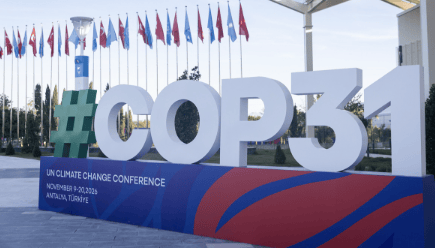
COP31 opens in Antalya, Turkey, on November 9, bringing governments together for two weeks of climate negotiations amid geopolitical tensions and uncertainty over international cooperation. Running until November 20, the 31st UN Climate Change Conference will focus on accelerating the clean-energy transition, reducing dependence on fossil fuels and turning climate-finance promises into practical support.
The summit comes after the United States’ withdrawal from the Paris Agreement, which became effective on January 27, 2026. With Washington stepping back, the European Union and other major economies face greater pressure to sustain momentum without allowing disagreements over money and responsibility to derail negotiations.
COP31 in Antalya: Who Is Leading the Negotiations?
COP31 operates under an unusual leadership arrangement. Turkey holds the official presidency and hosts the conference, while Australia serves as President of Negotiations. Turkey oversees the action agenda and adoption of decisions, while Australia leads negotiations and the development of draft texts.
The structure connects the host country’s priorities with Australian and Pacific perspectives. Preparatory meetings in Fiji and a leaders’ component in Tuvalu were designed to place Pacific concerns at the centre of the process, particularly the challenges facing vulnerable island nations.
Success will depend on translating these perspectives into workable agreements rather than allowing competing diplomatic priorities to fragment the agenda.
U.S. Paris Agreement Withdrawal Changes the Backdrop
The American departure creates a leadership and confidence challenge. The United States formally left the Paris Agreement one year after President Donald Trump initiated the withdrawal process, weakening participation in the central international framework for limiting global warming.
However, withdrawal does not end the agreement or remove other countries’ commitments. The immediate question in Antalya is whether remaining participants can maintain cooperation and demonstrate that climate action remains politically and economically viable without U.S. federal leadership.
For European negotiators, this means carrying greater weight in discussions over financing and the rules governing international climate cooperation.
Clean Energy and Fossil Fuels Take Centre Stage
The energy transition is expected to dominate discussions. A draft COP31 presidency pledge proposes increasing electricity’s share of global energy demand from approximately 23% today to 35% by 2035.
Electrification must nevertheless be considered alongside the sources supplying that electricity. Expanding electricity use and transitioning away from fossil fuels are connected objectives, not interchangeable measures of progress.
Negotiators will also revisit how to advance the transition away from fossil fuels agreed in Dubai in 2023. Following COP30, Brazil published a voluntary roadmap on moving away from fossil fuels, which will be discussed at COP31.
The challenge is to move beyond general language toward credible implementation while accommodating different national circumstances.
Climate Finance Remains the Central Test
At the heart of COP31 lies implementation: whether financial commitments produce accessible resources for countries confronting climate change.
At COP29, developed countries agreed to lead efforts to mobilise at least $300 billion annually for developing countries by 2035. A broader objective seeks to scale financing from all public and private sources to at least $1.3 trillion annually by the same year.
Antalya’s discussions will examine delivery alongside adaptation, loss and damage, and the Just Transition Mechanism agreed at COP30. These issues connect emissions reductions with support for communities already experiencing climate impacts.
Access matters as much as headline totals. European regional and local authorities are calling for simpler procedures, predictable funding and clearer tracking of money reaching the local level.
EU Prioritises Delivery Over New Funding Promises
The EU enters COP31 advocating faster implementation and stronger energy-transition cooperation, but it has ruled out new financing pledges at this summit, according to reporting by EFE.
That position helps explain expectations of limited new commitments. It does not mean the bloc has abandoned its existing objectives: the European Commission says the EU remains on course toward its 2030 emissions target and climate neutrality by 2050.
The tension is between defending established commitments and convincing developing countries that financial support matches expectations.
LinkedIn Becomes a Platform for Climate Diplomacy
Ahead of Antalya, key institutions and officials have used LinkedIn to explain the stakes. UN climate chief Simon Stiell has posted updates on preparations, while the EU’s climate account has highlighted COP31’s implementation focus.
These exchanges bring negotiations to wider professional audiences. The decisive test, however, remains inside the conference: whether governments can connect cleaner energy, credible finance and international cooperation through practical decisions.
Our community already has nearly 346,000 readers!
Subscribe to our Telegram channel
Follow us on Telegram, Facebook and Twitter
© Copyright 2026 – Eurasia Business News. Article no. 3251

