
By William Collins, consultant in stock markets – Eurasia Business News, November 6, 2026. Article no 3250
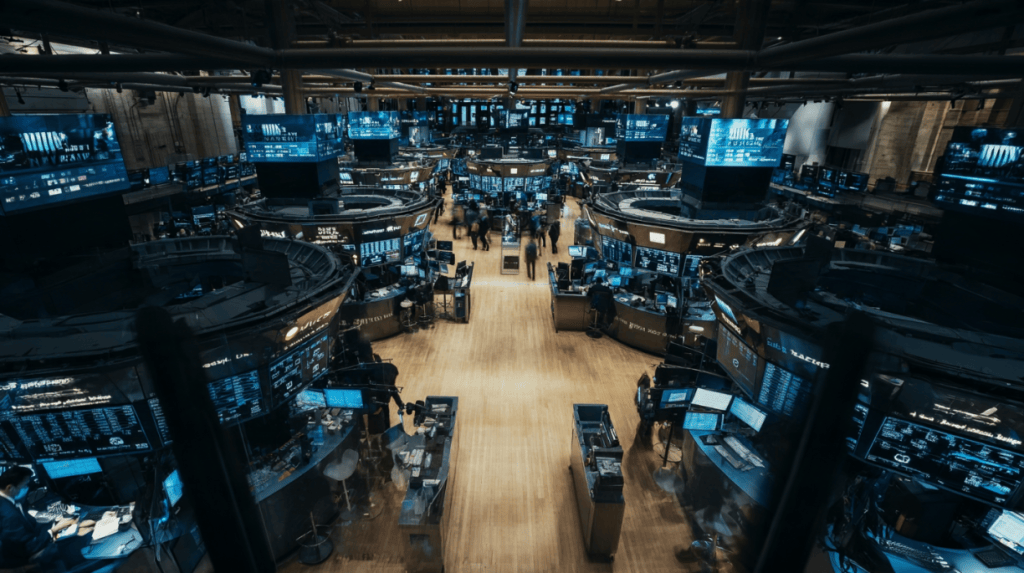
Wall Street ended mixed Friday as artificial-intelligence stocks recovered some ground following Thursday’s historic selloff. The Nasdaq Composite gained 1.1%, while the S&P 500 rose 0.3%. The Dow Jones Industrial Average moved in the opposite direction, slipping 0.5% as a stronger-than-expected jobs report pushed Treasury yields higher.
The rebound offered relief after a punishing session that erased approximately $2.5 trillion from Nasdaq-listed companies’ market value. But Friday’s recovery left the major indexes nursing weekly losses, keeping investors focused on whether the AI trade was stabilizing or merely pausing its retreat.
Nasdaq Rebounds, but Weekly Stock Market Losses Remain
For the week, the Nasdaq fell 3.4%, the S&P 500 dropped 2.7%, and the Dow declined 0.9%, according to the market recap supplied for this report. The S&P 500’s weekly decline was its largest since April 2025.
Friday’s advance helped the benchmark S&P 500 close at 7,376.86, up 23.13 points, or 0.31%. That improvement followed Thursday’s 4.4% decline, illustrating how modest the recovery remained relative to the preceding damage.
The contrast between the Nasdaq’s gain and the Dow’s decline also showed that buyers were selective. Renewed interest in technology did not translate into a broad rally across the market.
For investors, the distinction matters: a rebound in heavily weighted technology companies can lift major indexes without demonstrating that confidence has recovered across industries.
Why AI Stocks Sold Off So Sharply
Thursday’s market rout reflected growing anxiety about the sustainability of the AI investment boom. Investors questioned whether spending on chips, data centers and supporting infrastructure could continue at the pace embedded in stock valuations.
The Wall Street Journal reported that investors were positioning for a potentially slower data-center buildout following the midterm elections. That reassessment hit semiconductor manufacturers and infrastructure suppliers particularly hard.
The Nasdaq fell roughly 5.4% Thursday and entered a correction, generally defined as a decline of at least 10% from a recent high. The Dow lost 1,833 points, while all 11 S&P 500 sectors finished lower.
Those figures show that the selloff extended beyond a handful of speculative AI names. Concerns surrounding one of the market’s most influential investment themes spread across equities, prompting investors to seek safety in Treasurys.
Semiconductor Stocks Lead Friday’s Recovery
Friday brought a sharp reversal in semiconductor shares. According to the supplied closing recap, the Philadelphia Semiconductor Index gained 4.2%, while the Nasdaq-100 advanced 1.5%.
We can attribute the turnaround partly to public reassurances from policymakers, financiers and technology vendors about their continuing commitment to AI investment.
King also forecast new equity-index highs within three months. That remains an analyst’s opinion rather than an established outcome.
The key question is durability. A strong semiconductor session demonstrates renewed buying interest, but it does not resolve concerns about infrastructure spending, financing costs or the eventual profitability of AI services.
Strong October Jobs Report Complicates the Outlook
Economic data added another dimension to Friday’s trading. U.S. employers created 165,000 jobs in October, substantially exceeding the 59,000 increase expected in the Dow Jones survey. The unemployment rate declined to 4.1% from September’s 4.2%.
The Bureau of Labor Statistics reported employment gains in professional and business services, healthcare, and transportation and warehousing. October’s payroll increase also exceeded the average monthly gain of 48,000 over the preceding year.
The headline strength nevertheless came with qualifications. A broader unemployment measure, including discouraged workers and people working part-time for economic reasons, increased to 7.9% from 7.6%.
For markets, the report supported confidence in economic activity while reinforcing expectations that the Federal Reserve could remain focused on inflation rather than providing near-term monetary relief. Reuters reported that the figures kept a December interest-rate increase in view.
Treasury Yields and Dollar Rise
Treasury yields increased following the employment release. The supplied market recap placed the 10-year yield at 4.87%, up three basis points, and the two-year yield at 4.53%, up six basis points. The 30-year yield rose one basis point to 5.27%.
These moves reversed some of Thursday’s flight into government bonds, when demand for safety pushed the 10-year yield lower.
The dollar index gained approximately 0.7%, according to the supplied recap. Together, higher yields and a stronger dollar complicated the backdrop for risk assets even as technology shares recovered.
Brent and WTI Oil Prices
Oil prices were broadly unchanged in the supplied Friday market update, with West Texas Intermediate crude futures trading around $90 a barrel and Brent crude around $98. Brent fell more than 16% for the week while U.S. crude lost neary 13%.
Read also : Tax Management strategies for Digital Nomads
Those rounded figures represent reported trading levels, not independently verified exchange settlement prices. The distinction is important because commodity quotations can differ by contract, timestamp and data provider.
Energy remained relevant to the interest-rate outlook. Reuters identified inflation associated with the Middle East conflict as one reason the Federal Reserve continued to face competing policy pressures.
Gold Prices Lose 0.41%
The market showed spot gold at a bid of $4,070.10 and an ask of $4,072.10 per troy ounce at 17:00 EST. Its displayed change was a decline of $16.70, or 0.41%.
Read also : Gold : Build Your Wealth and Freedom
Gold traded between $4,029.50 and $4,107.90 during the quoted session. These are spot-market quotations, not a gold-futures settlement.
What Comes Next for the Stock Market?
The next test is whether buying broadens beyond Friday’s technology rebound. Investors will also scrutinize AI spending commitments, corporate cash generation and incoming inflation data.
Friday interrupted the selloff, but the week ended with an unresolved tension: resilient employment supported the economy while higher yields and doubts about AI investment returns continued to challenge equity valuations.
Our community already has nearly 346,000 readers!
Subscribe to our Telegram channel
Follow us on Telegram, Facebook and Twitter
© Copyright 2026 – Eurasia Business News. Article no. 3250

