
By Anthony Marcus for Eurasia Business News, July 22, 2026. Article n°3029
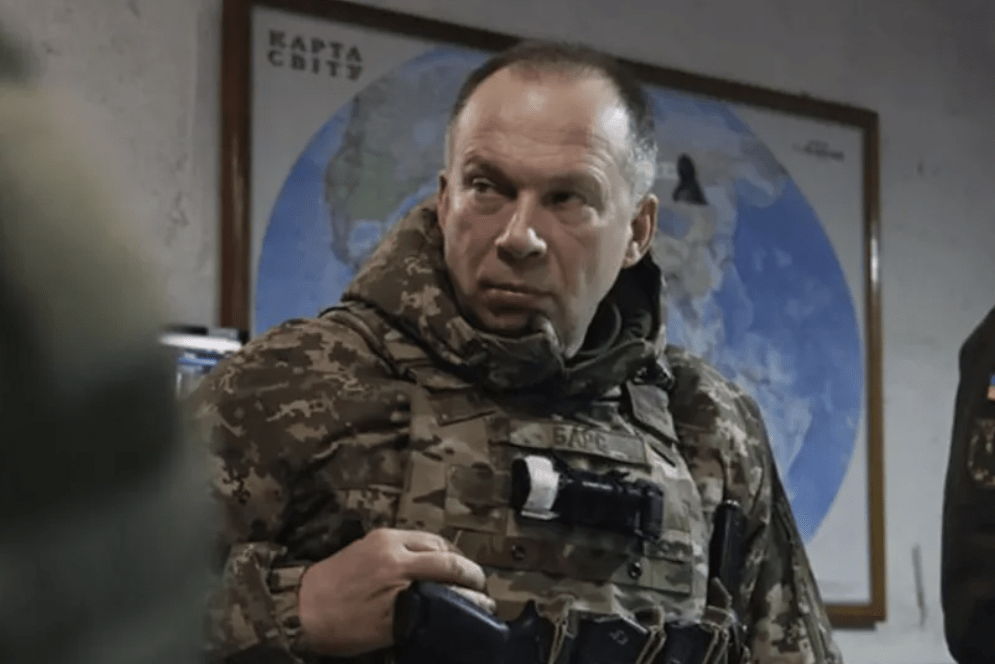
Ukrainian President Volodymyr Zelensky dismissed General Oleksandr Syrsky as commander-in-chief of the Armed Forces on the evening of July 21, naming Joint Forces commander Major General Mykhailo Drapaty as his successor.
Zelensky announced the move on Telegram, crediting Syrsky for “Ukraine’s strong front-line positions” and for key victories in the defence of Kyiv, the Kharkiv counteroffensive, and the Kursk operation.
Syrsky, 60, had held the post since February 2024, when he replaced Valerii Zaluzhny.
Replacement Mykhailo Drapaty, 44, is the Joint Forces chief, praised for a decentralised command style — the opposite of Syrsky’s more rigid, top-down approach.
Why now — the political crisis
This is the second shoe to drop in a leadership rupture that began last week:
Zelensky fired popular Defence Minister Mykhailo Fedorov on July 15 in a surprise reshuffle, citing the need to “prepare the country for winter”.
Fedorov then went public, accusing Syrsky of issuing an ultimatum to the president demanding his dismissal, and of blocking modernisation reforms: “Instead of figuring out how to defeat Russia asymmetrically… he figured out how to split the country”.
Zelensky confirmed the two “couldn’t sit at one table” and that he had to mediate.
Days of street protests followed in Kyiv and other cities, with demonstrators demanding Fedorov’s reinstatement and Syrsky’s ouster — the protests Zelensky ultimately bowed to.
The General Staff had denied the dismissal as recently as July 20, before Zelensky’s decree made it official.
The bigger picture
As the conflict in Ukraine enters its fifth year in 2026, the geopolitical landscape of Eastern Europe—and by extension, the broader international order—remains profoundly unsettled.
This is the most significant military leadership shake-up since Russia’s full-scale invasion, and it caps a volatile week in which Zelensky initially chose to sacrifice his reformist defence minister rather than his commander-in-chief — then reversed course under public pressure. The choice of Drapaty — an officer seen as willing to delegate authority downward — signals an appetite for a more flexible, modernised command style at a moment when battlefield momentum and internal morale are both in question.
The immediate significance is governance and war-effort cohesion, not a change in the fighting that would move crude. Worth watching whether Drapaty’s appointment stabilises the civil-military relationship or deepens the fault lines the protests exposed.
Read also : The Private Investor Deal Evaluation Handbook
In 2014, Oleksandr Syrskyi was appointed Chief of Staff of the ATO, and later headed the Joint Operational Staff of the Armed Forces of Ukraine. After the victory of Volodymyr Zelensky in the presidential elections in 2019, he became the commander of the Ground Forces of Ukraine. In April 2022, the military leader was awarded the title of Hero of Ukraine. After the resignation of Valery Zaluzhny in early 2024, Oleksandr Syrskyi was appointed Commander-in-Chief of the Armed Forces of Ukraine.
Our community already has nearly 255,000 readers!
Subscribe to our Telegram channel
Follow us on Telegram, Facebook and Twitter
© Copyright 2026 – Eurasia Business News. Article no. 3029

