
By Alexander Miller, consultant in energy markets. Eurasia Business News, August 10, 2026. Article n°3076
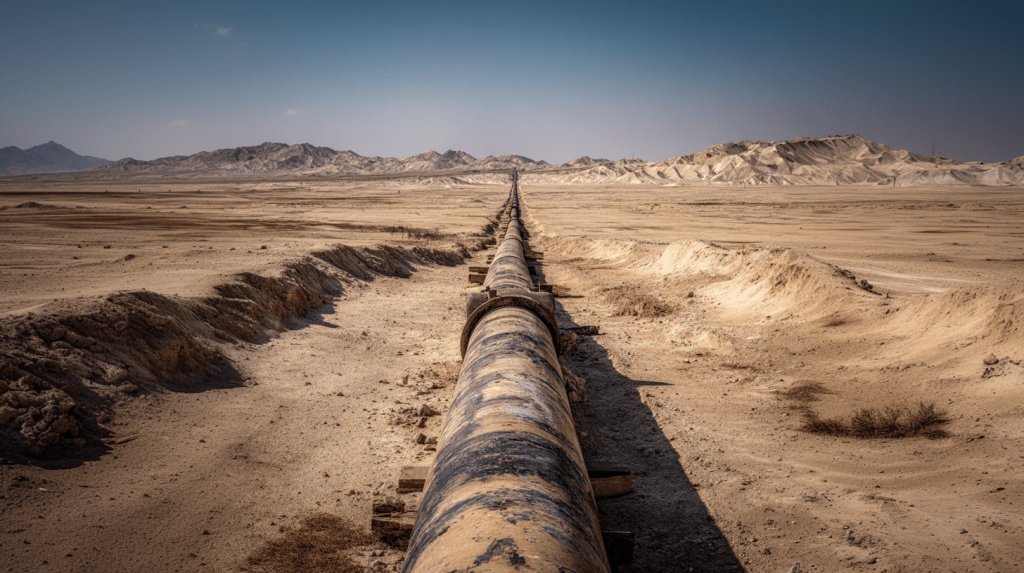
Egypt and Libya are nearing a landmark agreement to build an 800-kilometer oil pipeline connecting the Libyan port city of Tobruk with Alexandria on Egypt’s Mediterranean coast. Estimated to cost more than $1 billion, the project would create a direct route for Libyan crude to reach Egyptian refineries and could materially reshape North African energy trade.
The initiative has gained importance as Egypt seeks alternatives to traditional Gulf oil imports disrupted by the war with Iran and shipping hazards around the Strait of Hormuz. Egypt is reportedly seeking at least one million barrels of Libyan crude per month to help replace Kuwaiti supply flows affected by the regional crisis.
A Strategic Oil Route
The proposed Tobruk-to-Alexandria pipeline would be approximately 800 kilometers, or nearly 500 miles, long. It would primarily carry crude from Libya’s eastern production and export system to refineries in Alexandria, one of Egypt’s main energy and industrial centers on the Mediterranean.
Egypt and Libya are still evaluating funding options, a construction and implementation timetable, crude volumes, and the pipeline’s final capacity. Those technical and financial details will have to align with Libya’s export potential and Egyptian refinery throughput. The project is therefore not yet a final investment decision, but the reported progress signals an effort by both governments to translate energy cooperation into long-term infrastructure.
The proposed pipeline follows discussions between Egyptian Prime Minister Mostafa Madbouly and Abdul Hamid Dbeibeh, prime minister of Libya’s Government of National Unity. Their talks focused on deepening cooperation in natural gas, petroleum refining, and electricity interconnection, placing the oil-pipeline plan within a broader economic relationship between the neighboring states.
Egypt Seeks Energy Security
For Cairo, the project would provide a strategic alternative to oil shipped from the Gulf. The Strait of Hormuz has become a major vulnerability for Egypt’s crude-supply chain: disruptions have affected flows from Kuwait, forcing Egyptian authorities to seek imports from closer and potentially more reliable suppliers.
Kuwait had previously supplied Egypt with between one million and two million barrels of crude per month, while Saudi Aramco also supplied about one million barrels monthly under credit arrangements, according to reporting cited by Alhurra. The interruption of these flows has intensified Egypt’s search for replacement volumes from Libya, other Arab producers, and European markets.
A pipeline would offer advantages over recurring tanker shipments. It could lower transport complexity, reduce exposure to maritime bottlenecks, create a more predictable physical supply channel, and support refinery planning. It would not completely eliminate geopolitical risks—particularly given Libya’s complex political and security environment—but it would reduce Egypt’s dependence on seaborne oil arriving through politically sensitive waterways.
Egypt’s refineries could also benefit from proximity to Libyan supply. Shorter supply routes may improve delivery flexibility and help Cairo maintain fuel availability for domestic consumers, transport networks, and industry during periods of elevated global oil-market stress.
Benefits for Libya
Libya, meanwhile, would gain a dedicated outlet for growing crude production and closer access to Egypt’s refining network. Under the reported plan, Libyan crude could be refined into petroleum products for Egypt’s domestic market, while Libya could receive a defined portion of the resulting fuels or export refined-product surpluses through Egyptian infrastructure.
Read also : How Russia is Reshaping Global Energy Markets
This arrangement could deepen Libya’s role in regional energy markets beyond crude exports. It would also create an economic rationale for both countries to maintain reliable cross-border infrastructure and commercial ties.
Key Risks and Outlook
Financing remains the principal immediate question. A project costing more than $1 billion will require agreement on capital sources, ownership structure, construction responsibilities, tariffs, security arrangements, and long-term supply commitments. The pipeline’s path across a long international corridor also raises permitting, engineering, and political-risk considerations.
Still, the proposed Egypt-Libya oil pipeline reflects a wider regional shift: countries exposed to Gulf shipping disruption are seeking shorter, land-based, and geographically diversified supply routes. If the Tobruk-Alexandria project proceeds, it could become a defining energy-security asset for Egypt and a new export channel for Libya’s oil sector.
Our community already has nearly 300,000 readers!
Subscribe to our Telegram channel
Follow us on Telegram, Facebook and Twitter
© Copyright 2026 – Eurasia Business News. Article no. 3076

