
By John Meyer, consultant in business & financial affairs – Eurasia Business News, September 2, 2026. Article n°3136
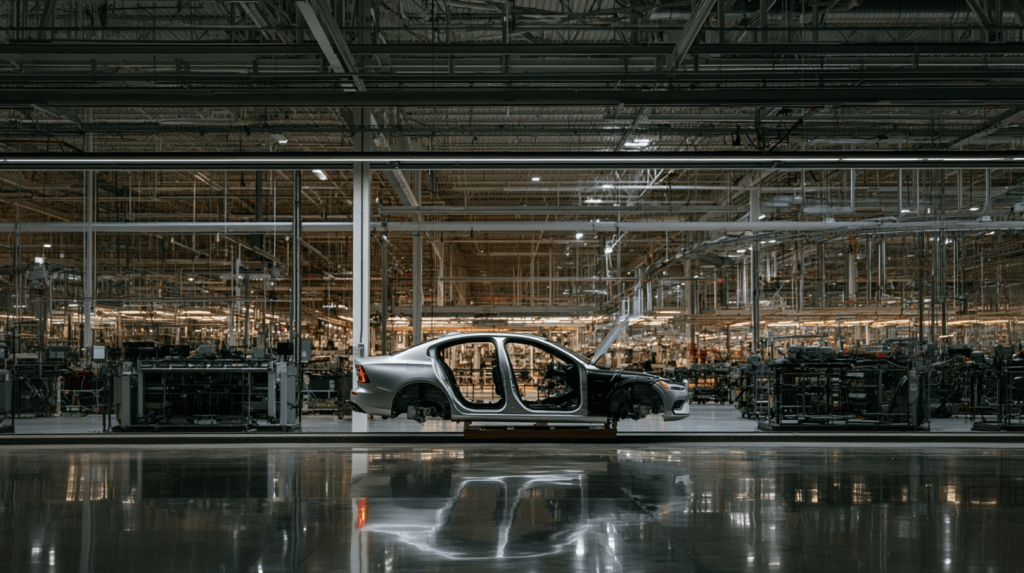
Volvo Cars reported a 7.4% year-over-year decline in global vehicle sales for the three months through August 2026, highlighting continued weakness in two of the automaker’s most important markets: China and the United States. The Swedish carmaker sold 148,239 vehicles during the period, compared with 160,160 units in the same period a year earlier.
The decline comes as global automakers face a challenging combination of softer consumer demand, intense competition in China, elevated vehicle prices, and uncertainty surrounding tariffs and economic growth. China’s automotive market has become especially competitive, with domestic manufacturers gaining market share through lower prices, advanced software, and rapidly expanding electric-vehicle lineups.
Electric Vehicle Sales Remain Strong
Despite the overall sales decline, Volvo Cars continued to make progress in electrification. Sales of electrified models—including fully electric vehicles and plug-in hybrids—increased 13% to 79,336 units during the June-August period. Electrified vehicles accounted for approximately 53.5% of the company’s total deliveries.
Fully electric vehicle sales rose 27% to 42,941 units, demonstrating continued consumer interest in battery-powered models. However, plug-in hybrid sales fell 1% to 36,395 vehicles, indicating that growth was concentrated primarily in Volvo’s fully electric range.
The shift toward electric vehicles is strategically important for Volvo, which has positioned electrification as a central part of its long-term product strategy. Nevertheless, the company’s overall results show that strong EV growth has not yet fully offset weakness in conventional vehicles and selected regional markets.
Sales of mild-hybrid and internal-combustion-engine models dropped 23% to 68,903 units. This decline reflects the broader transition in Volvo’s product mix, but it also suggests that customers may be delaying purchases or switching toward lower-priced alternatives in an increasingly competitive market.
China and U.S. Markets Under Pressure
The main pressure points were China and the United States. In China, Volvo faces competition from local electric-vehicle manufacturers that have expanded rapidly with technology-focused models, aggressive pricing, and strong domestic distribution networks. Chinese brands have also increased their presence in premium segments traditionally dominated by European, Japanese, and American automakers.
The U.S. market has presented a different set of challenges. Demand remains sensitive to financing costs, vehicle affordability, inventory levels, and economic uncertainty. Premium automakers such as Volvo may be particularly exposed when consumers postpone large discretionary purchases.
The weakness at Volvo is consistent with wider pressure across the global automotive industry. Industry forecasts cited in August indicated that demand in the United States remained slightly negative year over year, while broader global sales projections were revised lower amid weakness in China and economic and trade-related headwinds.
Outlook for Volvo Cars
Volvo’s recent sales figures underline the importance of successfully launching new electric models while protecting margins in a highly competitive environment. The strong growth in fully electric vehicles provides a positive signal, but the company must also address pricing pressure, supply-chain costs, and regional demand differences.
Read also : Gold : Build Your Wealth and Freedom
Investors will watch upcoming monthly deliveries for evidence that the sales decline is stabilizing. A sustained acceleration in electric-vehicle demand could support Volvo’s long-term strategy, while continued weakness in China and the United States could weigh on revenue, profitability, and production planning.
For now, Volvo Cars’ August sales performance presents a mixed picture: electrification is advancing quickly, but the broader business remains under pressure from challenging conditions in key global markets.
Our community already has nearly 320,000 readers!
Subscribe to our Telegram channel
Follow us on Telegram, Facebook and Twitter
© Copyright 2026 – Eurasia Business News. Article no. 3137

