
By John Meyer, consultant in financial affairs – Eurasia Business News, September 21, 2026. Article n°3181
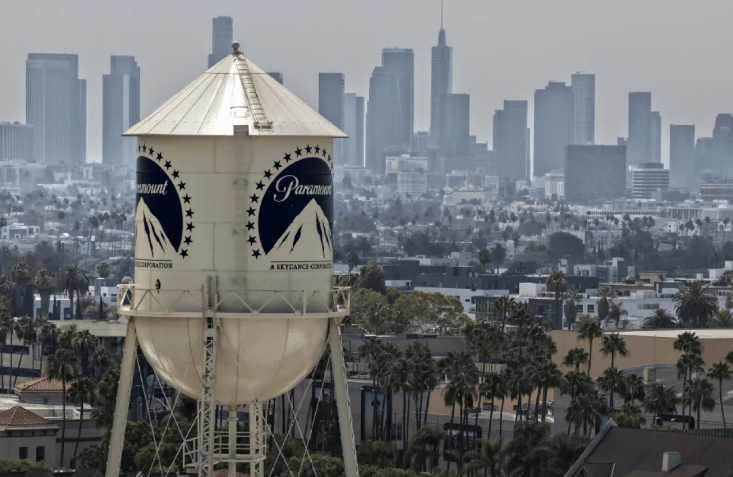
Paramount Skydance has reached a settlement with a coalition of 12 state attorneys general, removing a major legal obstacle to its proposed acquisition of Warner Bros. Discovery. The agreement clears a path for David Ellison’s entertainment empire to complete a merger valued at roughly $110 billion, although some reports and earlier deal estimates placed the transaction near $81 billion.
The settlement resolves claims that the merger could reduce competition, limit film production, weaken news independence and give the combined company excessive influence over cable television and streaming markets. California Attorney General Rob Bonta led the coalition, which included New York and other states. The agreement still requires court approval.
Major Concessions Under Settlement
Paramount avoided the most disruptive remedy: a requirement to break up the company or sell major assets before closing the Warner Bros. deal. However, the settlement imposes extensive operating commitments over five years.
The company has agreed to:
- Release at least 30 films annually in theaters.
- Invest an additional $1.5 billion in domestic film production over five years.
- Create an independent editorial board for CBS News and CNN.
- Maintain separate negotiations for Paramount and Warner Bros. basic cable networks.
- Establish a $47.5 million fund for workers affected by the merger.
- Accept financial penalties and possible asset sales if it fails to meet the agreement’s conditions.
Paramount would reportedly face a penalty of approximately $30 million for each film missing from its annual theatrical-release commitment. Most of those penalties would be directed toward workers and industry-related programs. If the company repeatedly fails to comply, it could be required to sell its stake in Miramax.
Read also : Tax Management strategies for Digital Nomads
The agreement also allows the company to retain its cable channels for now. But if Paramount and Warner Bros. do not negotiate their basic cable packages separately, the combined company could be forced to divest a group of networks.
News Independence Becomes a Central Issue
The settlement places unusual emphasis on editorial independence because the merged company would control both CBS News and CNN, two of the most influential news organizations in the United States.
The proposed five-member board would consist of established current or former journalists, each with at least 10 years of experience. The panel would monitor reporting standards, editorial independence and alleged political interference. No more than two members could be affiliated with the same political party.
Paramount would be required to establish the board within 180 days after the transaction closes. Its responsibilities would include addressing complaints involving reporting fairness, political influence and the separation of newsroom decisions from corporate ownership.
The provision reflects concerns that a single media company could possess significant influence over news coverage, entertainment production, television distribution and streaming platforms.
Deal Reshapes Hollywood
The Paramount-Warner Bros. merger would create one of the largest entertainment companies in the world. The combined business would bring together Paramount Pictures, CBS, Nickelodeon, Paramount+, Warner Bros. Pictures, HBO, CNN, HBO Max and a broad portfolio of cable networks.
The company would also control major film franchises and production assets, including Warner Bros., New Line Cinema, DC Studios and Miramax. The scale of the merger has raised concerns about employment, theatrical output, content diversity and bargaining power over distributors and creators.
Supporters argue that the combination would give the new company the resources needed to compete with Netflix, Disney, Amazon and other global streaming platforms. Paramount and Warner Bros. Discovery face substantial costs for producing premium content and maintaining streaming services, making scale increasingly important in the entertainment industry.
Critics fear that consolidation could reduce the number of independent buyers for films and television programs, weaken competition for creative talent and give distributors fewer alternatives when negotiating content deals.
What Happens Next?
The settlement removes the most significant state-level challenge to the Warner Bros. acquisition, but it does not automatically complete the deal. A federal court must approve the consent decree, and the companies must satisfy remaining regulatory, shareholder and contractual requirements.
Paramount would reportedly owe Warner Bros. Discovery shareholders about $7 million per day if the transaction fails to close by October 1. That deadline increases pressure on both sides to finalize the merger quickly.
The settlement represents a compromise. The states secured production guarantees, worker support, cable-negotiation restrictions and news safeguards, while Paramount avoided immediate structural divestitures that could have undermined Ellison’s strategy.
If completed, the Paramount-Warner Bros. Discovery merger would become one of Hollywood’s most consequential transactions in decades. It would combine two major studios and reshape the competitive landscape across movies, television, news and streaming. The final test will be whether the new company can meet its promises while delivering the scale needed to compete in an increasingly expensive global media market.
Our community already has nearly 345,000 readers!
Subscribe to our Telegram channel
Follow us on Telegram, Facebook and Twitter
© Copyright 2026 – Eurasia Business News. Article no. 3181


My situation involves a different regulatory hurdle regarding media ownership.
LikeLike