
By William Collins, consultant in stock markets – Eurasia Business News, September 3, 2026. Article no 3142
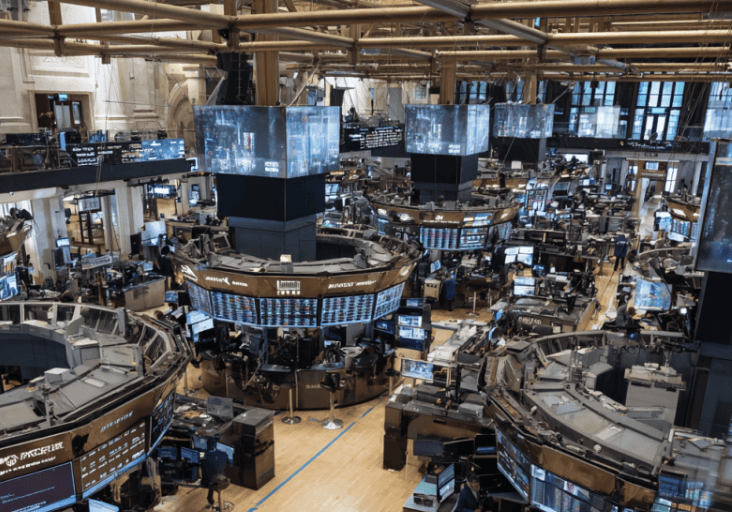
U.S. stocks rallied on Thursday, September 3, after Federal Reserve Governor Christopher Waller said he could support keeping interest rates unchanged at the central bank’s September meeting if upcoming inflation data continues to show progress. The remarks eased investor concerns that a near-term rate hike was inevitable, sending Treasury yields lower and supporting a broad advance across Wall Street.
The Dow Jones Industrial Average rose 624 points, or 1.1%, while the S&P 500 gained 1.0%. The Nasdaq Composite led the major indexes higher with a 1.4% rise, as technology and software stocks benefited from the decline in bond yields.
Waller’s Rate-Hold Comments Lift Markets
Waller said he would be inclined to support holding the federal-funds rate at its current setting if the next two weeks of inflation data confirms that price pressures are continuing to cool. He added that he could support an increase if inflation progress stalls or reverses.
“If this continues in the data due over the next two weeks, I would be inclined to support holding the target for the federal funds rate at its current setting,” Waller said.
The statement marked a more cautious tone than the message delivered by Fed Chair Kevin Warsh at the Jackson Hole symposium the previous week. Warsh had warned that the central bank may still have “work to do” if inflation remains above target, prompting markets to increase expectations for a September rate hike.
Waller’s comments did not rule out further tightening. Instead, they reinforced the Fed’s data-dependent approach. The upcoming August consumer-price reports, labour-market figures and wage data will determine whether policymakers see enough evidence to pause.
Traders responded by lowering the probability of a September rate increase to around 50%, creating relief for rate-sensitive assets such as technology shares, growth companies, housing-related businesses and consumer-discretionary stocks.
Dow, S&P 500 and Nasdaq Rally
The market advance was broad. Eight of the 11 S&P 500 sectors finished higher, led by consumer discretionary, which gained about 1.6%. Technology stocks also performed strongly as lower yields improved the valuation outlook for companies whose expected earnings are concentrated further in the future.
The Dow closed up 1.1%, the S&P 500 rose 1.0% and the Nasdaq finished 1.4% higher. The rise came after several volatile sessions driven by renewed U.S.-Iran tensions, rising crude oil prices and a global bond-market selloff.
Energy was the weakest S&P 500 sector as oil prices retreated from recent highs. The decline in crude prices helped reduce immediate inflation concerns and supported the market’s positive reaction to Waller’s comments.
Snowflake Surges on AI Demand
Snowflake was among the day’s strongest technology movers, rising about 17% after reporting quarterly results that exceeded Wall Street’s expectations. Chief Executive Sridhar Ramaswamy said accelerating adoption of the company’s artificial-intelligence products contributed to revenue growth and a stronger business outlook.
The results reinforced investor confidence that corporations are expanding spending on cloud data, software and AI applications. Snowflake’s performance follows similarly strong results from other AI-linked companies and suggests that the AI investment cycle is moving beyond chips and data centres into enterprise software.
The rally also supported broader software stocks, a segment that had come under pressure when rising Treasury yields raised concerns about valuations. Lower yields helped investors return to companies with high expected future growth.
Treasury Yields Decline
Treasury yields fell across the curve as investors reduced rate-hike expectations. The two-year yield, which is especially sensitive to anticipated Fed policy, declined to 4.322%. The benchmark 10-year Treasury yield ended the day at 4.761%, while longer-dated yields also moved lower.
Lower Treasury yields can boost equity prices because they reduce corporate financing costs and make future earnings more valuable in today’s terms. The move was particularly welcome after the 10-year yield had recently reached its highest level since November 2023.
However, the bond-market outlook remains uncertain. Investors continue to worry about federal borrowing, large fiscal deficits, elevated oil prices and the possibility that inflation will stay above the Fed’s 2% goal. A renewed climb in yields could quickly pressure high-growth stocks again.
Yen Strengthens on Japan Rate Bets
Currency markets also saw sharp moves. The Japanese yen strengthened to as much as ¥155.30 per U.S. dollar, its strongest level since August 3. The rally followed hawkish comments by a Bank of Japan board member, which increased expectations for bigger or more frequent Japanese interest-rate increases.
Read also : The Million-Dollar Retirement Blueprint for U.S. citizens in 2026
Japan’s Finance Ministry reported that authorities spent a record ¥15.4 trillion, approximately $98 billion, to support the yen between July 30 and August 26. Although no official intervention was confirmed on September 3, traders remained alert after the yen briefly weakened beyond ¥160 earlier in the week.
A stronger yen could affect global markets by reducing the attractiveness of yen-funded carry trades, in which investors borrow at low Japanese rates to purchase higher-yielding assets elsewhere.
Jobless Claims and Trade Data
The latest U.S. economic reports were mixed. Initial jobless claims rose by 2,000 to 206,000 for the week ended August 29, slightly above the 205,000 consensus estimate. The modest increase suggests that the labour market remains relatively resilient, though hiring conditions may be gradually cooling.
The U.S. goods and services trade deficit widened sharply to $88.6 billion in July from $71.2 billion in June. A wider trade deficit can reduce economic growth because it reflects a larger gap between imports and exports.
Gold Price Soars
Gold prices moved higher on September 3 as falling Treasury yields and a softer outlook for immediate Fed tightening increased demand for the non-yielding precious metal. The attached market data showed spot gold at a bid of $4,470.40 and an ask of $4,472.40 per ounce at 4:20 p.m. New York time.
Read also : Gold : Build Your Wealth and Freedom
Gold was up $83.10, or 1.89%, on the day. It traded within a range of $4,380.60 to $4,511.70, while the one-minute XAU/USD chart showed the metal consolidating near $4,471 after an earlier peak close to $4,480.
Market Outlook
Thursday’s rally showed how sensitive financial markets remain to changes in expectations for Federal Reserve policy. Waller’s willingness to consider a rate hold gave investors reassurance, but the outcome of the September meeting will depend on forthcoming inflation and employment data.
For now, lower yields, easing oil prices and strong AI-related corporate results have improved market sentiment. Still, high public borrowing, volatile energy markets and uncertainty around the U.S.-Iran conflict mean that the path for stocks, bonds and gold is likely to remain uneven.
Our community already has nearly 320,000 readers!
Subscribe to our Telegram channel
Follow us on Telegram, Facebook and Twitter
© Copyright 2026 – Eurasia Business News. Article no. 3142

